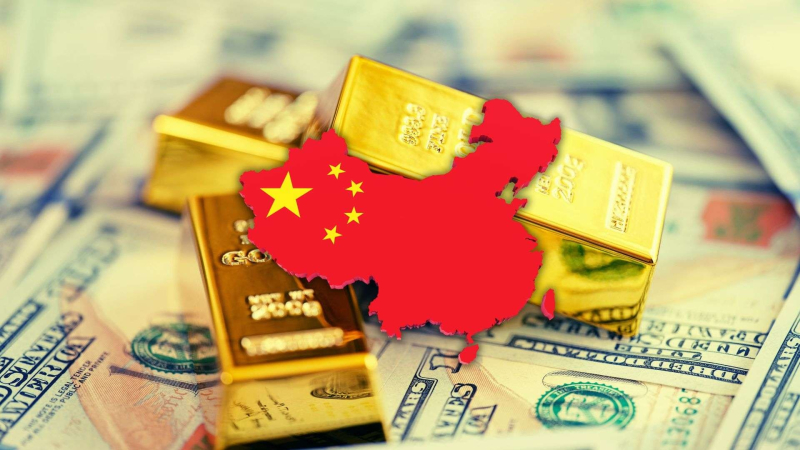
Central banks around the world are rethinking how they manage their foreign reserves. The mix between traditional dollar assets, gold, and emerging currencies such as the Chinese yuan is shifting as global monetary policy tightens and geopolitical risks rise.
This diversification marks one of the most significant changes in global finance in decades, reflecting both a response to currency volatility and a broader effort to balance security with flexibility in reserve management.
The Changing Landscape of Global Reserves
The U.S. dollar continues to dominate global reserves, accounting for roughly 58 percent of total holdings. However, that share has been declining gradually as central banks pursue a more balanced portfolio strategy. The shift reflects both precaution and pragmatism.
Higher interest rates in advanced economies have increased the cost of holding large quantities of dollar-denominated debt. Meanwhile, sanctions and financial fragmentation have pushed some countries to seek alternatives that reduce exposure to U.S. policy decisions.
Gold has emerged as a preferred hedge. Central banks purchased record amounts of gold over the past year, driven by its stability during market turbulence and its role as a non-sovereign store of value. This renewed demand underscores a desire for reserve assets that are not tied to the financial systems of any single nation.
Gold’s Role in Reserve Stability
Gold has regained prominence as both a defensive and strategic asset. It protects against inflation, exchange-rate volatility, and credit risk. Unlike foreign currency reserves, gold is not subject to default or sanctions risk, which makes it especially attractive in an uncertain global environment.
Recent data show that developing economies account for most of the increase in official gold holdings. Central banks in Asia, the Middle East, and parts of Africa have been steadily adding to their reserves, viewing gold as a means to reduce dependency on the dollar-based financial system.
For advanced economies, gold serves a different purpose. It provides balance in portfolios dominated by sovereign bonds and can act as a hedge when yields fluctuate. Even though gold does not generate income, its value as a crisis buffer remains unmatched.
The Role of the Yuan in Global Reserves
The Chinese yuan has gained attention as an alternative reserve currency. Its inclusion in the International Monetary Fund’s Special Drawing Rights basket in recent years marked an important step toward internationalization.
However, despite growth in yuan-denominated trade settlements, the currency’s share of global reserves remains modest. Limited convertibility, capital controls, and concerns over policy transparency restrict its broader adoption.
Still, several central banks are experimenting with yuan holdings, particularly those involved in trade and investment with China. As China expands its role in global infrastructure and energy markets, its currency’s importance in regional reserves is likely to rise gradually.
The yuan’s progress reflects the diversification trend more broadly: it may not challenge the dollar’s dominance soon, but it offers additional flexibility in balancing geopolitical and financial exposure.
Dollar Dominance and Its Enduring Advantages
Despite growing diversification, the dollar’s position remains unrivaled. Its liquidity, transparency, and deep financial markets make it the most trusted reserve asset. Central banks continue to rely on U.S. Treasuries for safety and market depth, even as they expand exposure to gold and other currencies.
The dollar’s dominance is reinforced by its role in global trade, where more than half of transactions are still invoiced in dollars. Even in a multipolar monetary landscape, most financial systems depend on dollar-based settlement infrastructure, ensuring the currency’s central role for years to come.
However, reliance on the dollar carries policy implications. When the Federal Reserve tightens monetary conditions, global liquidity shrinks, affecting financial stability elsewhere. This interconnectedness is why diversification efforts have gained urgency, as countries seek to cushion themselves against U.S. policy shifts.
Strategic Outlook for Reserve Management
Looking ahead, central banks are expected to continue diversifying gradually rather than shifting dramatically. The focus will remain on risk-adjusted returns, liquidity, and geopolitical balance. Gold and the yuan will both gain importance as supplementary assets rather than replacements for the dollar.
Multilateral initiatives are also supporting this evolution. Regional reserve pools, cross-border digital payment systems, and new forms of sovereign wealth cooperation are providing alternative frameworks for managing reserves. These developments reflect an increasingly adaptive global financial order.
For smaller economies, diversification remains constrained by limited market access and liquidity. The dollar will therefore remain indispensable for stability, even as diversification adds flexibility.
Conclusion
The rebalancing of global reserves signals an evolving monetary world that values flexibility as much as security. While gold and the yuan are gaining relevance, the dollar’s unmatched depth and liquidity ensure it will remain the cornerstone of international finance. The new era of reserve management is not about replacement but about resilience in a world of shifting economic power.