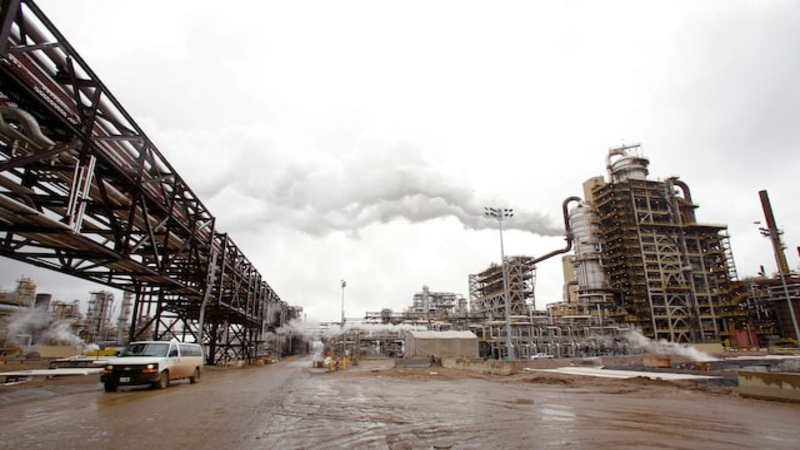
Canadian crude will remain competitive even if Venezuelan oil production rebounds, as investors continue to favor stability, governance, and long term reliability over headline driven supply shifts. Speaking amid renewed focus on Venezuela following the U.S. capture of Nicolas Maduro, Prime Minister Mark Carney said Canada’s energy sector offers a low risk profile that is difficult to replicate. Heavy crude from Venezuela shares similarities with oil sands output, prompting speculation that increased Venezuelan supply could pressure Canadian barrels. Markets have so far treated that scenario as theoretical rather than imminent, reflecting skepticism around how quickly Venezuela could restore production capacity. Canada’s advantage, Carney argued, lies not in short term price competition but in predictability, contract reliability, and regulatory continuity, factors that remain decisive for refiners and institutional capital.
The possibility of renewed Venezuelan output has gained attention after comments from U.S. President Donald Trump suggesting American oil firms are prepared to invest heavily to revive production. Analysts caution that years of underinvestment, sanctions, and infrastructure decay mean any meaningful increase would take time and capital. Even optimistic scenarios point to gradual gains rather than a rapid surge. In that context, Canadian producers are viewed as insulated from abrupt displacement, particularly in North American markets where logistics, blending requirements, and long term supply agreements favor continuity. Carney said a functioning Venezuelan economy would contribute to regional stability, but emphasized that increased supply elsewhere does not automatically erode Canada’s competitive position in global crude flows.
Canada’s strategy also increasingly emphasizes environmental credibility alongside cost discipline. Carney highlighted proposed carbon capture initiatives in Alberta as a way to enhance the appeal of oil sands production for buyers facing emissions constraints. As climate considerations play a growing role in procurement decisions, producers able to demonstrate lower lifecycle emissions may retain access to capital and markets even in a crowded supply environment. Canada has moved to recalibrate certain climate policies to encourage investment while maintaining longer term decarbonization goals. That balance is aimed at ensuring oil remains commercially viable without triggering abrupt regulatory shocks that could deter investors already wary of geopolitical risk elsewhere.
Policy alignment between federal and provincial governments has also been positioned as a stabilizing factor. Recent agreements with Alberta have eased selected rules to support production and infrastructure investment, including renewed discussion around pipeline access to the West Coast. While no private company has yet committed to new pipeline construction, the signaling has been interpreted as supportive of future capacity. For markets, the message is less about immediate expansion and more about resilience. Even if Venezuelan output eventually rises, Canada is framing its oil sector as a dependable anchor in an increasingly fragmented global energy landscape.