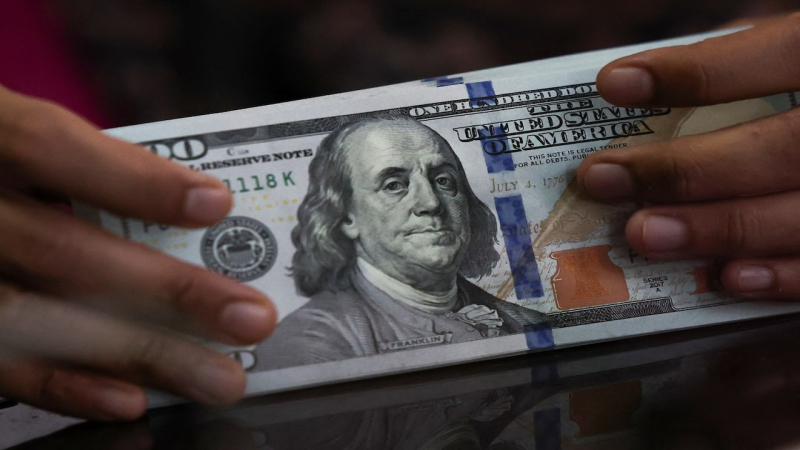
The global economy is entering a new era of digital trade where currencies, payments, and settlements are increasingly powered by technology. As blockchain networks, digital currencies, and tokenized assets gain traction, questions are rising about whether the U.S. dollar can maintain its dominant position.
While the dollar continues to serve as the anchor of global transactions, the shift toward digital trade infrastructure could redefine how currencies compete for influence in global finance.
The Dollar’s Historical Strength and Global Reach
For decades, the dollar has been the foundation of international trade, finance, and reserves. Nearly ninety percent of all global currency transactions involve the dollar on one side. Its strength lies in deep capital markets, transparent regulation, and the credibility of U.S. institutions.
Even in moments of global stress, the dollar’s liquidity and trustworthiness make it the preferred choice for central banks, corporations, and investors. This institutional depth has ensured that no alternative currency has come close to replacing it.
However, the world is changing. As technology transforms how goods and capital move, new systems are emerging that could gradually reduce the dollar’s transactional dominance even if it remains central to the financial system.
Digital Trade and the Rise of Tokenized Finance
Digitalization is reshaping trade from the ground up. Smart contracts and blockchain-based settlement systems now allow transactions to be executed instantly and verified without traditional intermediaries. These systems can operate using multiple currencies or digital tokens rather than relying solely on dollar-denominated payments.
Tokenized finance, which uses blockchain to represent real-world assets such as bonds, commodities, and currencies, is expanding rapidly. Central banks and private institutions are experimenting with digital versions of their currencies, including central bank digital currencies. These digital systems offer speed, transparency, and lower transaction costs, challenging the dollar’s traditional advantage in global settlements.
Yet most digital trade systems still rely on the dollar as a reference asset. Many stablecoins and tokenized payment instruments are pegged to the dollar, preserving its influence even in a digital format. This shows that while technology is changing the medium of exchange, it has not yet changed the underlying trust in the dollar.
Competing Currencies and Emerging Digital Frameworks
Several economies are promoting their own digital currencies as part of broader strategies to expand monetary influence. China’s digital yuan, for example, is being tested in cross-border settlements and regional trade agreements. Europe is also developing a digital euro aimed at strengthening payment sovereignty and reducing dependency on non-European systems.
These projects reflect growing interest in diversifying the global monetary system. However, the effectiveness of digital alternatives depends on convertibility, transparency, and the scale of adoption. The dollar continues to outperform competitors in all three areas.
Even as digital systems mature, the infrastructure that supports dollar transactions, such as global clearing banks, correspondent networks, and payment systems, remains unmatched. For global businesses, shifting away from this established framework involves significant costs and regulatory hurdles. This makes rapid displacement of the dollar unlikely, even as digital innovation accelerates.
Policy Implications and Strategic Challenges
The digitalization of trade presents both opportunities and risks for U.S. policymakers. On one hand, new technology can enhance the efficiency of dollar-based payments and improve financial inclusion. On the other hand, it introduces new forms of competition from programmable currencies and blockchain networks outside traditional oversight.
To preserve the dollar’s global position, policymakers are exploring digital infrastructure upgrades, including discussions about a potential digital dollar. The goal is to ensure that the dollar remains relevant in new forms of trade while maintaining the regulatory standards that underpin its credibility.
However, digital finance also poses cybersecurity, privacy, and interoperability challenges. Coordinating standards among international partners will be essential to avoid fragmentation of global payment systems. If other regions successfully establish interoperable digital networks faster than the U.S., the balance of currency power could gradually shift.
The Future of Dollar Dominance in a Digital World
The evolution of digital trade will not eliminate the dollar’s leadership but may reshape how that leadership functions. Instead of being the exclusive settlement currency, the dollar could serve as a global benchmark for value in a multi-currency digital ecosystem.
Its continued dominance will depend on innovation as much as trust. The U.S. must adapt its financial infrastructure to match the speed and flexibility of digital trade systems. Stronger partnerships with allies, modernized regulations, and participation in cross-border digital frameworks will be crucial for sustaining influence.
While other currencies will gain regional importance through digitalization, the dollar’s combination of liquidity, institutional strength, and legal reliability remains unmatched. The digital age may introduce new competition, but it also offers the U.S. an opportunity to reinforce its monetary leadership through innovation.
Conclusion
The digital transformation of global trade is changing how money moves, but not yet what money means. The dollar’s dominance is built on trust, depth, and credibility, qualities that technology alone cannot replicate. As finance becomes more digital, the challenge for the U.S. will be to ensure that the world’s most powerful currency remains just as central in code as it has been on paper.