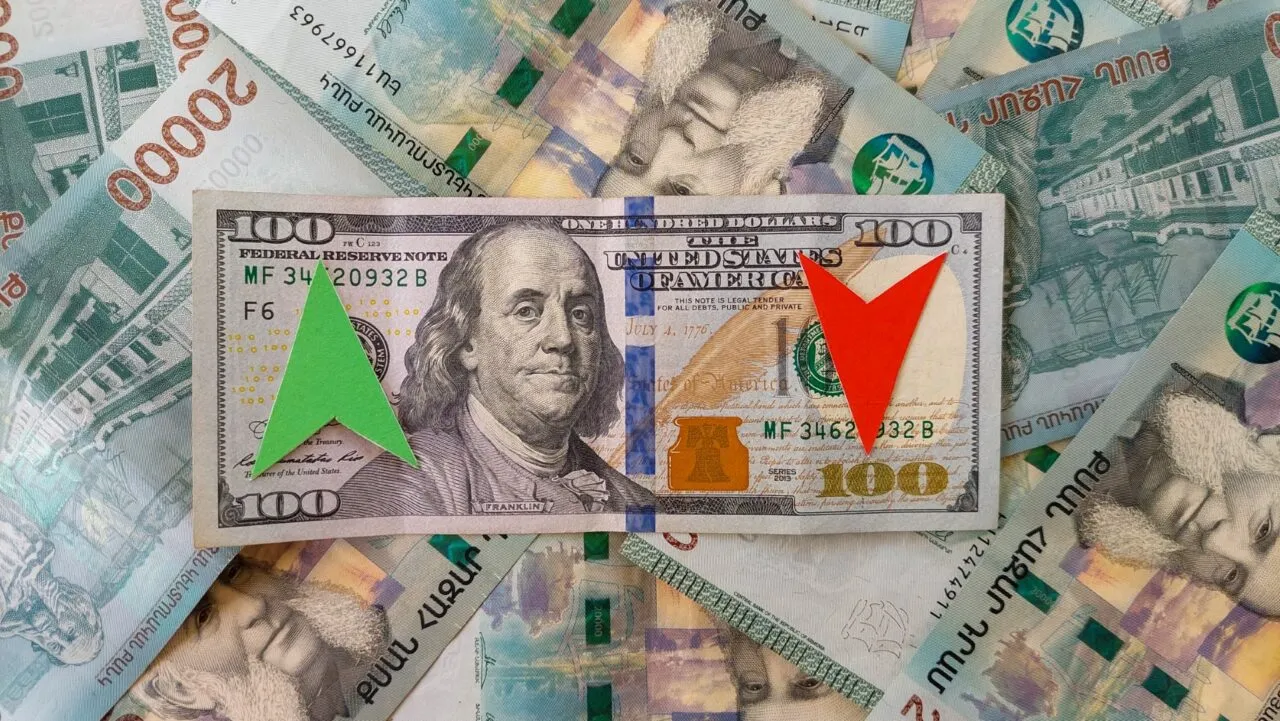
Central Bank Acts to Stabilize Currency
The Central Bank of Armenia has taken decisive action to adjust the USD exchange rate following recent fluctuations in forex markets. The Armenian dram experienced volatility as global investors reacted to strong U.S. economic data and the ongoing strength of the U.S. dollar. Authorities have emphasized that these adjustments are aimed at maintaining market stability and ensuring that currency movements do not disrupt domestic economic activity. Traders and analysts are closely monitoring the effects of these interventions, as they reflect Armenia’s approach to balancing domestic stability with external pressures.
Economic Background
Armenia’s economy has shown resilience despite external pressures. Consumer spending has remained steady, industrial output continues to grow moderately, and exports are recovering in key sectors such as technology and manufacturing. However, the dram faced depreciation pressures due to increased capital outflows and global dollar strength. Analysts highlight that the Central Bank’s decision to adjust the USD exchange rate is a proactive measure to protect both businesses and households from sudden currency shocks that could affect imports, exports, and overall economic confidence.
Exchange Rate Adjustment Mechanism
The Central Bank of Armenia employed a combination of foreign exchange market interventions and policy guidance to influence the USD/AMD rate. Officials clarified that the adjustments are temporary and focused on maintaining orderly market conditions rather than changing long-term monetary policy. These interventions included targeted sales of foreign currency reserves and communications with commercial banks to stabilize the dram. By providing sufficient liquidity and clear guidance, the central bank aims to reduce volatility while maintaining investor confidence.
Impact on Domestic Markets
The currency adjustment has immediate implications for domestic markets. Import-dependent sectors, including energy, construction, and manufacturing, benefit from reduced exchange rate volatility, which helps manage costs. Consumers are likely to experience more stable pricing for imported goods and services. Financial institutions have also welcomed the clarity provided by central bank actions, which facilitates planning for hedging strategies, loans, and investment decisions. Analysts suggest that such measures are essential in small open economies like Armenia, where external shocks can have outsized effects on domestic markets.
Global Dollar Strength and Armenia
The Armenian dram’s fluctuations are partly attributable to the persistent strength of the U.S. dollar. Strong U.S. consumer spending, moderate inflation, and resilient employment have made the dollar an attractive currency for investors seeking safe-haven assets. This trend has contributed to capital outflows from emerging markets, including Armenia. As a result, central bank interventions are necessary to manage the impact on domestic liquidity and maintain economic stability. The coordinated response highlights how domestic policy must adapt to global financial conditions.
Investor and Market Reaction
Market participants responded positively to the central bank’s interventions. Forex trading stabilized, and volatility in USD/AMD pairs decreased. Analysts emphasize that transparent communication and timely action are key to maintaining investor confidence, especially in smaller markets where capital flows can significantly affect exchange rates. The central bank’s actions have been interpreted as a signal of readiness to act against excessive currency fluctuations, reinforcing market trust and mitigating speculative pressures.
Comparison with Regional Currencies
Armenia’s approach is consistent with strategies adopted by other emerging markets facing similar pressures. Neighboring countries have implemented comparable interventions to manage exchange rate volatility and protect domestic economies from the effects of dollar strength. For example, Indonesia and India have used foreign currency reserves and policy guidance to stabilize their local currencies. Observers suggest that Armenia’s measures demonstrate the importance of proactive central bank intervention in maintaining macroeconomic stability in regions influenced by global capital flows.
Economic Implications and Inflation
Exchange rate stability is closely tied to inflation management. Depreciation of the dram can lead to higher import costs and elevated consumer prices. By intervening to stabilize the currency, the Central Bank of Armenia helps contain inflationary pressures, maintaining price stability and supporting economic growth. Analysts note that while inflation is currently moderate, ongoing monitoring of both domestic demand and external factors is essential to prevent future volatility. Stability in the exchange rate also ensures that monetary policy decisions are more effective and predictable.
Outlook for the Armenian Dram
Looking ahead, the Armenian dram’s trajectory will depend on the interplay of domestic economic performance, global dollar strength, and continued central bank actions. Analysts expect that further interventions may be necessary if external pressures intensify or if global investor sentiment shifts. Transparency and clear communication from the central bank will be critical to maintaining market confidence. Additionally, economic indicators such as trade balances, capital flows, and inflation data will continue to guide policymakers in making timely and effective decisions.
Conclusion
The Central Bank of Armenia’s adjustments to the USD exchange rate demonstrate a proactive approach to managing currency volatility amid external pressures. Domestic economic fundamentals remain stable, but the currency continues to face challenges from global capital flows and U.S. dollar strength. By maintaining transparency, providing liquidity, and coordinating policy measures, the central bank has successfully mitigated short-term risks while supporting investor confidence. Armenia’s experience underscores the importance of active monetary policy and market monitoring in small open economies, highlighting the interconnected nature of global financial systems and the influence of major currencies on emerging markets.