Introduction
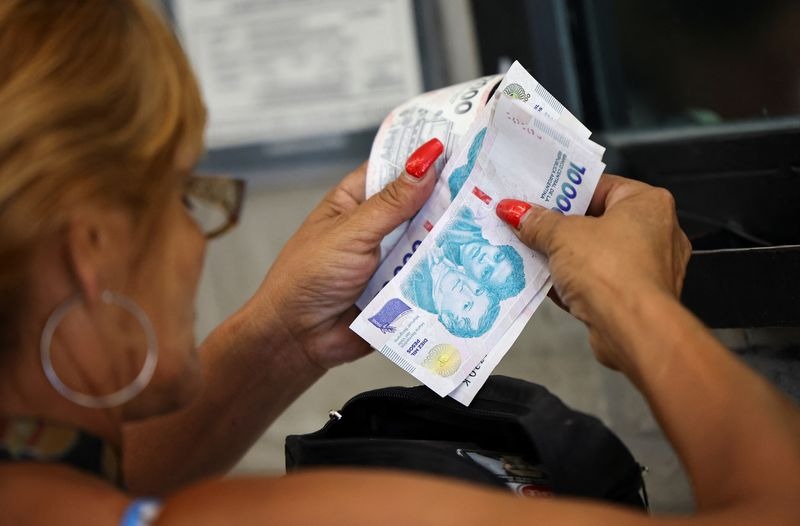
Argentina’s government is accelerating dollar sales to support its struggling peso amid mounting pressure on foreign reserves and ongoing negotiations for U.S. financial assistance. The Treasury has reportedly used a substantial portion of its available reserves to stabilize the exchange rate, aiming to contain inflation and restore investor confidence. However, the rapid depletion of dollar holdings has raised concerns among economists and global institutions about the sustainability of Argentina’s strategy, especially as external debt obligations remain high.
The currency defense comes at a crucial time for the South American nation. Talks with U.S. officials and multilateral lenders are underway to secure new financial aid that could ease liquidity pressures and restore stability. The intervention reflects the government’s determination to avoid a deeper devaluation that could further erode household incomes and spark social unrest. Yet, analysts warn that Argentina’s short-term measures, while politically necessary, may not resolve underlying structural weaknesses that continue to undermine the peso’s long-term value.
Peso Defense Strategy and Reserve Depletion
The Argentine Treasury’s dollar intervention intensified following a sharp decline in the peso’s value on both official and parallel markets. To slow the currency’s slide, authorities sold hundreds of millions of dollars from central bank reserves, hoping to temper inflation expectations and maintain control of import prices. The move temporarily stabilized the peso, but it came at the cost of dwindling foreign exchange reserves, which have now fallen to their lowest level since 2021. Market analysts note that this pace of depletion is unsustainable without fresh external financing.
The central bank has also tightened capital controls, limiting dollar purchases for importers and individuals. While these measures provide short-term relief by slowing reserve losses, they distort market pricing and discourage investment. Businesses operating in Argentina face mounting uncertainty as access to hard currency becomes increasingly constrained. Economists argue that such interventions buy time but fail to address fiscal imbalances or restore long-term confidence in the peso. Without credible reforms, the cycle of inflation and devaluation risks repeating itself.
Inflation Pressures and Economic Fragility
Argentina’s inflation remains among the highest in the world, with annual rates exceeding 120 percent. The currency defense aims to prevent further acceleration, but the impact has been limited. Prices continue to rise across key sectors, including food, transport, and energy. Wage negotiations have struggled to keep pace, eroding purchasing power and pushing more households into poverty. The government’s challenge is to stabilize prices without resorting to austerity measures that could provoke political backlash ahead of next year’s elections.
Economists highlight that currency interventions often have diminishing returns in high-inflation environments. Once markets lose confidence in monetary policy credibility, defending the exchange rate through reserves alone becomes ineffective. The IMF has warned that sustained inflation cannot be resolved without coordinated fiscal and monetary tightening. Argentina’s fiscal deficit, largely financed through money creation, continues to fuel inflationary pressures. Without a credible plan to reduce deficits and restore trust in domestic institutions, the peso remains vulnerable despite temporary support.
U.S. Involvement and Aid Negotiations
Negotiations with U.S. officials and multilateral partners have become central to Argentina’s financial strategy. The government is reportedly seeking new lending arrangements that could bolster reserves and provide breathing room for economic reforms. The talks come amid broader discussions about regional financial stability, as Argentina’s crisis poses spillover risks for neighboring economies. Washington’s willingness to extend support will depend on Argentina’s commitment to policy adjustments and transparency in financial management.
The United States views Argentina as a strategic partner in South America, but also as a country requiring structural reform to achieve sustainable growth. Officials familiar with the talks have emphasized that any assistance would likely be conditional on credible economic restructuring. This could include greater fiscal discipline, exchange rate unification, and measures to attract foreign investment. While direct U.S. aid remains uncertain, the discussions have boosted market sentiment temporarily, as investors interpret them as signs of potential stabilization.
IMF Role and Conditionality
The IMF remains a key player in Argentina’s financial outlook. The country already holds one of the Fund’s largest lending programs, totaling over $40 billion. Recent reviews by the IMF have praised limited progress on fiscal targets but cautioned that continued currency interventions undermine the program’s objectives. The Fund’s latest report stresses the need to preserve foreign reserves and focus on policies that improve export competitiveness rather than relying on defensive market operations.
Argentina’s government faces a delicate balancing act between meeting IMF conditions and managing domestic political realities. Reducing subsidies, tightening public spending, and reforming state-owned enterprises are politically sensitive but essential for regaining macroeconomic stability. The IMF has signaled flexibility in recognizing the social and political challenges of adjustment, but it insists that credible reforms are the only path toward sustainable recovery. Failure to meet these conditions could delay further disbursements and increase financial uncertainty heading into 2026.
Impact on Foreign Investors and Markets
Foreign investors have grown increasingly cautious about exposure to Argentine assets. Sovereign bonds trade at deep discounts, reflecting concerns over debt sustainability and potential restructuring. Meanwhile, foreign direct investment has slowed as businesses await clarity on currency policy and regulatory stability. The dollar scarcity has also disrupted trade, with import-dependent industries struggling to secure components and raw materials. The uncertainty surrounding aid negotiations has made it difficult for investors to price risk accurately.
Despite these challenges, some analysts see opportunities emerging from depressed valuations. If Argentina secures a credible aid package and implements structural reforms, the potential for long-term gains could attract renewed investment. Asset managers emphasize that confidence can return quickly once macroeconomic credibility is restored. However, the timeline for recovery remains uncertain, and much will depend on the outcome of the current negotiations with both the IMF and U.S. policymakers. Investors remain watchful for concrete signs of policy consistency before re-engaging meaningfully.
Political Ramifications and Public Sentiment
The economic crisis has deepened public frustration with Argentina’s leadership. Rising prices and wage stagnation have eroded trust in government policies, fueling protests and political polarization. The administration’s reliance on dollar interventions has drawn criticism from opposition parties, which argue that such measures merely postpone inevitable adjustments. As elections approach, the government faces the challenge of stabilizing the economy while maintaining public support for reform. Political uncertainty further complicates the economic outlook, as policy continuity remains unclear.
The peso’s defense has symbolic importance beyond financial markets. For many Argentines, currency stability is tied to national pride and economic dignity. Repeated crises over the past four decades have left deep scars on public confidence. The government’s ability to navigate current pressures will determine whether Argentina can finally break the cycle of instability or face yet another period of turbulence. Analysts warn that the political stakes are as high as the economic ones, with leadership credibility directly influencing market behavior.
Conclusion
Argentina’s efforts to defend its currency highlight the tension between short-term stabilization and long-term reform. While dollar sales and capital controls have slowed the peso’s decline, they have also depleted reserves and increased vulnerability to external shocks. Sustainable recovery will require more than temporary interventions it will depend on credible fiscal policies, institutional reform, and external support tied to transparent commitments. The coming weeks will be critical as negotiations with the United States and the IMF shape Argentina’s financial trajectory.
The broader lesson from Argentina’s situation is that defending a currency without addressing underlying imbalances is only a temporary fix. Lasting stability demands structural change, credible policy communication, and the restoration of market confidence. For now, Argentina’s treasury continues to burn through its limited reserves in a battle that underscores the difficult balance between political necessity and economic reality. Whether this strategy leads to relief or deeper strain will depend largely on the success of international cooperation and the government’s willingness to embrace reform.