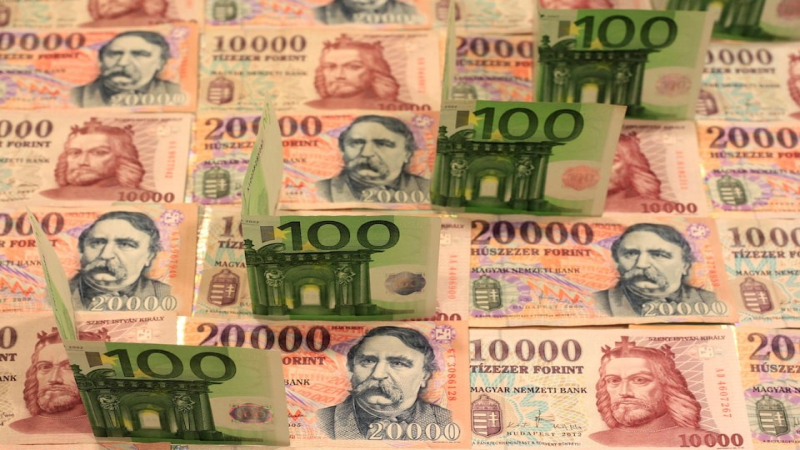
Central Europe’s major currencies may be approaching the upper limits of their recent gains, according to the latest projections from regional analysts who expect the forint, crown and zloty to give back some strength through 2026. After hitting fresh multi month highs against the euro, the forint remains the region’s top performer this year with an eight percent rise since January, yet survey forecasts indicate mild depreciation ahead as economic softness and fiscal constraints weigh on its outlook. While some analysts point to tentative diplomatic progress in the Russia Ukraine conflict as a potential support for regional FX, the consensus suggests that further appreciation will be difficult to sustain without a material shift in domestic fundamentals. The forint reached its strongest level in nearly two years this week, but projections show modest downward pressure emerging into year end and continuing across the next twelve months. This recalibration aligns with signals that stagnating growth and upcoming elections could dampen investor sentiment even as broader external conditions remain relatively supportive.
The Czech crown, which has risen more than four percent this year, is viewed as the region’s most resilient currency going forward, supported by firm central bank policy and signs of accelerating economic activity. A prolonged period of steady interest rates has helped maintain the crown’s momentum, while dollar softness has further reinforced its appeal. Projections indicate that the crown may hold close to its current multi month highs through next year, buoyed by stronger than expected domestic demand. The zloty, meanwhile, has benefited from cyclical momentum tied to economic recovery, though analysts expect only modest gains as Poland continues to navigate the impact of interest rate cuts implemented earlier in the year. The currency touched a seven month high recently, but poll forecasts point to a slight retreat back toward the center of its trading range over the next twelve months, reflecting a stabilizing rather than accelerating trend.
Romania’s leu is expected to weaken as well, with analysts forecasting a decline of around one percent in the coming year, a move that would place it near levels last seen during periods of heightened fiscal concern. The central bank has managed the currency closely to contain inflationary pressures accompanying fiscal consolidation efforts, but analysts suggest that once inflation cools, policymakers may allow greater flexibility that results in gradual depreciation. Across the region, the interplay between domestic policy stances, growth differentials and global dollar conditions will shape currency performance in the year ahead. With the U.S. currency losing ground recently, regional FX has enjoyed a tailwind, yet analysts caution that local structural constraints could limit further appreciation. The latest projections reinforce a broader theme in global FX markets where relative fundamentals and policy expectations are defining currency paths more sharply as 2026 approaches.