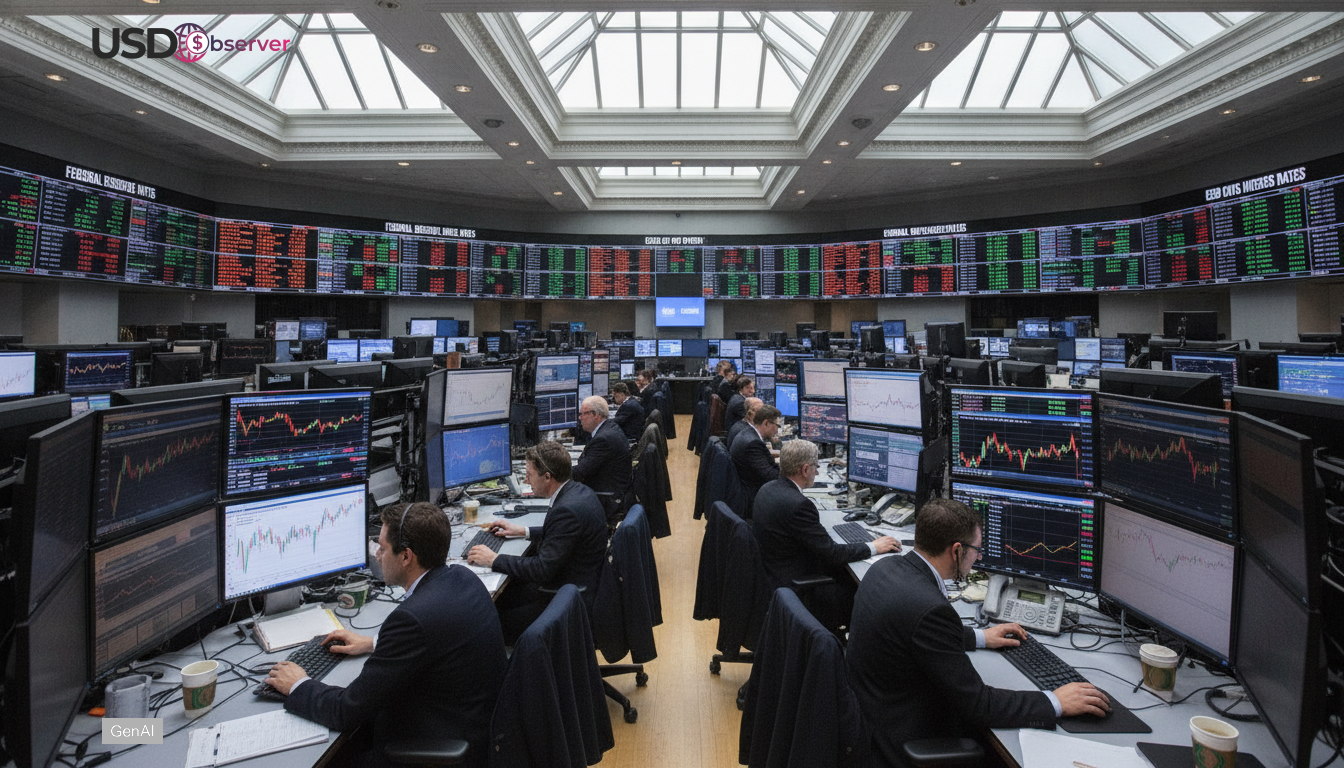
Global markets turned positive as signs of progress toward ending the U.S. government shutdown lifted investor sentiment and renewed confidence in short-term economic stability. After a 40-day political deadlock, reports of movement in congressional talks spurred buying across risk assets. Futures on the S&P 500 rose 0.8%, while Nasdaq 100 futures advanced 1.3%, reflecting optimism that fiscal activity could soon normalize. The U.S. dollar steadied after a volatile week, and the yen weakened as investors rotated back into riskier positions. Analysts noted that traders are increasingly pricing in a near-term reopening, with expectations for the House of Representatives to vote on a short-term funding bill within days. The potential resolution comes as concerns mount over the shutdown’s impact on employment data, consumer confidence, and fourth-quarter growth forecasts, which had been constrained by data blackouts.
Asian financial centers responded quickly to the improving tone. The Australian dollar strengthened, gold prices rose modestly, and equities across the Asia-Pacific region extended gains. Analysts in Singapore and Sydney described the market reaction as a “relief rally,” underpinned by expectations that economic disruptions will ease and investor confidence will recover once data flow resumes. Institutional strategists said the reopening could encourage renewed capital inflows into equities, bonds, and commodities, particularly if delayed government releases confirm slowing inflation. Market participants also anticipate that restored federal operations may accelerate spending on infrastructure and public projects, boosting short-term liquidity. However, they cautioned that this improvement may be temporary, as the proposed funding plan extends only until January 2026, suggesting renewed fiscal uncertainty early next year.
Currency strategists highlighted that the resolution could reduce global data uncertainty, improving visibility for central banks ahead of their December meetings. The reduced risk premium has already been reflected in tighter Treasury yields and steadier USD trading ranges. While the broader macro outlook remains cautious, the return of U.S. fiscal operations may help the Federal Reserve reassess its policy path more confidently. Analysts at regional institutions emphasized that an end to the shutdown will likely reinforce the Fed’s bias toward gradual easing in 2026 if the economic slowdown persists. For now, the combination of political progress, easing risk aversion, and improved liquidity conditions has given global markets their first clear signal of recovery in several weeks.