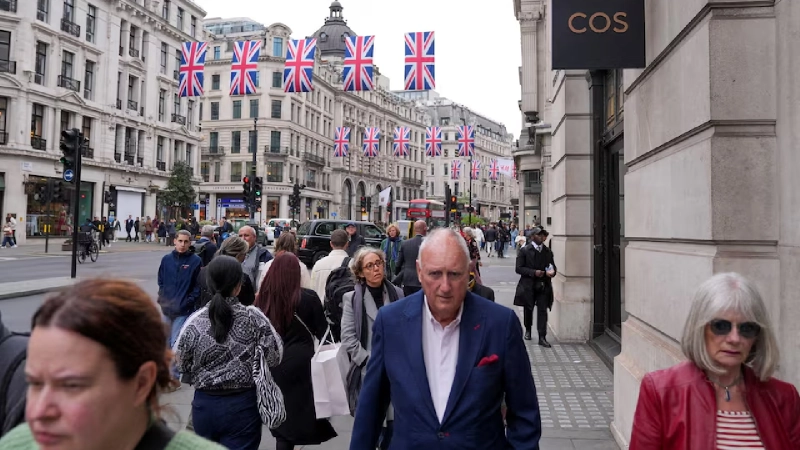
The United Kingdom’s economy entered the final months of last year with minimal growth, underscoring the fragile state of economic momentum even before rising geopolitical tensions began to reshape the outlook. Official data confirmed that output expanded only marginally in the fourth quarter, reflecting subdued activity across key sectors. This weak performance is now raising concerns about how the economy will navigate additional pressures from higher energy costs and inflation linked to global developments, particularly as policymakers face increasing challenges in balancing growth and price stability.
Economic data indicates that gross domestic product rose just 0.1 percent during the final quarter of 2025, matching the pace recorded in the previous period. The limited expansion highlights ongoing structural challenges, including weak business investment and subdued private sector activity. Much of the modest growth was driven by public sector spending, while corporate investment declined, signaling caution among businesses amid uncertain economic conditions. These trends suggest that underlying economic strength remains limited, leaving the economy vulnerable to external shocks.
Analysts warn that the current environment could complicate the policy outlook for the Bank of England, particularly as inflation pressures are expected to rise due to higher energy prices. While financial markets have priced in the possibility of interest rate increases, many economists believe that the weak growth backdrop may limit the central bank’s ability to tighten monetary policy aggressively. The combination of low growth and rising prices presents a complex scenario, where policymakers must carefully assess the trade off between controlling inflation and supporting economic activity.
Despite the broader weakness, there are some signs that households may have limited capacity to absorb rising costs. Data shows that the savings rate increased toward the end of the year, providing a potential buffer for consumers facing higher energy bills and living expenses. This accumulation of savings could help sustain consumption in the near term, although its effectiveness will depend on how long inflationary pressures persist and how confidence evolves among households.
The outlook for 2026 has already been revised lower by international organizations, reflecting concerns about slowing global growth and the impact of ongoing geopolitical tensions. Forecasts suggest that the pace of economic expansion could slow significantly compared to the previous year, placing additional pressure on policymakers to deliver on commitments to strengthen growth. The external environment, including energy market volatility and trade disruptions, is expected to play a critical role in shaping economic performance over the coming months.
Government efforts to stimulate growth are likely to face increasing challenges as fiscal and monetary conditions tighten. Rising borrowing costs and weaker external demand could weigh on investment and consumption, limiting the effectiveness of policy measures aimed at accelerating economic activity. At the same time, the widening current account deficit highlights ongoing imbalances that may further complicate the economic outlook, particularly if global financial conditions remain restrictive.
Looking ahead, the UK economy is expected to remain sensitive to developments in global markets, especially energy prices and geopolitical stability. While some resilience may come from household savings and public sector support, the overall trajectory will depend on how effectively policymakers navigate the evolving challenges. With growth already weak before the latest global shocks, the coming months are likely to test the economy’s ability to withstand additional pressures while maintaining stability.