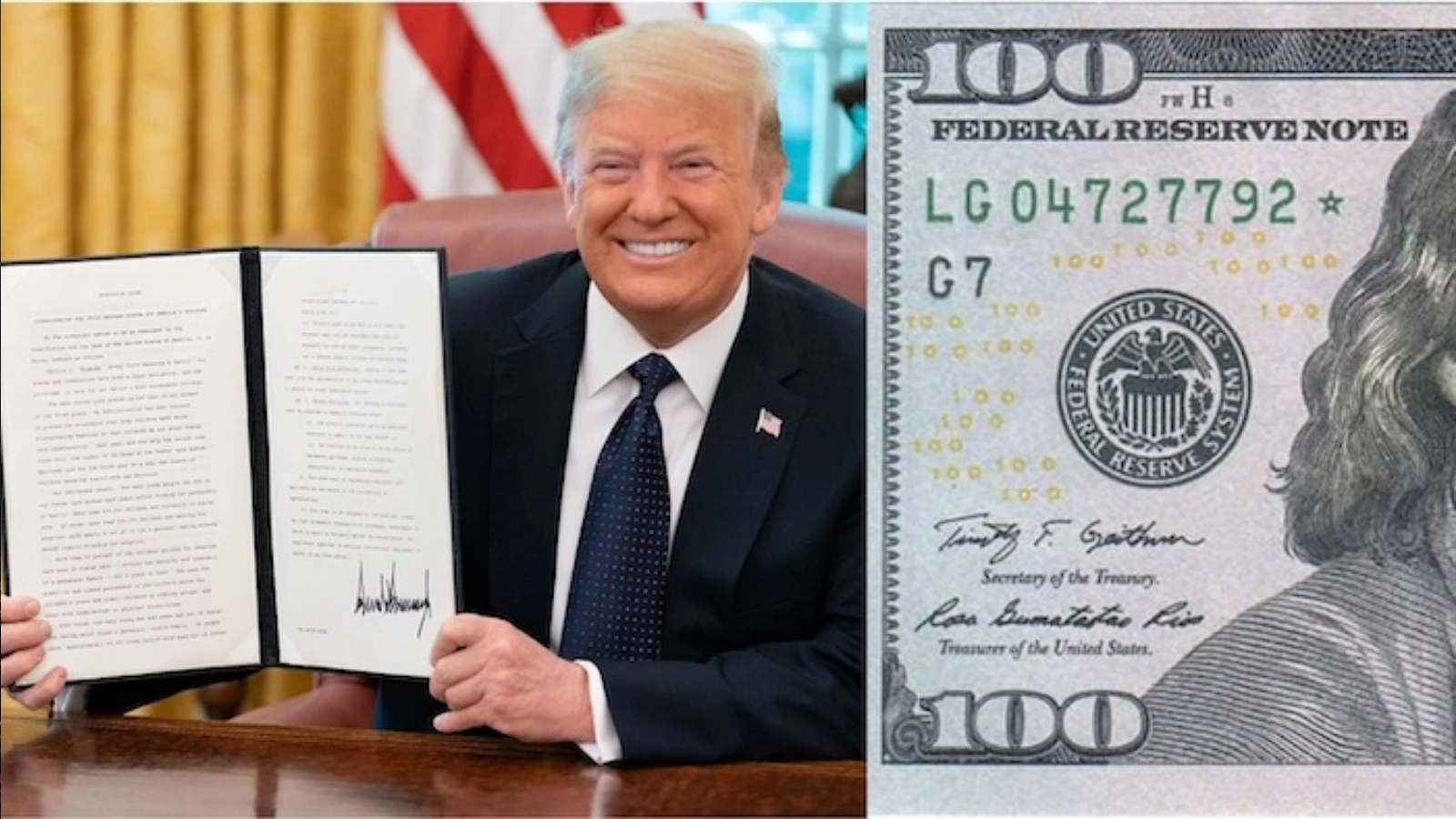
Introduction to the new currency design
Trump’s signature appearing on US dollars would be a design change with symbolism that travels farther than the ink. For investors, the immediate question is whether a branding shift can touch the USD reserve currency story, which is built on liquidity, rule-of-law assumptions, and deep markets rather than aesthetics. Still, currency design communicates state priorities, and markets are hypersensitive to political signals when they intersect with funding needs and credibility. Early coverage framed the move as unprecedented for a sitting president, giving the note a headline effect that can briefly amplify narrative risk. The practical point is simple: the bill’s look may change, but the institutional machinery behind it does not automatically change with it.
Historical precedents of signatures on currency
Signatures on US paper money are not new, even if a president’s signature would be. The standard pairing has long been the Treasurer of the United States and another senior official, reflecting accountable custody rather than personal ownership of the currency. That history matters because it separates the identity of the note from the identity of the issuer. The issuer is the state, executed through a blend of Treasury policy and central banking operations, while the signature convention has served as a bureaucratic stamp of authenticity. As a reference point for how markets treat the dollar as an asset, the more relevant headline is not the autograph but the durability of the framework that supports settlement and collateral. For related market context, see recent analysis of the dollar outlook.
Potential impacts on USD strength internationally
The Trump signature impact, if any, would flow through perception channels: allies and rivals read American notes as a proxy for continuity, not as collectibles. Reserve managers in Asia and the Gulf typically evaluate dollars through hedging costs, swap line reliability, and the breadth of US Treasury collateral, not through design choices. Yet a design that appears to politicize the note could be interpreted as a messaging pivot, especially if it coincides with louder debates about sanctions, tariffs, or debt ceilings. That is where Treasury policy becomes the bridge between symbolism and market reality, because it governs issuance strategy, cash management, and communication with primary dealers. A visible personalization can raise the temperature of the conversation, but it does not rewrite the legal tender status or the role of Treasury bills in global repo plumbing.
Market reactions and economic implications
In trading terms, the clearest channel for a design-driven story is volatility in sentiment-sensitive crosses, not a structural repricing of the dollar’s carrying capacity. If headlines create a short burst of risk aversion, the dollar can rise on safe-haven reflex even when the story is political, a dynamic often seen during geopolitical shocks. But any lasting move would likely require confirmation from macro data and the Federal Reserve’s reaction function, because rate differentials and real yields are still the scoreboard. Investors will also look at whether the episode collides with fiscal debates that affect auction demand and term premia. To anchor the news framing, mainstream reporting such as the BBC’s coverage of the currency signature plan gives the political context, while day-to-day pricing is better explained by labor and inflation releases.
Long-term effects on reserve currency status
The long run for the USD reserve currency hinges on convertibility, legal predictability, and the capacity to absorb savings at scale, which is why the deepest risk is never the graphic design but the policy environment that surrounds it. Reserve status erodes when counterparts doubt settlement neutrality, when fiscal paths appear unstable, or when market plumbing becomes unreliable during stress. A politicized note could be read as a small signal within that larger mosaic, especially by officials who already argue for diversification into gold, euro assets, or regional payment systems. Yet diversification is not a switch; it is a slow portfolio process constrained by market depth and hedging capacity. If the signature episode is accompanied by calm issuance and a steady Fed stance, it will likely fade into numismatic trivia. For cross-asset cues, gold-versus-dollar movements remain a cleaner window into global confidence shifts.