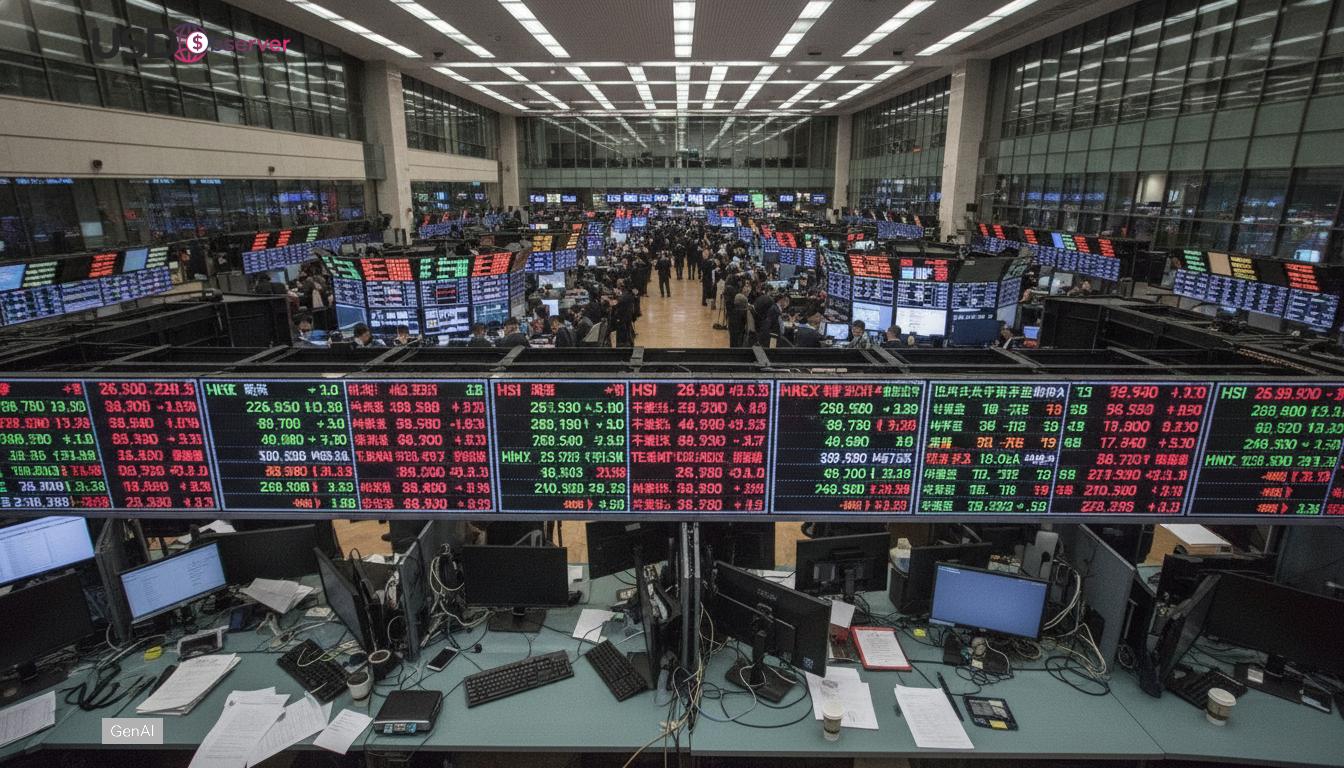
Global investors are pulling money out of emerging market funds as rising geopolitical tensions linked to the Iran conflict reshape risk appetite across financial markets. New data shows that flows into emerging market bond funds declined sharply in the week ending March 11, while investment into emerging market equities stalled after several weeks of steady inflows. The shift reflects growing caution among global asset managers who are reassessing exposure to higher risk markets as energy prices surge and geopolitical uncertainty deepens. Analysts say the sudden change in sentiment highlights how quickly global capital can retreat from developing economies when geopolitical tensions threaten stability in energy supply and financial markets.
The recent pullback follows a strong start to the year for emerging market assets. Investors had poured large amounts of capital into both hard currency and local currency emerging market debt during the first months of 2026, attracted by improving economic fundamentals, relatively stable inflation trends and expectations of a weaker United States dollar. Data from market tracking firms shows roughly twenty one billion dollars flowed into emerging market debt funds earlier in the year, marking one of the strongest early year inflow periods on record. However the escalation of tensions in the Middle East and the accompanying rise in oil prices has forced many investors to reconsider their positioning across global portfolios.
Financial strategists say the shift in investor sentiment is closely tied to fears that rising energy prices could create stagflation risks across developing economies. Stagflation refers to a combination of slower economic growth and higher inflation which historically places heavy pressure on emerging market currencies, bond yields and government finances. Market analysts note that many emerging economies are energy importers and therefore highly sensitive to rising oil prices. If fuel costs remain elevated for an extended period it could increase inflation pressures, limit the ability of central banks to lower interest rates and slow economic growth across several developing regions.
Several market experts have warned that the investment environment for emerging markets may become significantly more volatile if geopolitical tensions persist. Analysts at major financial institutions say emerging market credit had shown surprising resilience earlier this year despite fluctuations in global equity markets driven by rapid advances in artificial intelligence technology. However the sudden spike in energy prices and uncertainty surrounding the Middle East conflict has changed the narrative. Some strategists believe that what initially appeared to be an ideal environment for emerging market assets may now face growing risks if inflation remains elevated and global growth weakens.
The broader context is that emerging markets had been enjoying a powerful rally for more than a year. Stocks, bonds and currencies across developing economies had generally outperformed expectations as central banks implemented disciplined monetary policies and global investors searched for higher yields outside developed markets. Many policymakers in emerging economies had begun to signal confidence that inflation pressures were easing and that gradual interest rate cuts could support economic expansion. The sudden rise in oil prices and geopolitical tensions has now complicated that outlook and forced central banks to reassess their policy paths.
Currency markets have also responded to the shifting environment. Rising energy prices typically strengthen the United States dollar as investors seek safety in dollar denominated assets during periods of geopolitical stress. A stronger dollar can create additional pressure on emerging market currencies by increasing the cost of servicing foreign currency debt and reducing capital inflows. Investors are therefore watching closely for signs that the conflict could disrupt energy supply routes or extend into a prolonged geopolitical crisis that affects global trade and financial stability.
Market participants say the future direction of emerging market assets will largely depend on how long energy markets remain under pressure and whether geopolitical tensions begin to stabilize. Some analysts believe that the strong inflows earlier in the year suggest there is still significant global capital ready to return to emerging markets if conditions improve. However if oil prices remain elevated and geopolitical risks intensify, emerging market bonds, equities and currencies could continue to face headwinds as investors shift funds toward safer assets.