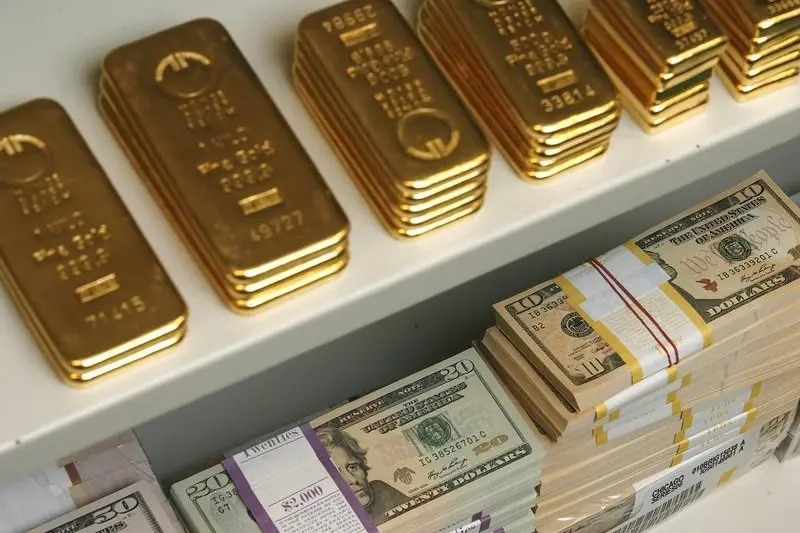
Rising geopolitical tensions in the Middle East have pushed investors once again toward assets traditionally viewed as safe during times of uncertainty. The renewed volatility across global markets has reignited a long standing debate among investors about which financial instruments truly offer protection when geopolitical risks intensify. While the US dollar, gold and government bonds have historically been considered reliable safe havens, recent market behavior suggests that the dynamics are becoming more complex. Investors are now reassessing how each asset responds under modern economic conditions shaped by inflation concerns, geopolitical shocks and shifting monetary policy expectations.
The US dollar has emerged as one of the strongest performers during the latest bout of market instability. Currency markets have seen a clear increase in demand for the greenback as investors seek liquidity and stability in the world’s largest reserve currency. The dollar index has moved higher this week, reflecting stronger demand across global markets. Notably the dollar has strengthened even against currencies that are typically considered defensive such as the Japanese yen and the Swiss franc. Analysts say the renewed demand highlights how global investors continue to rely on the depth and liquidity of US financial markets during periods of heightened uncertainty.
One reason the dollar has benefited during the latest geopolitical shock is the United States’ position as a major energy producer. Rising oil prices linked to tensions in the Middle East can strengthen the economic outlook for energy exporting economies, including the United States. In addition, investors seeking short term safety often prefer holding dollar cash rather than longer term assets. This shift toward liquidity has supported the currency even as some analysts continue to question whether the dollar will maintain its traditional safe haven status over the long term given growing global discussions around currency diversification.
Government bonds, which historically attract strong demand during times of crisis, have behaved differently in the current environment. Instead of rallying, many sovereign bonds have experienced selling pressure as investors focus more on inflation expectations than on safety. Yields on several major government bonds have moved higher this week, reflecting concerns that rising energy prices could trigger renewed inflation pressures. Increased government borrowing and fiscal expansion in several major economies have also weighed on bond markets, reducing their appeal as a straightforward defensive investment during geopolitical shocks.
Gold remains one of the most closely watched safe haven assets despite experiencing short term price swings. The precious metal has delivered strong long term gains over the past decade, reinforcing its reputation as a hedge against inflation, geopolitical uncertainty and currency depreciation. While gold prices can fluctuate during periods of market stress due to profit taking or liquidity needs, many investors continue to view the metal as an essential component of diversified portfolios. Analysts note that gold ownership remains relatively low among institutional investors compared with historical allocation ranges, suggesting that there may still be room for further demand in the future.
Traditional safe haven currencies have also faced pressure during the recent market turbulence. The Japanese yen and Swiss franc, both long regarded as defensive currencies during global crises, have weakened against the US dollar. Currency strategists suggest that domestic policy uncertainties and potential central bank interventions may be limiting the ability of these currencies to strengthen significantly. Concerns about monetary policy direction in Japan and the possibility of currency management actions in Switzerland have introduced additional factors that investors must consider when assessing currency based safe haven strategies.
Equity markets have also provided mixed signals during the recent geopolitical turmoil. Defensive sectors such as utilities and consumer staples often perform relatively well when broader markets face stress because their revenues tend to be more stable. However recent market movements have shown that these sectors are not immune to broader economic pressures. Some defensive stocks have already experienced strong gains in previous months, leaving less room for further upside during the current period of volatility. As a result investors are increasingly evaluating valuations and interest rate conditions when deciding how to position their portfolios during uncertain times.