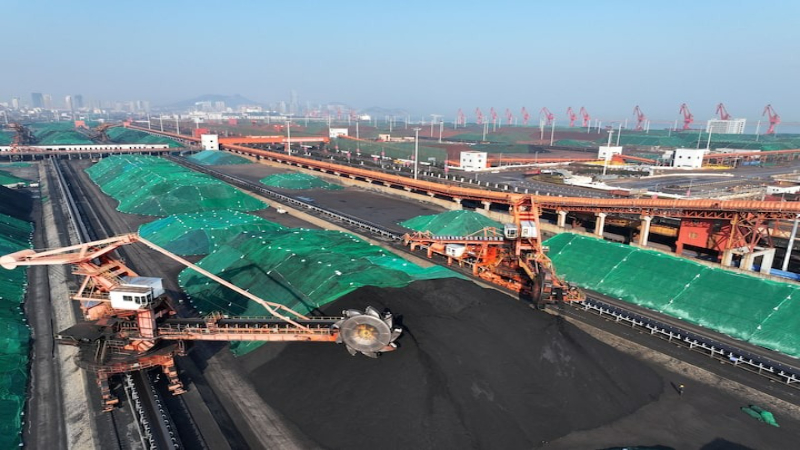
China’s coal production is projected to post its slowest growth of the decade in 2026, even as imports are expected to decline for a second consecutive year, reflecting structural shifts in the country’s energy landscape.
According to estimates from the China Coal Transportation and Distribution Association, output is set to rise by about 35 million metric tons to 4.86 billion tons in 2026. That represents growth of roughly 0.7 percent, marking the most modest annual expansion so far this decade for the world’s largest coal producer and consumer.
At the same time, coal imports are forecast to fall 5.1 percent to approximately 465 million tons. The anticipated decline follows developments in Indonesia, China’s largest external supplier, where authorities have proposed significant production cuts and reinstated export tariffs. Indonesian miners have halted spot exports as the government moves to support domestic prices, reducing near term supply available to key buyers such as China.
Industry analysts expect China to rely more heavily on domestic inventories this year as consumption growth outpaces the increase in local production. However, officials have indicated that domestic output can still expand further if imported volumes contract more sharply than expected.
Coal remains central to China’s power system, although its role is evolving. Coal fired generation fell in 2025 for the first time in a decade as rapid expansion of renewable energy capacity helped meet rising electricity demand. Wind and solar installations have grown quickly, reducing the share of incremental demand met by coal plants.
Despite this shift, proposals for new coal fired power plants have increased, reflecting concerns about grid stability and energy security. Authorities continue to view coal as a critical backup source capable of providing reliable baseload power during periods of fluctuating renewable output.
Consultancy assessments suggest that coal plants are increasingly transitioning from primary electricity suppliers to flexible backup providers. Utilisation rates of coal fired power have declined significantly over the past decade, dropping from around 60 percent in 2011 to just under 50 percent in 2025. Forecasts indicate that utilisation could fall further in the coming years as renewables take a larger share of the generation mix.
China has pledged to reach peak carbon emissions before 2030 and achieve carbon neutrality by 2060. The slower growth in coal output aligns with these longer term climate goals, even though overall production remains at record high levels.
The balance between energy security, economic growth, and environmental commitments continues to shape China’s coal strategy. With imports declining and domestic production growth moderating, policymakers face the task of ensuring adequate supply while managing the transition toward a more diversified and lower carbon energy system.