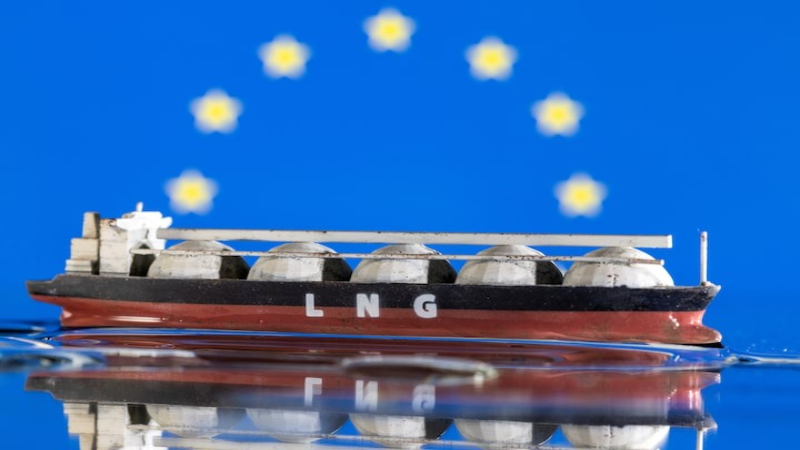
The United States accounted for 60 percent of the European Union’s liquefied natural gas imports in January, reinforcing its position as Europe’s dominant LNG supplier as the bloc continues to pivot away from Russian energy. Data from analytics firm Kpler showed the U.S. share rose from 53 percent a year earlier and from levels seen in December, reflecting both seasonal demand and structural shifts in supply. Europe imported roughly 5.36 million metric tons of U.S. LNG during the month, the second highest monthly volume on record. Colder winter weather lifted gas consumption across the region, while long term supply contracts and expanded U.S. export capacity helped drive the increase. The figures underscore how central U.S. gas has become to Europe’s energy system following years of disruption.
Analysts expect the trend to continue through the year, with U.S. LNG projected to supply close to 65 percent of Europe’s total LNG imports in 2026, up from around 56 percent last year. European buyers have steadily increased purchases from the United States since Russia invaded Ukraine in 2022, accelerating efforts to reduce dependence on Russian pipeline gas. The shift has been supported by political agreements and trade commitments, including a pledge by the European Union to significantly expand energy purchases from Washington. As new LNG infrastructure has come online across Europe, U.S. exporters have been well positioned to meet demand, further tightening the transatlantic energy relationship.
At the same time, rising reliance on U.S. energy has sparked unease among some European officials concerned about replacing one dependency with another. Tensions have been heightened by recent trade disputes and foreign policy disagreements involving President Donald Trump, prompting renewed debate over Europe’s long term energy security strategy. EU Energy Commissioner Dan Jorgensen has warned that the bloc risks becoming overly exposed to a single supplier even as it phases out Russian fuel. His comments followed diplomatic strains linked to U.S. policy positions, which he described as a wake up call for European energy planning.
Despite the growing U.S. share, Russia remained a significant LNG supplier in January, accounting for around 19 percent of EU imports. The European Union has committed to banning all Russian LNG and pipeline gas by late 2027, with the first stages of the phaseout set to take effect in the coming months. These initial measures will prohibit new short term contracts for Russian LNG, tightening restrictions over time. As the transition unfolds, Europe is expected to further increase reliance on alternative suppliers, particularly the United States, while also accelerating investment in renewables and efficiency to reduce overall gas demand.