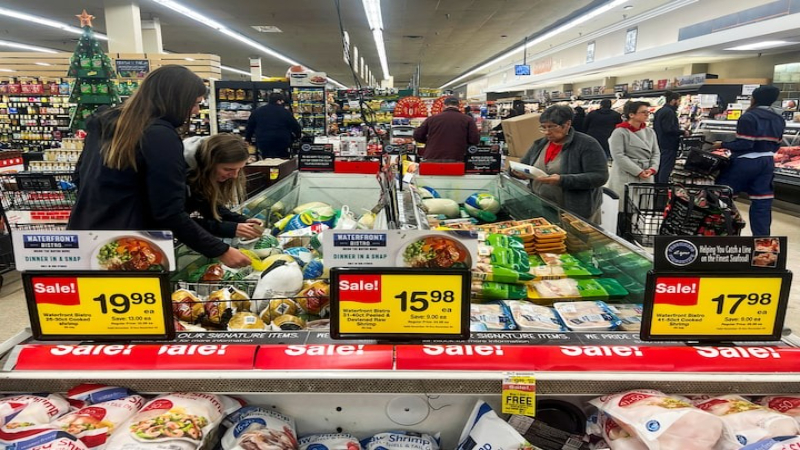
U.S. consumer confidence weakened sharply in January, falling to its lowest level in more than a decade as households grew increasingly uneasy about prices, employment conditions, and the broader economic outlook. The latest survey data showed a steeper decline than economists had expected, signaling rising caution among consumers at the start of the year. Concerns about the cost of living remained prominent, with food, fuel, and household expenses weighing heavily on sentiment. The downturn suggests that persistent inflation pressures and uncertainty around economic policy are beginning to affect household attitudes, even as overall economic growth remains positive.
Survey responses pointed to broad based pessimism, with consumers expressing heightened anxiety about future income prospects and job availability. While the labor market remains relatively stable by historical standards, perceptions of weakening momentum appear to be influencing confidence levels. Respondents also cited worries about trade developments, political uncertainty, and rising insurance costs. These concerns have contributed to a more guarded outlook on personal finances and spending intentions, raising questions about whether consumer demand could soften in the months ahead. Analysts note that confidence indicators often influence discretionary spending decisions, which play a central role in driving U.S. economic activity.
The decline in confidence comes at a sensitive time for policymakers, as household spending has been a key pillar supporting economic resilience. Slower consumer optimism could translate into more cautious behavior, particularly for large purchases and non essential goods. While confidence measures do not always lead changes in actual spending, sustained weakness may signal mounting pressure on household budgets. Economists are closely watching whether sentiment stabilizes or continues to deteriorate, as this could affect growth expectations and influence monetary policy discussions later in the year.
Looking ahead, consumers appear focused on how prices, employment conditions, and policy decisions will evolve in the coming months. Inflation trends, wage growth, and interest rate expectations are likely to remain central to sentiment. Any further rise in costs or signs of labor market cooling could deepen pessimism, while improvements in purchasing power may help restore confidence. For now, the sharp January decline highlights the fragility of consumer sentiment and underscores the importance of economic stability in sustaining household confidence.