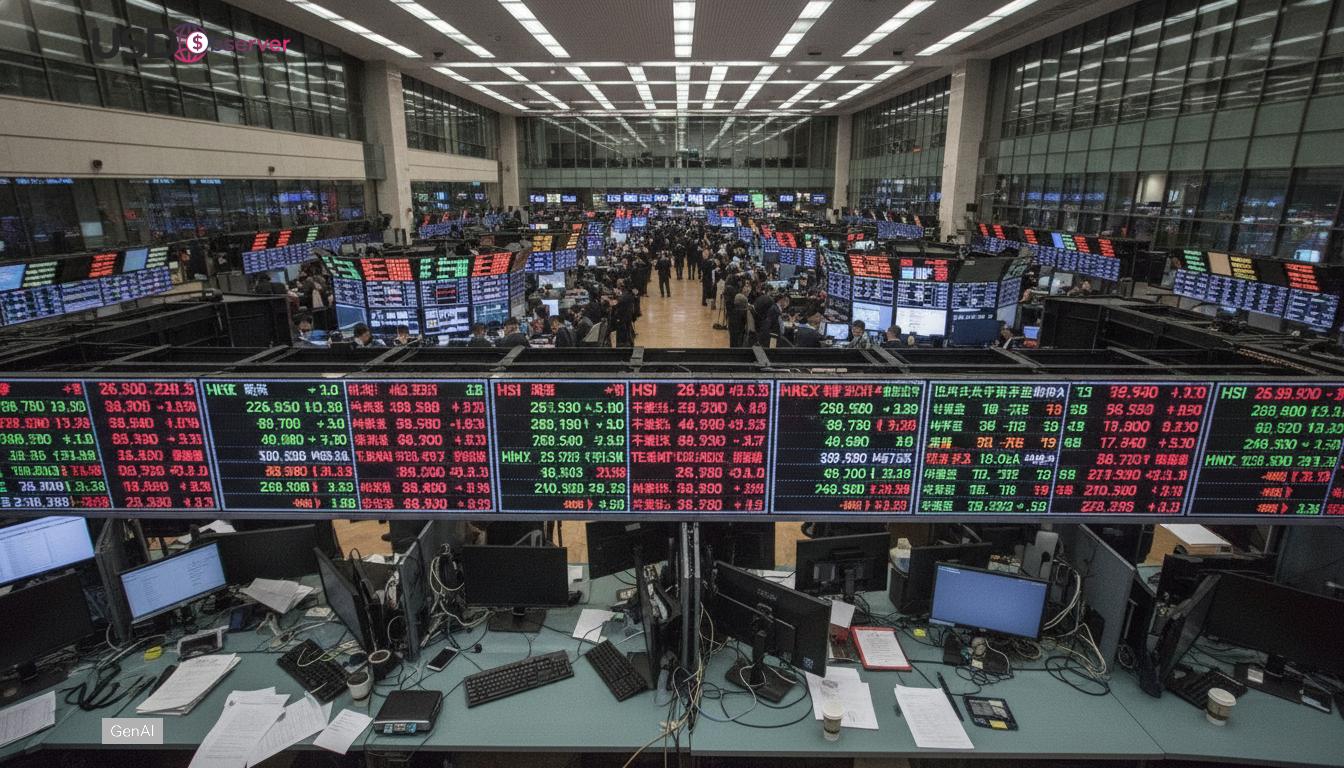
Global equity markets hovered near record highs as investors focused on the outlook for corporate earnings, largely brushing aside renewed trade rhetoric from Washington. Futures tied to U.S. technology shares advanced, while European stocks posted moderate gains, reflecting confidence that earnings from major companies could sustain momentum despite lingering geopolitical tensions. Markets across Asia also strengthened, led by a sharp rebound in South Korea, where stocks reversed early losses to close at a fresh peak. The resilience suggested that investors remain willing to prioritize growth prospects over political noise, particularly as global economic indicators remain relatively stable and corporate balance sheets continue to show strength.
Trade concerns resurfaced after new tariff threats were directed toward Asian imports, yet market reaction remained muted. Investors appeared more focused on the upcoming wave of earnings from large U.S. companies, viewing them as a clearer signal of economic health than policy statements. Even markets directly referenced in the trade dispute showed resilience, highlighting confidence that any escalation may be limited in scope or duration. European equities edged higher alongside gains in global benchmarks, reinforcing the view that investor positioning has shifted back toward fundamentals after weeks of uncertainty. This broader stability has helped global stock indices remain anchored near historic highs.
Currency and commodity markets reflected a more cautious undercurrent, particularly as the U.S. dollar remained under pressure. The greenback traded near multi month lows as concerns over fiscal negotiations, central bank independence, and political risk weighed on sentiment. A weaker dollar helped fuel continued gains in precious metals, with gold and silver extending strong rallies as investors sought protection against uncertainty. The surge in metals prices also reflected expectations that monetary policy will remain accommodative even as growth holds up, reinforcing demand for non yielding assets amid global portfolio diversification.
Attention is now turning to central bank guidance and earnings clarity as markets move deeper into the week. Investors are watching policy signals closely, particularly around interest rate expectations and leadership changes at key institutions. At the same time, questions remain over whether heavy investment in technology and productivity will translate into sustained returns. Oil prices remained largely stable, suggesting that energy markets are balancing supply concerns with steady demand expectations. Together, these dynamics point to a market environment that remains optimistic but increasingly selective as investors weigh growth, policy risk, and valuation discipline.