As the global economy moves deeper into 2026, growth signals are pointing toward moderation rather than outright contraction. Manufacturing output remains uneven across regions, consumer demand is cautious, and fiscal flexibility is narrowing in several major economies. Despite these pressures, financial markets are not displaying broad stress. Instead, capital is quietly consolidating around the U.S. dollar, reinforcing its central role in the global economic system.
This shift highlights a growing divergence between real economic momentum and financial allocation. While growth outside the United States faces structural and policy constraints, global capital continues to favor dollar based assets. The result is a global economy where activity softens, but dollar demand remains firm, driven by institutional depth rather than cyclical strength.
Capital re centralization defines the global cycle
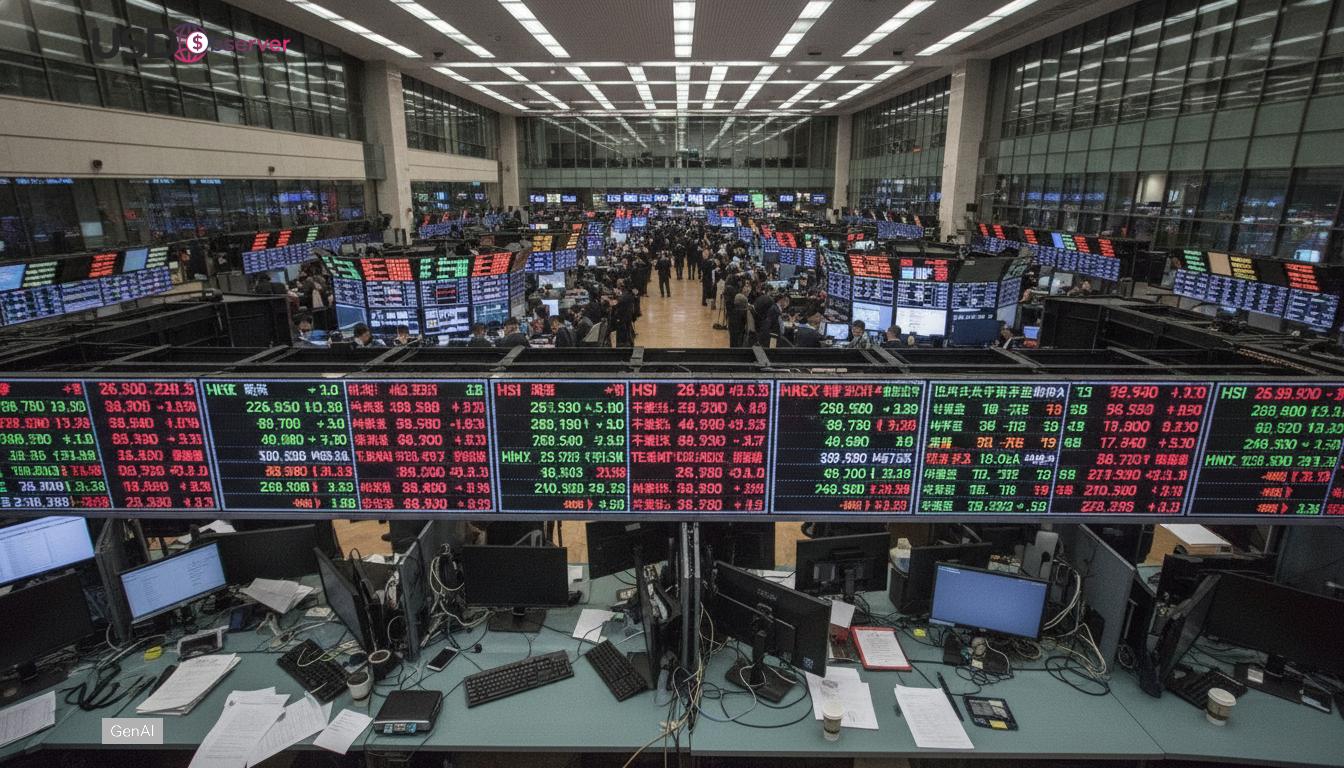
The most important macro trend shaping the current environment is the re centralization of global capital flows. Investors are increasingly prioritizing liquidity access, legal clarity, and market depth over marginal growth opportunities. In this context, U.S. financial markets continue to offer unmatched scale and flexibility.
Capital that once sought diversification across regions is now concentrating in fewer destinations. This does not reflect panic or crisis, but a rational response to a world where policy uncertainty and fiscal limitations are becoming more pronounced. As governments face higher borrowing costs and tighter budget constraints, investor preference shifts toward systems perceived as more resilient.
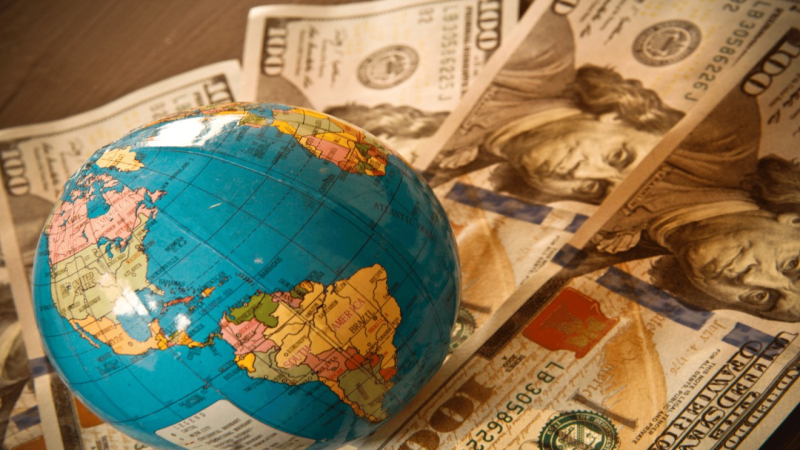
The dollar benefits directly from this dynamic. Its role as the primary settlement currency and reserve anchor allows it to attract flows even when growth prospects appear ordinary. This structural advantage becomes more visible during periods of global slowdown.
Global growth slows without systemic stress
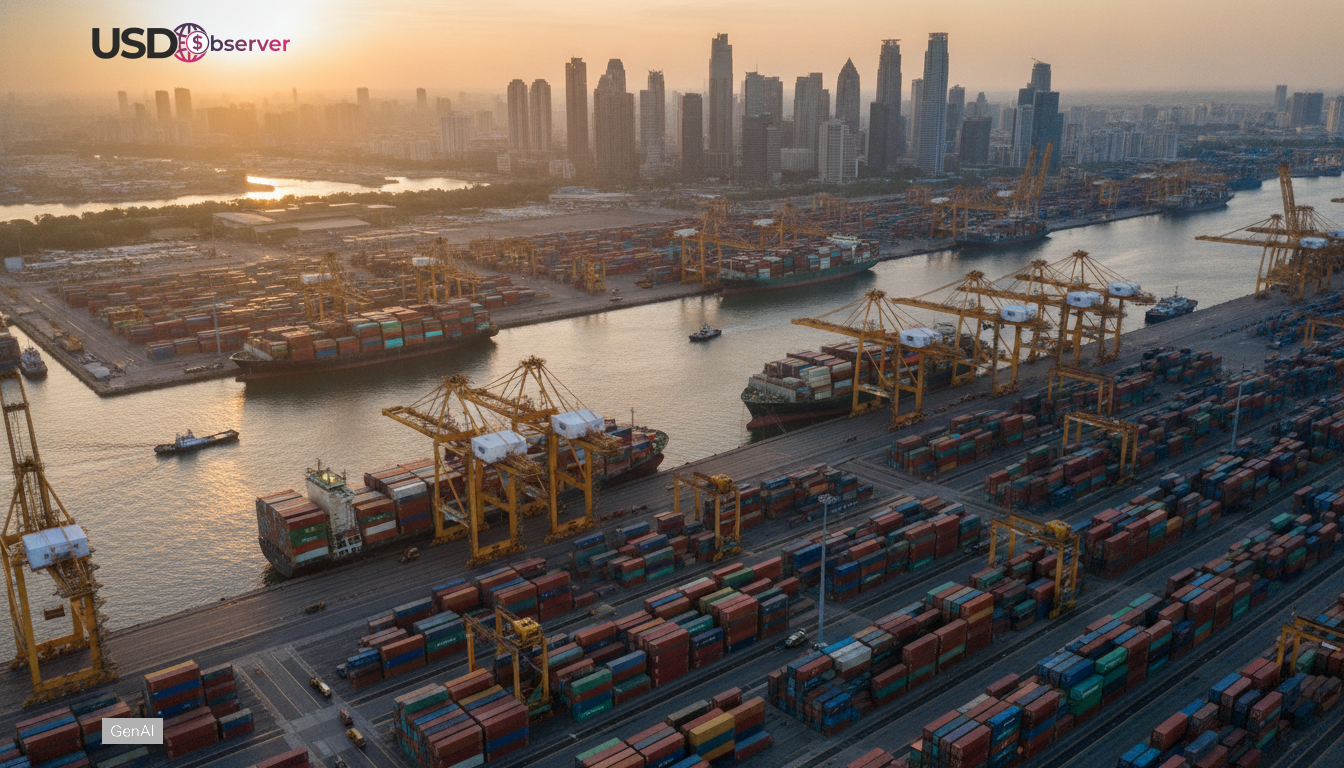
Unlike past cycles, the current softening in global growth is not accompanied by widespread instability. Supply chains are adjusting, inflation has eased from earlier peaks, and financial systems remain largely functional. However, growth engines are losing momentum, particularly in regions with limited fiscal space.
Emerging economies face a delicate balance between supporting domestic demand and managing external financing pressures. Developed economies outside the United States are constrained by aging demographics and policy trade offs. These factors contribute to slower expansion, but not collapse.
In this environment, capital does not flee risk entirely. Instead, it reallocates toward stability. The dollar becomes a default destination, not because alternatives are failing, but because uncertainty has increased.
Dollar dominance anchored in liquidity and trust
The persistence of dollar dominance in a slowing global economy underscores a critical shift in how currency strength is defined. Dollar demand is no longer closely tied to U.S. growth outperformance. Instead, it is anchored in liquidity availability, institutional trust, and the capacity to absorb large scale capital movements.
Global investors value the predictability of U.S. markets during periods of transition. The ability to enter and exit positions efficiently matters more than short term returns. This reinforces a cycle where the dollar strengthens during phases of adjustment rather than expansion.
Importantly, this dominance does not require aggressive policy action. It is sustained through existing financial architecture and network effects that are difficult to replicate elsewhere.
Implications for global allocation strategies
For portfolio managers and policymakers, the re centralization of capital flows presents both challenges and constraints. Countries seeking to attract investment must now compete on stability and transparency, not just growth potential. At the same time, reliance on external financing becomes more sensitive to dollar conditions.
This dynamic limits the effectiveness of traditional diversification strategies. When global growth slows uniformly, capital gravitates toward the most liquid core rather than rotating between regions. As a result, the dollar’s influence extends beyond trade and reserves into broader asset allocation decisions.
Conclusion
The current global cycle is defined by moderation in growth and consolidation in capital flows. While economic momentum softens across regions, the dollar’s dominance remains intact, supported by liquidity depth and institutional confidence. This divergence highlights a structural reality of the modern global economy. Capital flows respond less to growth differentials and more to system reliability. As long as uncertainty persists, the dollar will continue to sit at the center of global financial allocation.