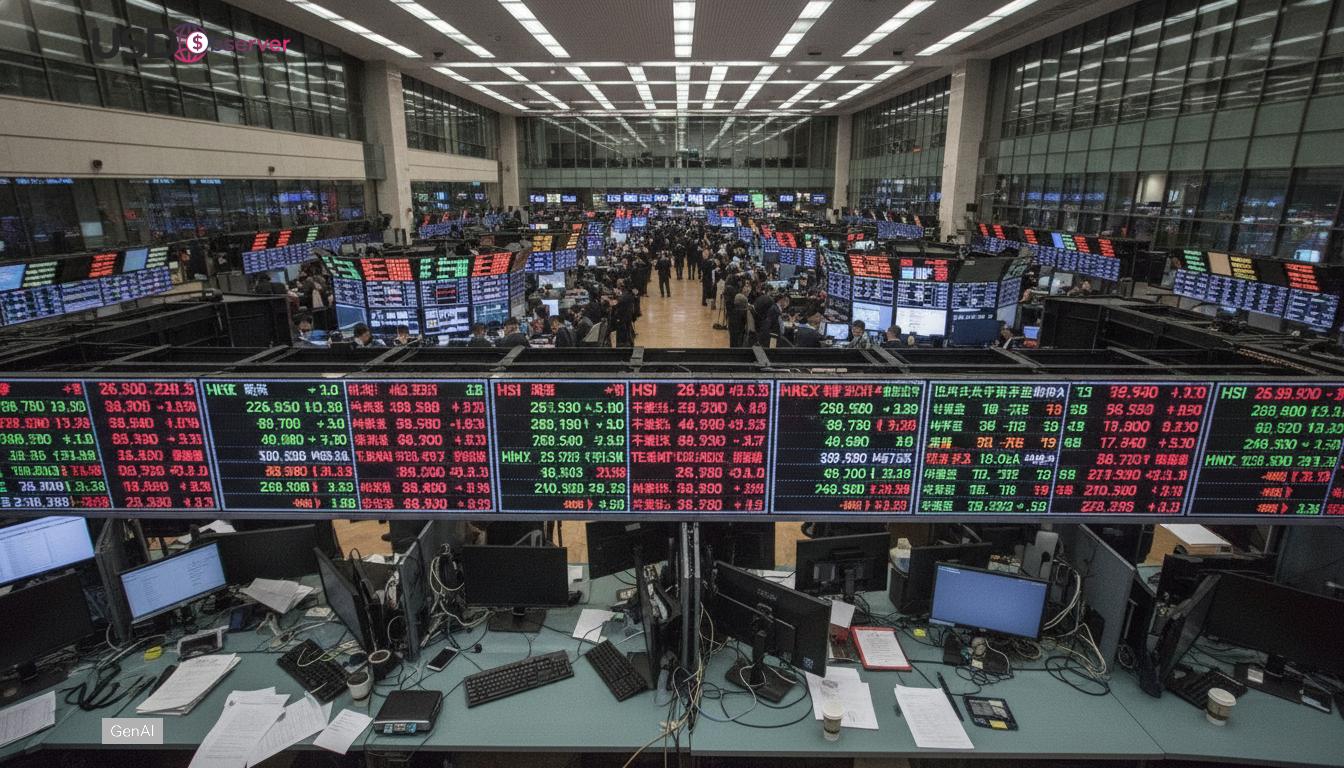
Economic cycles have long trained markets to associate volatility with recession risk. Sharp swings in asset prices, tightening financial conditions, and rapid narrative shifts were usually warnings that growth was about to break. In 2026, that link has weakened. Volatility is elevated, markets remain reactive, yet recession signals remain muted.
This coexistence of volatility and ongoing expansion reflects a structural shift in how the global economy functions. Macro instability no longer requires economic contraction. Instead, it emerges from tighter constraints, policy friction, and thinner buffers that amplify small changes into large market moves.
Volatility Is Being Driven by Constraints Not Collapse
The most important change is that volatility is now generated by constraints rather than breakdowns. Capacity limits, higher rates, fiscal pressure, and balance sheet sensitivity all create friction in the system. When growth operates close to these limits, even modest adjustments can produce outsized reactions.
Markets respond to this friction continuously. Asset prices adjust to changing assumptions about rates, policy endurance, and funding conditions without waiting for growth to turn negative. Volatility becomes a feature of expansion rather than a prelude to contraction.
This is why markets can swing sharply on data that would have been absorbed quietly in earlier cycles. The system has less slack, so price discovery is more sensitive.
Policy Uncertainty Sustains Market Instability
Another contributor to volatility without recession is policy uncertainty. Central banks are cautious, fiscal authorities face constraints, and governments balance competing priorities. This creates a policy environment where clarity is limited even when growth is steady.
Markets react to shifting guidance, evolving frameworks, and conditional commitments. The absence of clear policy direction sustains volatility because expectations must be constantly updated. Stability in outcomes does not translate into stability in pricing.
In 2026, uncertainty about how long current policies will persist matters more than the policies themselves. That uncertainty fuels market movement without requiring economic stress.
Financial Conditions Adjust in Steps Not Trends
Financial conditions no longer ease or tighten smoothly. They adjust in steps as risk tolerance, liquidity, and funding costs recalibrate. These step changes generate volatility even when growth data remains supportive.
Credit availability can tighten in specific segments, liquidity can thin in certain markets, and risk premiums can widen selectively. These adjustments do not imply recession, but they do force repricing across assets.
Markets that expect a linear relationship between growth and conditions struggle in this environment. Volatility reflects adjustment rather than deterioration.
Cross Asset Signals Are Less Aligned
Another feature of the new volatility regime is weaker cross asset alignment. Equities, bonds, currencies, and commodities no longer move in predictable patterns tied to growth cycles. Each asset class responds to different constraints and incentives.
This misalignment increases volatility because signals conflict. Positive economic data may support equities while pressuring bonds. Stable growth can strengthen some currencies while weakening others. Markets oscillate as participants reconcile these competing signals.
The lack of a single dominant narrative keeps volatility elevated even in the absence of recession risk.
Structural Changes Have Raised the Volatility Floor
Several structural factors have raised the baseline level of volatility. Higher interest rates increase sensitivity to data. Elevated debt levels amplify the impact of funding costs. Geopolitical and policy considerations introduce persistent uncertainty.
Together, these factors mean that markets react more to smaller changes. Volatility does not require bad news. It emerges from continuous reassessment in a constrained environment.
This higher volatility floor represents a shift rather than a phase. It reflects how the global economy now operates.
What This Means for Markets in 2026
For investors, the key implication is that volatility should not be treated as a recession signal by default. In the current cycle, markets can remain volatile while growth persists. Risk management must adapt to this reality.
Strategies built on the assumption that volatility precedes contraction may misfire. Instead, success depends on understanding which constraints are binding and how markets reprice around them. Volatility becomes a condition to manage rather than a warning to exit.
Recognizing this new normal helps explain why markets feel unstable even when the economy does not.
Conclusion
Macro volatility in 2026 no longer requires recession. It is driven by constraints, policy uncertainty, and structural shifts that amplify small changes into large market moves. Understanding volatility as a feature of expansion rather than a signal of collapse is essential for navigating today’s global economy.