Economic data entering 2026 continues to point toward resilient growth across major regions. Output is expanding, labor markets remain relatively firm, and recession fears have eased compared with earlier expectations. On the surface, this looks like a constructive backdrop for markets, suggesting stability rather than disruption.
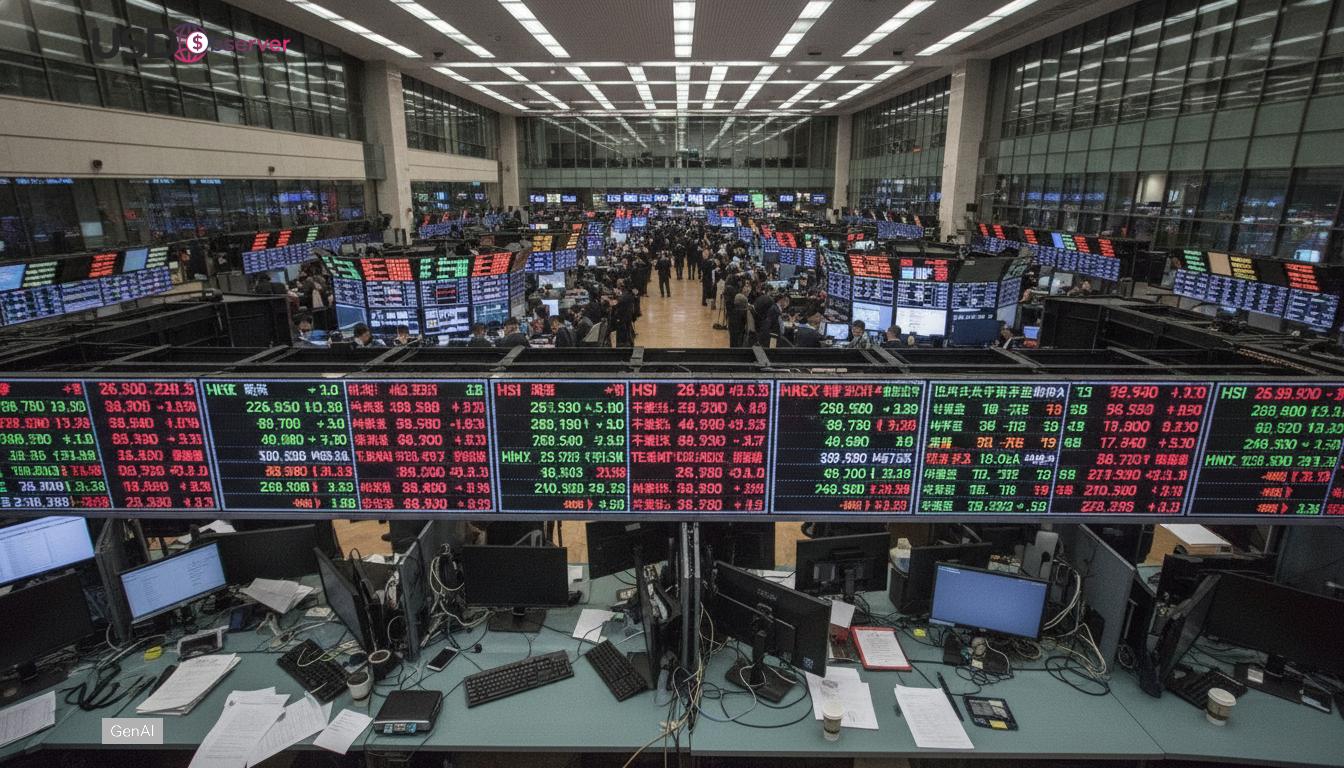
Yet market stress continues to surface even alongside resilient growth. Asset prices show intermittent volatility, financial conditions remain tight, and capital allocation is increasingly cautious. This apparent contradiction highlights a key feature of the current cycle. Growth resilience does not automatically translate into market comfort, especially when that growth interacts with tight constraints and shifting risk perceptions.
Resilient Growth Can Expose Structural Weaknesses
The most important reason resilient growth can produce stress is that it exposes structural limits rather than masking them. When growth persists in an environment of tight capacity, elevated rates, and constrained balance sheets, pressure builds in specific parts of the system.
Firms face higher financing costs while still needing to invest and hire. Households encounter rising debt servicing burdens even as employment holds up. Governments must manage fiscal demands without the benefit of low borrowing costs. Growth continues, but it does so under strain, revealing weaknesses that were less visible during slower periods.
Markets respond to these pressures by repricing risk, even if headline growth remains positive.
Financial Conditions Do Not Automatically Ease With Growth
Another source of stress is the disconnect between growth and financial conditions. In previous cycles, resilient growth often coincided with easing credit and abundant liquidity. In 2026, financial conditions remain restrictive despite steady activity.
Banks and lenders are selective, credit spreads stay elevated, and funding costs remain high relative to past expansions. Growth does not loosen these constraints because policy settings remain cautious and balance sheets are still adjusting to higher rates.
This means growth must operate within tight financial boundaries. Markets sense this tension and price assets accordingly, producing stress even without economic contraction.
Resilient Growth Raises the Bar for Policy Relief
Resilient growth also delays policy relief. When economies continue to expand, central banks have less incentive to ease aggressively. Policymakers prioritize inflation control and credibility, keeping rates higher for longer.
This creates stress for markets that expect growth to bring relief. Instead of lower rates and easier liquidity, growth prolongs restrictive conditions. Asset prices must adjust to a world where positive data does not translate into immediate policy support.
The result is frustration in markets that are conditioned to associate growth with accommodation. That frustration shows up as volatility and repricing.
Sectoral Imbalances Create Localized Stress
Resilient growth is rarely uniform. Some sectors and regions perform well, while others lag. In 2026, services often outperform manufacturing, and domestically oriented activity holds up better than trade sensitive sectors.
These imbalances create localized stress. Firms in weaker sectors face margin pressure and funding challenges even as the broader economy grows. Investors differentiate more sharply between winners and losers, increasing dispersion across assets.
This dispersion can feel like stress even though aggregate growth remains intact. Markets become more selective, and broad based rallies become harder to sustain.
Growth Sustains Demand for Capital in a Tight System
Another reason resilient growth produces stress is that it sustains demand for capital when supply is constrained. Businesses continue to seek financing for investment, governments roll over large debt stocks, and households maintain borrowing needs.
In a system with limited balance sheet capacity, this competition for capital raises costs and tightens conditions. Growth keeps pressure on funding markets rather than relieving it. Markets respond by demanding higher risk premiums and repricing assets to reflect scarcity.
Stress emerges not because growth is weak, but because it persists in an environment with limited slack.
What This Means for Markets in 2026
For market participants, the key lesson is that resilient growth is not synonymous with low risk. In the current cycle, growth can coexist with tight financial conditions, delayed policy easing, and structural constraints. These factors combine to create stress even as data remains supportive.
Investors who rely solely on growth indicators may underestimate risk. A more complete assessment considers how growth interacts with rates, liquidity, and balance sheet capacity. Stress arises when these elements are misaligned.
Recognizing this dynamic helps explain why markets remain cautious and reactive despite positive economic signals.
Conclusion
Resilient growth in 2026 does not guarantee market calm. Instead, it can intensify stress by exposing structural constraints, sustaining tight financial conditions, and delaying policy relief. Understanding how growth interacts with limited slack and elevated rates is essential for interpreting market behavior in a cycle where strength and stress coexist.