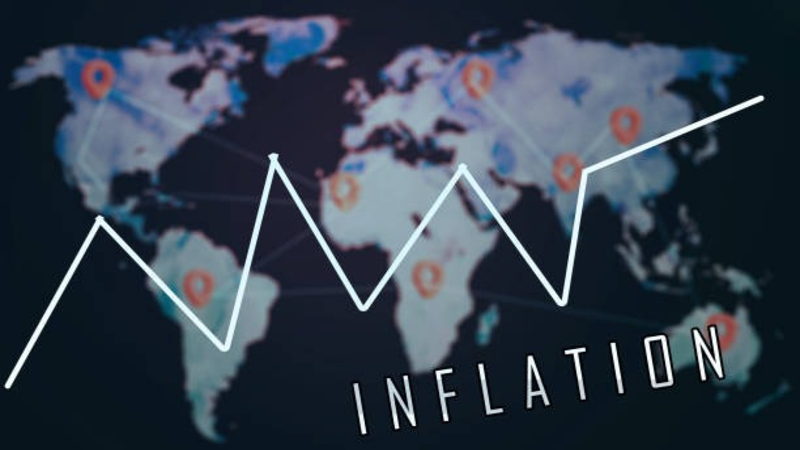
Global inflation is slowing, but it is not slowing evenly. As 2026 begins, disinflation across major economies is unfolding at different speeds, driven by local labor markets, energy exposure, and policy choices. This uneven process matters deeply for currency markets because the U.S. dollar responds to relative conditions rather than global averages.
Many investors assume that falling global inflation automatically weakens the dollar by encouraging rate cuts and risk taking. In practice, disinflation can either support or hurt USD depending on where it occurs, how quickly it progresses, and how policymakers respond. Mapping these differences is essential for understanding dollar behavior in a transitioning macro environment.
Why Relative Disinflation Matters More Than Global Averages
Currency markets are comparative by design. What matters is not whether inflation is falling everywhere, but where it is falling faster or slower. If inflation decelerates more rapidly outside the United States, real rate differentials can shift in favor of the dollar even if U.S. inflation is also easing.
In this scenario, the dollar benefits from relative stability. Lower inflation abroad often forces earlier or deeper policy easing, narrowing yield support for other currencies. As a result, the dollar can remain firm or strengthen despite a global disinflationary backdrop.
When Disinflation Supports the Dollar
Disinflation helps the dollar when it reduces inflation risk without undermining growth or confidence in U.S. assets. If U.S. inflation cools gradually while remaining higher than in peer economies, real yields can stay comparatively attractive.
This dynamic is especially powerful when other economies face sharper disinflation driven by weak demand. In those cases, falling prices signal economic fragility rather than efficiency gains. Capital tends to favor economies where inflation is easing for the right reasons, supporting the dollar through relative growth and policy credibility.
When Disinflation Works Against USD
Disinflation hurts the dollar when it accelerates domestically while remaining sticky elsewhere. If U.S. inflation falls quickly due to demand slowdown or labor market weakness, expectations for aggressive easing increase. This can weigh on the dollar, particularly if other regions maintain higher inflation and tighter policy stances.
In such cases, disinflation signals weakening fundamentals rather than improved efficiency. Markets respond by rotating capital toward economies with stronger nominal growth or higher yields, reducing dollar demand.
Services Inflation Is the Key Divider
One of the most important differences across economies is the behavior of services inflation. Goods inflation has eased broadly, but services inflation remains persistent in some regions due to wages and structural costs.
Where services inflation remains elevated, central banks have less room to ease. This keeps yields higher and currencies more resilient. Where services inflation cools faster, policy flexibility increases, which can weaken local currencies relative to the dollar.
Energy and Policy Structure Shape Outcomes
Energy exposure continues to influence inflation paths. Economies heavily reliant on imported energy see inflation fall faster when prices stabilize, but they also remain vulnerable to renewed shocks. This volatility affects currency confidence.
Policy structure matters as well. Central banks with strong credibility can manage disinflation without destabilizing expectations. Where credibility is weaker, falling inflation can quickly turn into deflation fears, undermining currency stability and indirectly supporting the dollar.
Why the USD Responds Nonlinearly
The dollar does not respond to disinflation in a linear way. It reacts to how disinflation changes relative policy paths, growth expectations, and risk sentiment. This explains why the dollar can strengthen during global disinflation in some periods and weaken in others.
In 2026, this nonlinearity is likely to persist. Markets will continuously reassess which regions are benefiting from disinflation and which are being constrained by it.
Implications for FX Strategy in 2026
Understanding where disinflation helps or hurts the dollar allows for more precise positioning. Rather than betting on a single USD direction, traders benefit from identifying relative winners and losers within the disinflation landscape.
This environment favors selective FX strategies based on policy divergence, real rate differentials, and inflation composition rather than broad dollar views.
Conclusion
Global disinflation is reshaping currency markets in uneven ways. In 2026, falling inflation can support the U.S. dollar when it weakens competitors more than it weakens the U.S. economy, and hurt it when domestic disinflation signals growth risk. Mapping these differences is essential for understanding the dollar’s next phase.