China’s growth outlook entering 2026 is often described as better than feared rather than outright strong. Activity data has stabilized, downside risks appear contained, and policymakers have avoided sharp contraction. For global markets, this has reduced tail risk and improved sentiment, particularly across Asia and commodity linked economies.
Yet this stabilization carries a less intuitive consequence. Even when China avoids a hard landing, its recovery can tighten global dollar liquidity rather than loosen it. The reason lies in how capital flows, trade financing, and risk allocation respond to changes in China’s growth trajectory. Understanding this spillover is essential for interpreting currency and funding conditions in 2026.
Why Better Than Feared Growth Can Still Tighten Liquidity
Global dollar liquidity is shaped not just by U.S. monetary policy, but by how dollars circulate through trade and capital markets. When China’s economy stabilizes, demand for imports, raw materials, and intermediate goods improves. This increases the need for dollar denominated trade financing, absorbing liquidity that might otherwise flow into financial assets.
At the same time, stabilization reduces expectations of aggressive policy easing. Markets begin to price less support from Chinese authorities, which shifts risk appetite and funding behavior. The combination of higher trade related dollar demand and reduced policy backstops can quietly tighten global liquidity even without visible stress.
Trade Financing and Dollar Demand
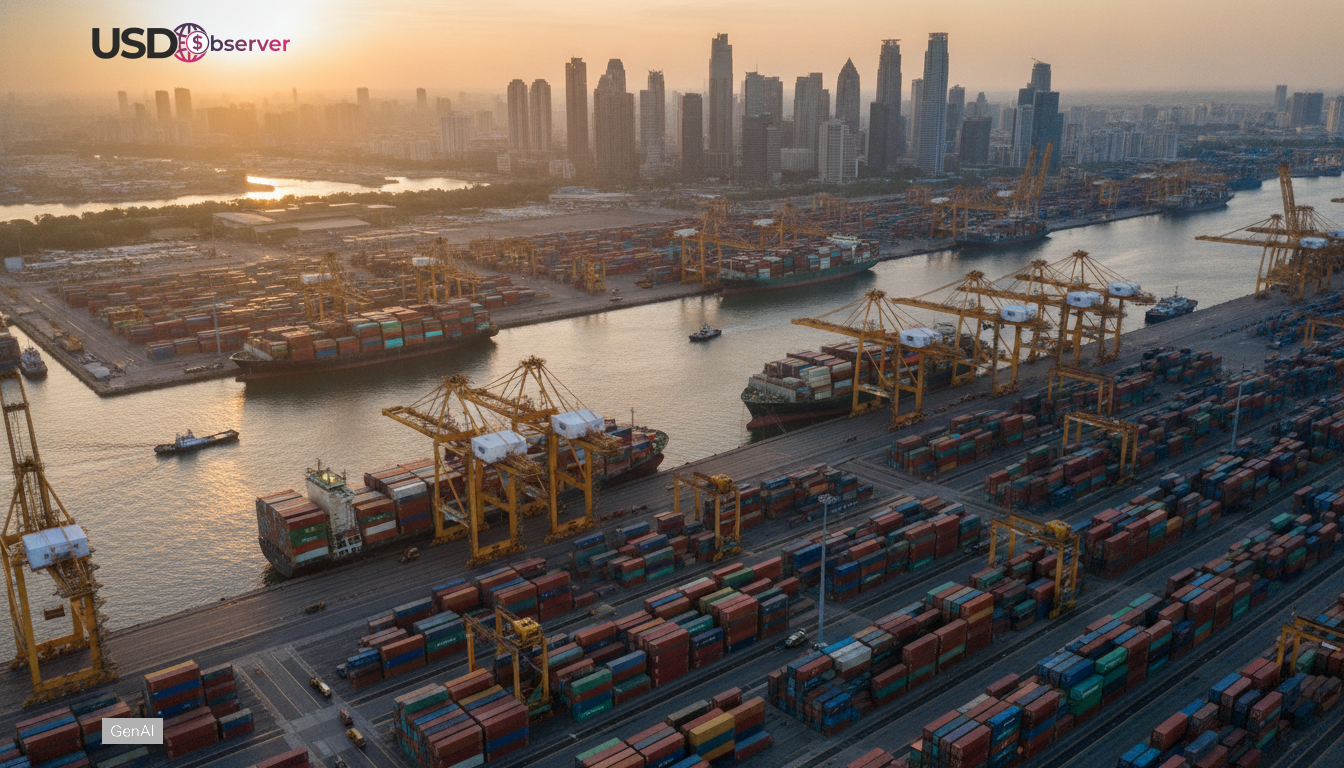
China remains one of the world’s largest users of dollar based trade settlement. As export and import activity picks up, the need for working capital financing rises. Banks and corporates draw on dollar lines to fund inventories and shipments, increasing transactional dollar demand.
This process does not always show up in headline FX markets immediately. Instead, it surfaces through tighter offshore funding conditions and higher demand for short term dollar instruments. For emerging markets and trade dependent economies, this can feel like a gradual squeeze rather than a sudden shock.
Capital Flows Rebalance Away From Safety
When China’s outlook improves from very weak to merely stable, global investors often rotate away from extreme defensive positioning. Capital flows return selectively to Asian equities, credit, and commodities. While this supports risk assets, it also reduces excess dollar holdings built up during periods of stress.
As these dollars are redeployed into real economy activity and regional assets, the pool of readily available dollar liquidity shrinks. This is particularly relevant for economies that rely on portfolio inflows to finance external deficits. Liquidity tightens even though sentiment appears constructive.
The Role of Policy Expectations
Markets often underestimate how expectations of policy support influence liquidity. When growth is deteriorating, investors expect aggressive stimulus, liquidity injections, and credit expansion. When growth stabilizes, those expectations fade.
In China’s case, better than feared data reduces pressure for large scale easing. This limits the flow of excess liquidity into global markets. Even without tightening, the absence of further easing can have a tightening effect relative to expectations.
Spillovers Into Emerging Markets
Emerging markets feel this dynamic first. As dollar liquidity becomes more transactional and less abundant, financing conditions become more selective. Currencies with weak external balances or high refinancing needs face pressure, even as global growth headlines appear benign.
This explains why some emerging market currencies struggle during periods of modest global improvement. The issue is not deteriorating growth, but competition for dollar liquidity as trade and investment activity absorbs supply.
Why This Matters for the Dollar in 2026
For the U.S. dollar, this spillover creates a counterintuitive outcome. Stabilization in China reduces extreme risk aversion, but it can still support the dollar by tightening offshore liquidity. The dollar does not need aggressive U.S. growth or higher rates to benefit from this dynamic.
Instead, it gains from being the medium through which global activity is financed. When China’s economy operates more normally, the dollar’s role as the world’s settlement currency becomes more visible.
Using a China Spillover Monitor
A practical spillover monitor focuses on trade volumes, offshore funding costs, and capital flow composition rather than headline GDP alone. Tracking changes in trade financing demand, regional liquidity indicators, and emerging market funding stress provides early signals of tightening conditions.
This approach avoids misinterpreting stabilization as uniform easing. It recognizes that growth normalization can reallocate liquidity in ways that create new pressures.
Conclusion
China’s better than feared growth outlook does not guarantee easier global financial conditions. In 2026, stabilization can tighten dollar liquidity by increasing trade financing demand and reducing expectations of policy support. Understanding this spillover helps explain why funding conditions can tighten even when global growth risks appear to be receding.