Global growth forecasts heading into 2026 point to a slower expansion than markets were accustomed to earlier in the cycle. While outright recession risks remain contained, the pace of global activity is moderating across both advanced and emerging economies. This shift has important implications for trade dynamics and currency demand, particularly for the US dollar.
Slower growth does not reduce trade flows evenly. Instead, it reshapes who trades, how contracts are structured, and which currencies dominate settlement. As global expansion cools, USD trade flows are being reinforced through changes in invoicing, financing, and risk management behavior.
How Slower Growth Changes Global Trade Patterns
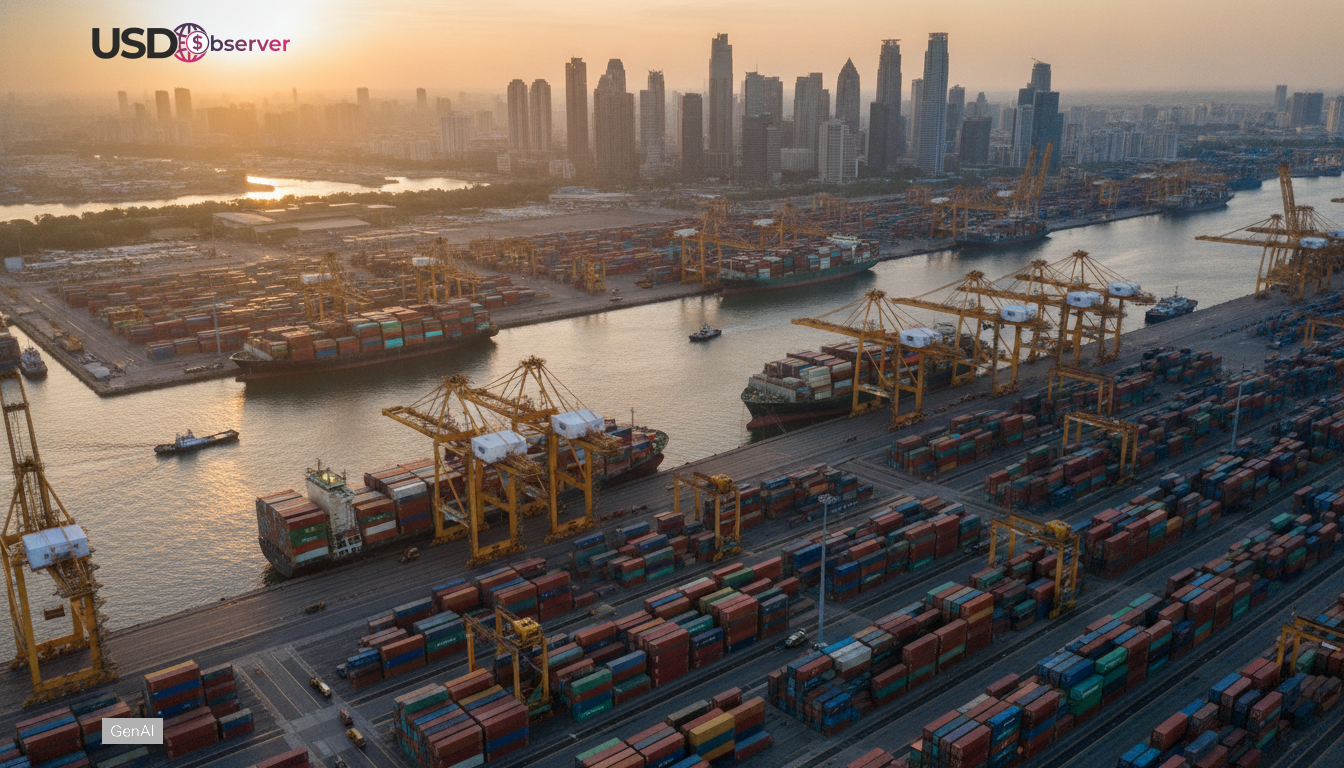
When growth slows, firms become more cautious about inventory, investment, and cross border exposure. Trade volumes may stabilize or decline modestly, but the structure of trade becomes more conservative. Companies prioritize reliability and cost control over expansion.
This environment favors established trade currencies. Contracts are increasingly written in currencies that minimize volatility and legal uncertainty. The dollar benefits from this preference, as it remains the most widely accepted settlement currency.
As a result, even with slower growth, USD usage in trade can increase rather than decline.
Why USD Invoicing Gains During Slowdowns
During periods of slower expansion, counterparties place greater emphasis on predictability. Using the dollar reduces currency risk for both exporters and importers, especially when local currencies face pressure.
Dollar invoicing also simplifies financing. Trade credit, letters of credit, and working capital facilities are often structured in USD, making it the default choice when conditions tighten. This reinforces dollar demand even as trade volumes soften.
The growth warning therefore translates into stronger structural support for USD trade usage.
Financing and Insurance Reinforce Dollar Flows
Trade finance and insurance play a larger role when growth slows. Lenders and insurers become more selective, favoring standardized contracts and currencies with deep liquidity.
Because many trade finance instruments are dollar denominated, slower growth increases reliance on USD channels. This affects not only trade settlement but also funding needs across supply chains.
These mechanisms quietly reinforce dollar flows without showing up immediately in headline trade data.
Implications for Global Currency Dynamics
As trade structures become more conservative, currencies tied closely to growth cycles may face pressure. Meanwhile, the dollar benefits from its role as a transactional anchor.
This does not imply broad dollar strength across all dimensions. Instead, it highlights how USD demand can remain firm through functional usage rather than speculative flows.
Understanding this distinction is key for interpreting currency behavior during periods of slower global expansion.
Conclusion
Slower global growth reshapes trade behavior in ways that reinforce the dollar’s role in invoicing, financing, and risk management. Even as expansion cools, USD trade flows remain resilient due to their reliability and liquidity. Heading into 2026, this structural support continues to underpin dollar demand in the global economy.