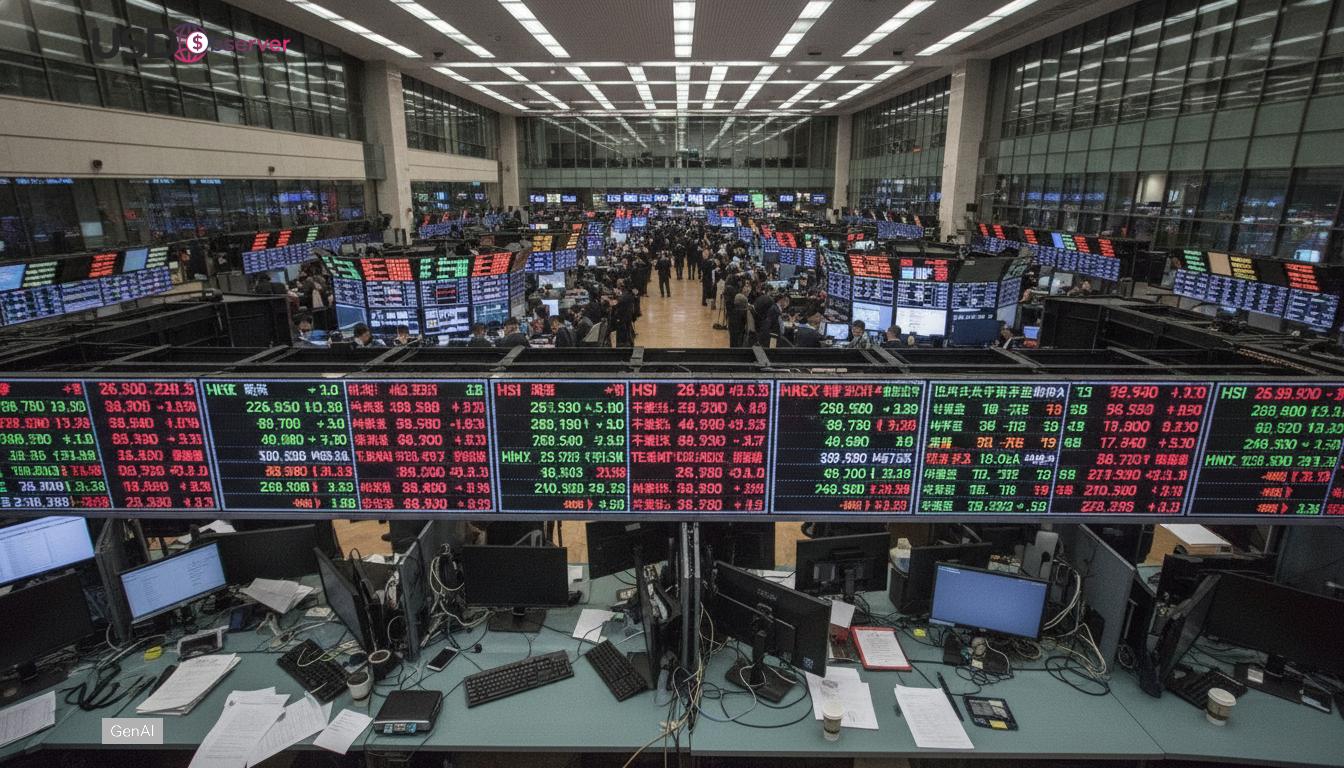
Asian currency markets moved through 2025 with uneven momentum, reflecting differing economic conditions and policy choices across the region. While some currencies benefited from improved trade flows and capital inflows, others struggled to gain traction despite a softer dollar environment. This divergence highlighted that for many Asian economies, currency stability mattered more than outright strength.
Rather than chasing appreciation, policymakers and investors prioritized control and predictability. The Asia FX momentum check shows that currencies performed best where volatility was contained and policy signals remained consistent, even if gains against the dollar were limited.
Why Stability Matters More Than Appreciation
For many Asian economies, excessive currency strength can be as problematic as weakness. Strong appreciation can hurt export competitiveness, disrupt supply chains, and complicate domestic policy objectives. As a result, authorities often favor managed stability over directional moves.
In 2025, this approach proved effective. Currencies that avoided sharp swings attracted steadier investment flows and reduced hedging costs for corporates. Stability supported trade planning and preserved confidence without introducing new risks.
This preference reflects a broader shift toward risk management rather than performance chasing.
Diverging Policy Approaches Across Asia
Asian central banks entered 2025 with varying policy constraints. Some faced lingering inflation pressures, while others dealt with slower growth or capital flow sensitivity. These differences shaped FX outcomes.
Markets rewarded clarity. Where policy frameworks were well communicated and intervention strategies predictable, currencies held momentum even without strong appreciation. In contrast, uncertainty around policy direction increased volatility and discouraged inflows.
The result was a region where FX performance depended more on governance than macro headlines.
Capital Flows Favor Predictability
Capital flows into Asia remained selective throughout the year. Investors favored markets offering transparent regulation, stable external balances, and credible institutions. Yield alone was not sufficient to attract sustained interest.
This selectivity reinforced the value of currency stability. Predictable FX behavior reduced risk premiums and supported longer term investment decisions. Markets with frequent or abrupt currency moves faced higher funding costs.
As a result, stability became a competitive advantage rather than a constraint.
What the Momentum Check Signals for 2026
Looking ahead, Asia FX momentum is likely to remain uneven. Economies that maintain disciplined policy and stable FX management are better positioned to navigate global uncertainty. Those reliant on rapid appreciation or external financing remain more vulnerable.
For investors, this suggests focusing on relative stability rather than directional bets. Monitoring policy consistency and balance of payments dynamics will be key.
The momentum check reinforces the idea that currency success is increasingly about control rather than strength.
Conclusion
Asia’s FX performance in 2025 showed that stability often matters more than appreciation. Markets rewarded currencies backed by predictable policy and controlled volatility rather than aggressive gains. Heading into 2026, stability remains a critical anchor for Asian FX amid uneven global conditions.