Trade policy rarely moves currency markets in obvious ways. In 2025, tariff announcements and trade restrictions did not trigger dramatic FX reactions. Yet beneath the surface, trade friction quietly influenced how investors priced risk and safety across currencies, particularly the US dollar.
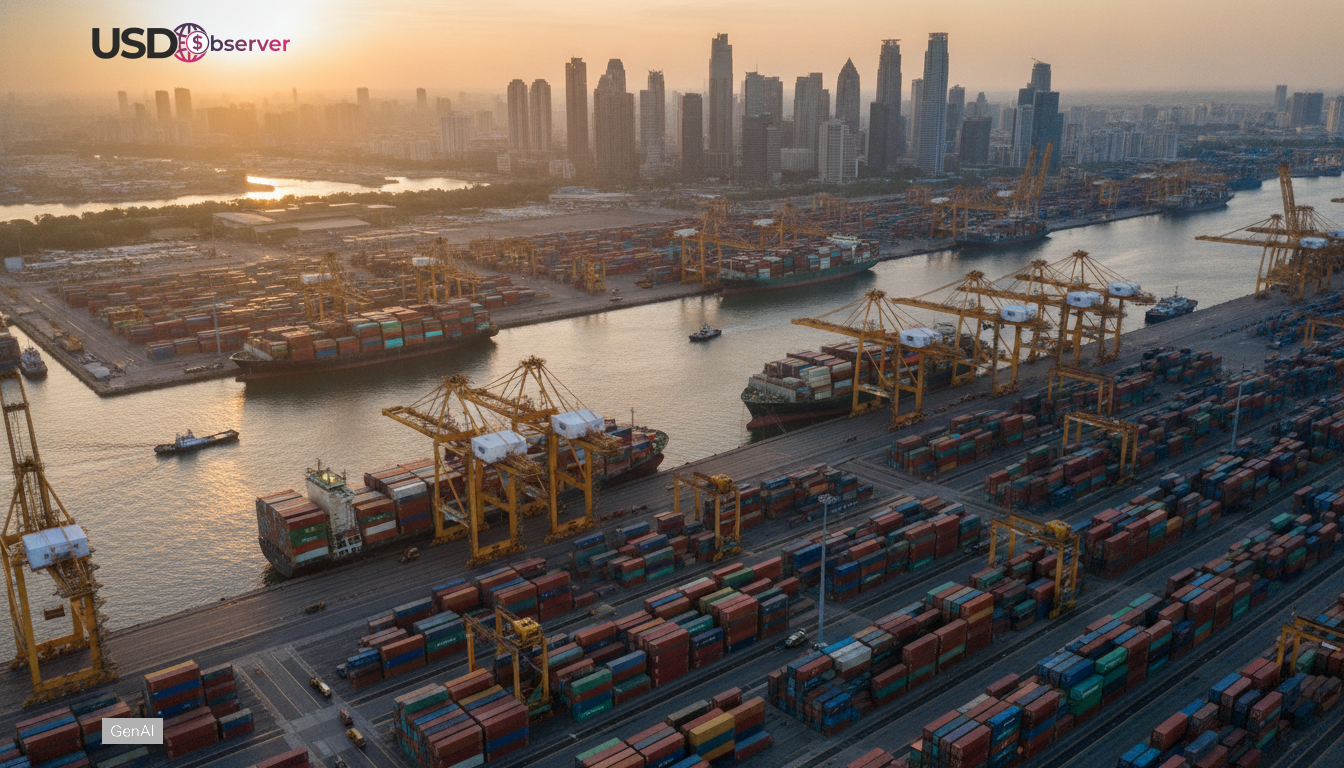
Rather than driving sharp spot moves, tariffs acted as a multiplier on uncertainty. They reshaped supply chains, altered growth expectations, and changed how capital assessed risk. For the dollar, this translated into a subtle repricing of its safety premium rather than an immediate directional surge.
How Trade Friction Alters Currency Risk Pricing
Tariffs affect currencies indirectly by changing the distribution of economic risk. Higher trade barriers raise costs, disrupt production, and reduce visibility around future growth. This uncertainty tends to favor currencies associated with stability and liquidity.
The dollar benefits from this dynamic even when the US is directly involved in trade disputes. Investors often prioritize liquidity and institutional strength over trade exposure when uncertainty rises. As a result, the USD can attract defensive flows despite being part of the friction.
This mechanism helps explain why trade tensions can support the dollar without producing headline FX volatility.
The Safety Premium Works Gradually
Unlike traditional risk events, trade friction unfolds slowly. Tariffs are implemented over time, negotiated, revised, or expanded. This gradual process allows markets to adjust positioning incrementally rather than through abrupt moves.
The dollar’s safety premium therefore builds quietly. Capital shifts into USD assets through portfolio rebalancing, increased hedging, and funding preferences. These flows accumulate without necessarily pushing spot prices sharply higher.
This slow repricing can be difficult to detect, but its impact becomes clear over longer horizons.
Why Tariffs Affect Funding and Hedging Behavior
Trade friction also influences corporate behavior. Companies facing higher costs or disrupted supply chains often increase hedging to manage currency and funding risk. This raises demand for dollar denominated instruments, especially when contracts and financing are structured in USD terms.
At the same time, uncertainty around trade policy can tighten funding conditions for export oriented economies. As access to external financing becomes more sensitive, demand for stable funding currencies increases.
These channels reinforce the dollar’s role as a funding anchor even in the absence of acute market stress.
The Multiplier Effect on Global Capital Flows
Tariffs do not operate in isolation. They interact with existing growth and policy dynamics, amplifying their effects. In a world already facing slowing growth and tighter financial conditions, trade friction can magnify risk aversion.
This multiplier effect redirects capital toward perceived safe havens. The dollar, supported by deep markets and legal certainty, captures a significant share of these flows. Importantly, this does not require a crisis. Persistent friction alone can sustain the safety premium.
Understanding this interaction is essential for interpreting USD behavior in a fragmented global economy.
Conclusion
Trade friction in 2025 reshaped the dollar’s safety premium through gradual and indirect channels rather than sudden market shocks. Tariffs increased uncertainty, influenced hedging behavior, and redirected capital toward liquidity and stability. As long as trade tensions persist, the dollar’s role as a defensive anchor remains quietly reinforced.