The global debt picture at the end of 2025 reveals a clear divergence that is reshaping macro expectations. Public borrowing continues to expand across many economies, while private credit growth is cooling. This split matters because it changes who carries financial risk and how economic adjustment unfolds.
During periods of cheap money, public and private debt often rise together. In the current environment of higher financing costs, that pattern has broken. Households and firms have become more cautious, while governments have stepped in to stabilize growth, fund strategic priorities, and manage social pressures. The global debt map now reflects this imbalance.
Understanding why this divergence emerged helps clarify the risks and tradeoffs facing economies as they move into 2026.
Why Public Borrowing Continued to Rise
Public borrowing increased in 2025 not because of exuberance, but because of necessity. Governments faced slower growth, higher interest costs, and growing structural demands. Defense spending, energy security, aging populations, and infrastructure needs all required funding even as revenues came under pressure.
At the same time, withdrawing fiscal support too aggressively risked amplifying economic slowdown. Many policymakers chose gradual adjustment rather than sharp consolidation. This resulted in higher deficits and rising debt ratios, even as the pace of increase slowed compared to earlier crisis years.
Markets largely tolerated this borrowing as long as it appeared purposeful and contained. The key distinction was between financing structural needs and funding open ended consumption.
Why Private Credit Growth Slowed
Private credit responded differently to higher rates. Businesses and households faced more immediate constraints. Higher borrowing costs reduced appetite for leverage, and lenders tightened standards to manage risk.
In many economies, private credit growth slowed markedly as refinancing became more expensive and demand softened. Companies delayed expansion plans, and households became more selective about large purchases. This cooling was not disorderly, but it was broad.
The slowdown in private credit reflects adaptation rather than stress. Balance sheets were adjusted to a new cost of capital, reducing vulnerability but also dampening growth momentum.
The Shift in Risk Bearing
This divergence has shifted risk bearing toward the public sector. Governments are absorbing more of the adjustment burden while private actors retrench. In the short term, this supports stability. In the long term, it raises questions about fiscal sustainability.
When public debt rises as private debt stabilizes, the economy becomes more dependent on government balance sheets. This can be effective if managed well, but it reduces buffers against future shocks.
Markets are increasingly attentive to how governments plan to manage this tradeoff. Credible medium term frameworks help anchor confidence. Uncertainty increases sensitivity.
Regional Differences on the Debt Map
The global debt map is uneven. Advanced economies generally carry higher public debt but benefit from deep markets and reserve currency status. Emerging markets show more variation, with some maintaining discipline and others relying more heavily on public borrowing to offset weak private demand.
These differences influence capital flows and financing conditions. Countries perceived as managing debt responsibly retain access to funding even at higher costs. Others face tighter constraints and must adjust more quickly.
This divergence reinforces selectivity in global markets. Debt is not judged uniformly. Context and credibility matter more than headline ratios.
What This Means for Growth Dynamics
Rising public debt alongside cooling private credit creates a distinct growth profile. Government spending supports activity, but private investment lags. This can sustain growth in the near term while limiting long term productivity gains.
For growth to become more balanced, private confidence must recover without reigniting excessive leverage. That requires stable policy signals, predictable financing conditions, and credible fiscal paths.
Absent that, economies may experience extended periods of moderate growth supported by the public sector rather than driven by private expansion.
Implications for 2026 Policy Choices
As 2026 approaches, policymakers face a delicate balance. Continuing to rely on public borrowing risks entrenching fiscal pressure. Cutting back too quickly risks undermining fragile private demand.
Markets will watch how governments navigate this transition. Clear plans to gradually reduce deficits as conditions allow will be viewed favorably. Ambiguity will be penalized through higher risk premiums rather than immediate crises.
Private credit trends will also be closely monitored. A gradual recovery would ease pressure on public balance sheets. Continued stagnation would increase dependence on fiscal support.
What to Watch Going Forward
Key indicators include public debt trajectories, private credit growth rates, and the interaction between fiscal policy and lending conditions. These reveal whether the current divergence is narrowing or becoming entrenched.
Another signal is how shocks are absorbed. Economies where private credit remains resilient may rely less on public borrowing over time.
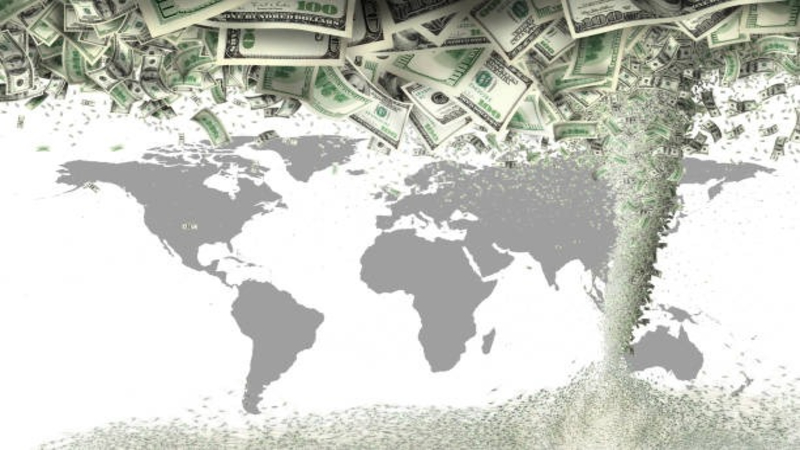
The global debt map is dynamic, but the current pattern is clear.
Conclusion
In 2025, global debt dynamics shifted as public borrowing continued to rise while private credit cooled. This divergence reflects adaptation to higher financing costs rather than instability, but it alters where risk resides in the economy. As markets move into 2026, the challenge will be rebalancing growth drivers without overstretching public balance sheets. Understanding this evolving debt map is essential for assessing fiscal resilience and long term stability.