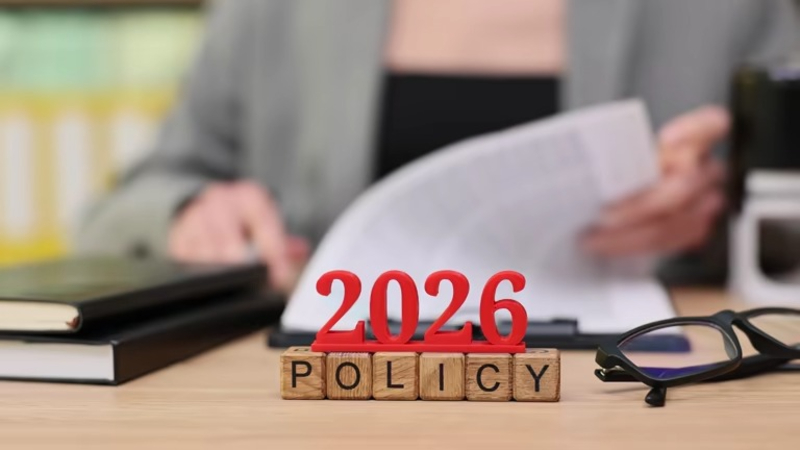
As 2025 draws to a close, global markets are already looking ahead to 2026 with a growing sense of caution. Policy uncertainty has become a defining background condition rather than a temporary disturbance. While headline volatility remains contained, the underlying risk premium tied to political and regulatory outcomes is quietly being built into prices.
This early repricing reflects a shift in how markets process uncertainty. Instead of waiting for clarity, investors are adjusting assumptions in advance. Elections, fiscal debates, trade policy, and geopolitical alignment are all feeding into expectations well before concrete decisions are made. The result is a more defensive pricing structure across asset classes.
The policy uncertainty index may not dominate daily headlines, but its influence is increasingly visible in how markets behave.
Why Policy Risk Is Being Priced Earlier Than Usual
One reason policy uncertainty is being priced early is fatigue with surprises. Over recent cycles, markets experienced abrupt policy shifts that challenged assumptions quickly. As a result, participants have become less willing to rely on baseline forecasts that assume smooth political outcomes.
In late 2025, this mindset is clear. Investors are not predicting specific policy outcomes, but they are assigning higher probabilities to disruption. This raises required returns and lowers tolerance for leverage. Risk assets remain supported, but valuations increasingly reflect buffers rather than optimism.
Early pricing also reflects the global nature of upcoming policy decisions. Fiscal sustainability, trade alignment, and regulatory frameworks are being debated simultaneously across major economies. The overlap of these issues amplifies uncertainty even if no single decision appears extreme on its own.
Fiscal and Political Signals Feeding the Risk Premium
Fiscal policy plays a central role in this repricing. High public debt levels have narrowed policy flexibility, making future decisions more consequential. Markets are sensitive to signs of delayed consolidation, expanded spending, or shifts in tax regimes, especially in large economies.
Political dynamics add another layer. Electoral cycles introduce uncertainty around policy continuity. Even without radical platforms, changes in leadership can alter priorities and implementation timelines. Markets respond by demanding compensation for the possibility of change, not its certainty.
This combination of fiscal constraint and political transition increases the baseline level of uncertainty. It does not require crisis to affect pricing. The mere presence of unresolved debates is enough to influence behavior.
How Policy Uncertainty Shows Up in Markets
Policy uncertainty rarely appears as sharp price moves. Instead, it shows up through subtle adjustments. Term premiums rise modestly. Currency volatility skews increase. Investment horizons shorten. Companies delay capital expenditure decisions without canceling them outright.
In currency markets, this often translates into preference for liquidity and flexibility. Investors favor currencies with deep markets and predictable policy frameworks. Others face gradual pressure rather than sudden selloffs. This behavior aligns with a world where uncertainty is persistent rather than episodic.
Equity markets show similar patterns. Valuations compress slightly, risk dispersion increases, and sector performance becomes more selective. These are classic signs of a risk premium being built quietly rather than priced abruptly.
Why 2026 Is Already Influencing 2025 Pricing
Markets rarely wait for calendar years to change. Expectations for 2026 are already shaping decisions because policy timelines extend beyond year end. Budget negotiations, regulatory proposals, and geopolitical alignments evolve over months, not days.
As these processes unfold, markets begin adjusting ahead of outcomes. This early movement reduces the likelihood of sudden repricing later, but it also keeps a persistent drag on risk appetite. The result is a market that looks calm on the surface but cautious underneath.
This dynamic explains why volatility can remain low even as uncertainty rises. When risk is absorbed gradually, it does not produce dramatic spikes. Instead, it reshapes the distribution of returns over time.
What to Watch as Policy Uncertainty Evolves
Key indicators to monitor include shifts in long term yields, currency option pricing, and cross border capital flows. These areas often reflect policy concerns before they appear in headline indices. Changes in corporate guidance and investment plans also provide insight into how uncertainty is influencing real economy behavior.
If clarity emerges on major policy fronts, risk premiums may compress. If debates intensify or timelines extend, uncertainty may remain elevated. Either outcome will shape asset allocation decisions well into 2026.
Understanding the difference between unresolved risk and negative outcomes is essential. Markets are pricing uncertainty itself, not necessarily deterioration.
Conclusion
The risk premium for 2026 is already being constructed through rising policy uncertainty. Markets are adjusting early, embedding caution into valuations and behavior without waiting for definitive outcomes. This gradual repricing reflects lessons learned from recent cycles and sets the tone for a more defensive and selective global market environment as the next year approaches.