Global growth has managed to stay on a steady path despite repeated trade disputes, tariff measures, and policy frictions between major economies. For years, these disruptions were treated as temporary shocks that could be absorbed or reversed. The latest global assessments suggest a different interpretation. Trade friction is no longer a short term disturbance. It is becoming a structural ceiling on how fast the global economy can grow.
This shift matters because ceilings behave differently from shocks. Shocks fade. Ceilings persist. As trade barriers, supply chain fragmentation, and policy uncertainty harden into the background of the global economy, growth potential is being capped in a way that cannot be easily offset by stimulus or financial conditions alone.
Trade Friction as a Structural Constraint on Growth
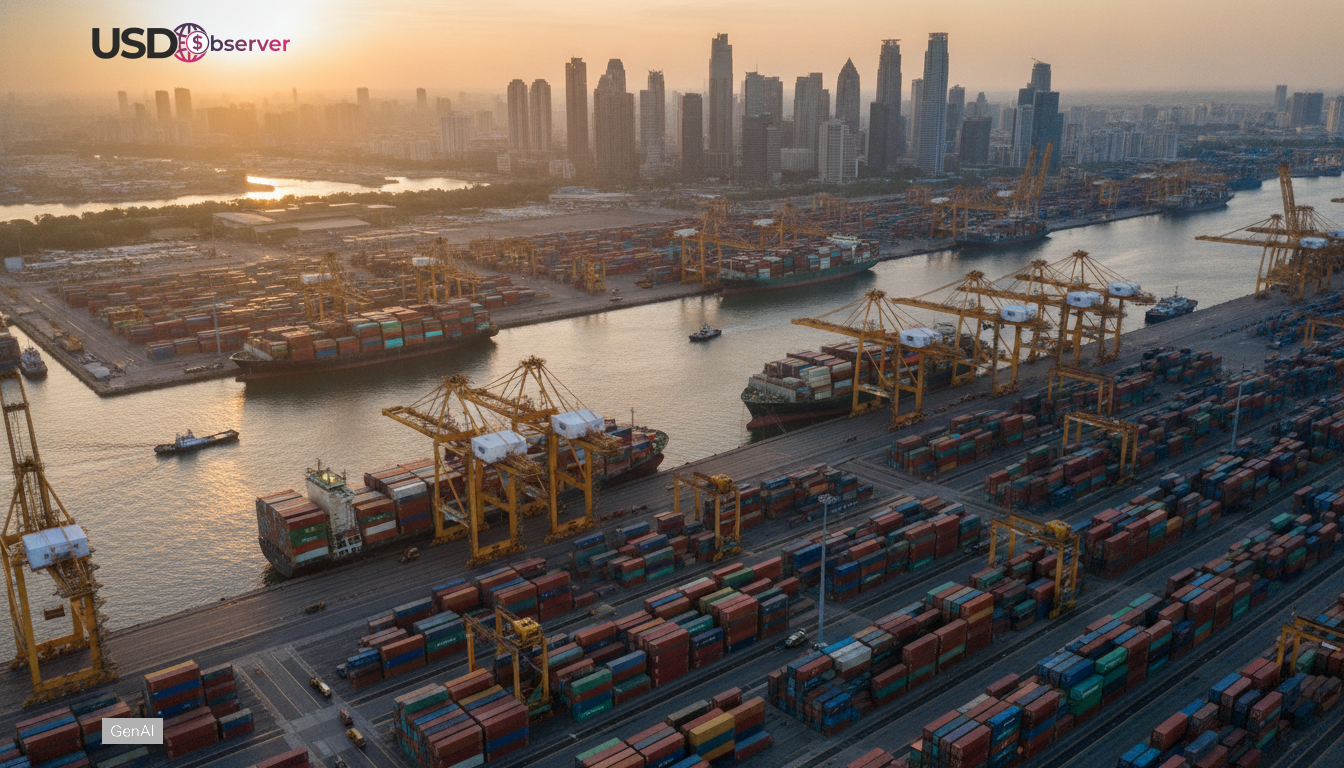
The most important signal from current global projections is that trade friction now limits expansion even when demand is supportive. Cross border trade volumes continue to grow, but at a slower and more uneven pace than in previous cycles. This reflects not just cyclical weakness, but deliberate policy choices that reshape trade relationships.
Tariffs, export controls, and localization requirements increase costs and reduce efficiency. Firms adapt by re routing supply chains, but adaptation itself is costly. Over time, these costs accumulate, lowering productivity growth and reducing the returns on investment. The result is a lower speed limit for the global economy.
Markets are beginning to internalize this reality. Growth expectations are being adjusted downward not because of imminent recession risk, but because structural headwinds are restraining upside.
Fragmentation Is Replacing Integration
One of the clearest trends is the gradual shift from integration to fragmentation. Global supply chains are becoming more regional, less optimized for cost, and more focused on resilience. While this reduces vulnerability to single point disruptions, it also sacrifices efficiency gains built over decades.
This transition affects both advanced and emerging economies. Export driven growth models face pressure, while import reliant sectors absorb higher costs. Fragmentation does not stop trade, but it changes its composition and growth rate.
For policymakers, this creates a dilemma. Strategic autonomy may enhance security, but it comes at the expense of potential output. Markets must now weigh these trade offs when assessing long term growth prospects.
Why Policy Support Cannot Fully Offset the Drag
Fiscal and monetary policies can soften the impact of trade friction, but they cannot fully neutralize it. Lower interest rates can encourage investment, and fiscal spending can support demand, but neither can restore lost efficiency from fragmented trade.
In high debt environments, the ability to deploy large scale stimulus is already constrained. This makes structural trade headwinds more consequential. When growth slows due to trade barriers, there is less policy space to compensate.
This reality helps explain why growth forecasts remain moderate even in the absence of acute stress. The ceiling imposed by trade friction limits how much upside policy can deliver.
Implications for Markets and Investment Strategy
For markets, trade friction as a structural ceiling changes how risks are priced. Volatility may remain contained, but trend growth is lower. This favors strategies focused on relative performance, sector selection, and resilience rather than broad beta exposure.
Currencies of economies deeply integrated into global trade may face headwinds if volumes stagnate. Conversely, countries that benefit from regionalization or domestic demand strength may outperform. Equity markets may reward firms that successfully navigate fragmented supply chains rather than those reliant on global scale alone.
Bond markets will reflect this environment through lower neutral growth assumptions and cautious rate expectations. Long term yields may remain anchored even as near term cycles play out.
Why This Signal Matters Looking Into 2026
As the global economy moves into 2026, the framing of trade friction matters. Treating it as temporary risks overestimating growth potential and policy effectiveness. Recognizing it as structural leads to more realistic expectations and strategies.
This does not imply stagnation. Growth can continue, but within tighter bounds. Productivity gains must come from innovation and reform rather than from expanding trade integration alone.
Markets that adapt to this ceiling rather than fight it are more likely to navigate the next phase successfully.
Conclusion
Trade friction has evolved from a temporary shock into a structural growth ceiling. As supply chain fragmentation and policy barriers persist, global growth potential is being capped in a lasting way. For markets and policymakers alike, the challenge is no longer to wait for normalization, but to operate within these new limits.