The dollar is once again at the center of global policy debates as governments and financial institutions reassess strategic currency priorities. Recent international forums and bilateral discussions have highlighted how the USD remains a core pillar of global trade, settlement, and reserve management. This renewed focus comes at a time when economic transitions, shifting interest rate paths, and geopolitical uncertainties are prompting policymakers to reexamine the foundations of global financial architecture.
Despite ongoing conversations about diversification and regional currency cooperation, the dollar continues to play a central stabilizing role. Policymakers are responding to evolving economic realities by evaluating how USD liquidity patterns and cross-border settlement flows influence domestic financial stability. These discussions underscore the continued importance of understanding the dollar’s influence within global decision making, especially as several economies face delicate policy periods in the coming months.
High-level forums reaffirm the USD as a stabilizing anchor
The most significant trend emerging in recent policy discussions is a reaffirmation of the dollar’s stabilizing role. Officials across advanced and emerging economies have highlighted the importance of reliable dollar liquidity during periods of financial uncertainty. This reflects ongoing demand for USD-denominated instruments and the currency’s deep integration into trade finance networks. As global markets prepare for policy recalibrations, the consistency of USD flows is becoming even more relevant.
Central banks participating in multilateral meetings have emphasized that stable dollar access remains essential for managing external pressures. Even regions exploring long-term diversification strategies acknowledge that near-term economic resilience depends on predictable USD funding channels. The importance of treasury markets, cross-border settlement frameworks, and international banking systems has been central in these discussions. These factors reinforce why policymakers continue to treat the dollar as a critical anchor in a fluid macro environment.
Trade and investment priorities shape policy positioning
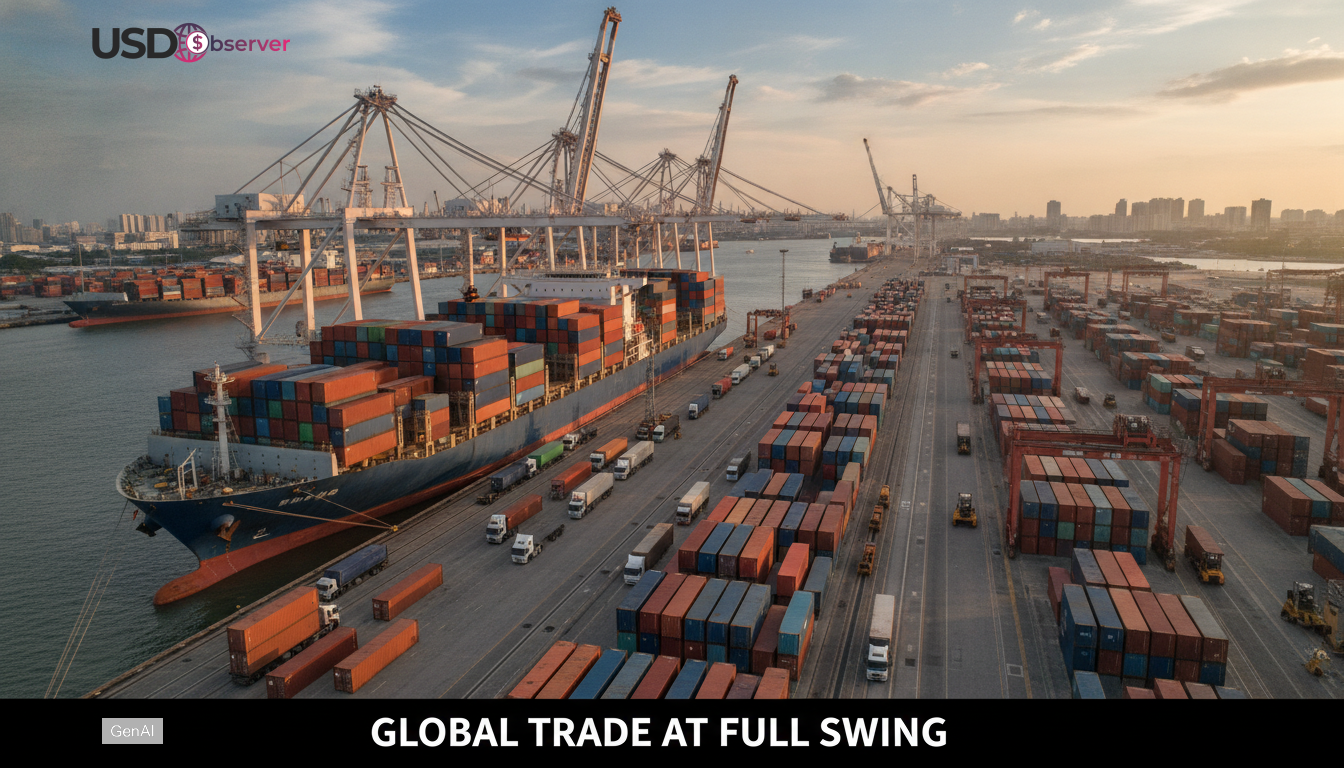
Trade ministers and economic councils are also examining how the dollar’s role influences cross-border investment decisions. Many of the latest trade agreements and financing frameworks continue to rely heavily on USD settlement due to its widespread acceptance and transparency. This structure offers businesses predictable pricing mechanisms and investors stable valuation benchmarks, which are especially valuable during periods of moderating global growth.
Investment authorities note that the dollar’s predictable behavior supports risk management strategies in both developed and emerging economies. This is particularly important for markets dependent on external financing or heavily exposed to commodity-linked income. Policymakers are analyzing how exchange rate stability affects regional competitiveness and the ability of firms to attract foreign capital. These assessments influence long-term economic planning and shape how governments approach currency policy.
Reserve management strategies align with global policy tone
Another key theme in current policy discussions is the alignment between reserve management strategies and the dollar’s stabilizing characteristics. Many reserve authorities are adopting more balanced approaches that prioritize liquidity and risk control. While interest in diversification remains present, policymakers consistently highlight that USD assets continue to offer the most reliable support during external shocks.
Strategic reserve adjustments also reflect the broader global policy tone. As major central banks implement gradual changes in their communication and rate outlooks, reserve managers are recalibrating exposures in ways that align with global transitions. This includes maintaining strong USD liquidity buffers to support exchange rate stability during periods of heightened market sensitivity.
Policy debates acknowledge long-term challenges but reinforce USD relevance
Policymakers are transparent about the long-term structural challenges that could influence the dollar’s global position. These include evolving geopolitical relationships, new digital finance infrastructures, and growing interest in alternative settlement systems. However, these developments have not displaced the dollar’s near-term strategic role. Instead, they form part of broader conversations about building a more adaptable and resilient financial system.
The ongoing debates reflect a pragmatic approach to currency planning. Even as discussions expand to include regional cooperation initiatives, policymakers continue to prioritize the immediate importance of USD-backed stability. This suggests a recognition that global financial transitions require time, coordination, and consistent policy frameworks to manage risks effectively.
Conclusion
The dollar’s strategic role is resurfacing across high-level policy discussions as global leaders confront economic uncertainty and evolving financial priorities. While diversification initiatives remain part of long-term planning, policymakers continue to view the USD as a crucial stabilizing force for trade, reserves, and cross-border financing. These conversations reinforce the currency’s enduring relevance as the global economy navigates shifting conditions.