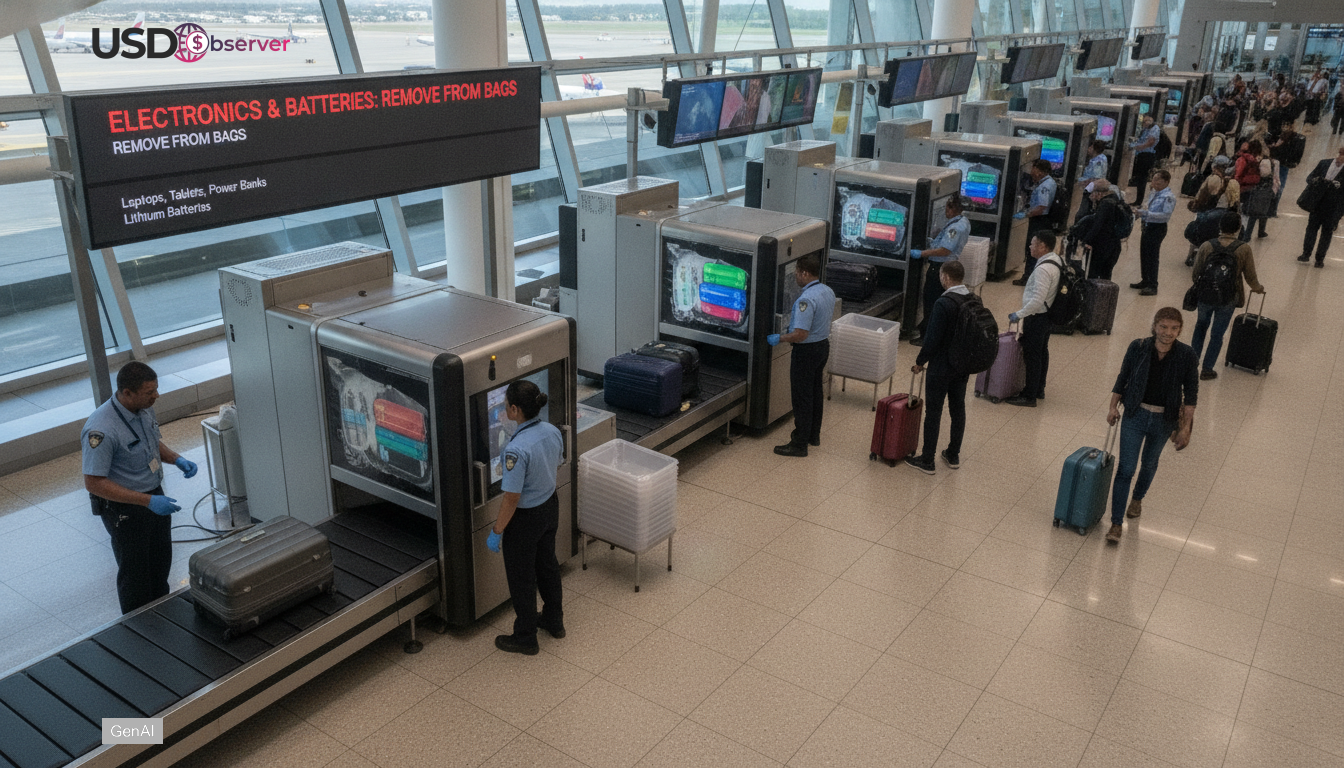
Airline Industry Raises Lithium-Ion Batteries Concerns
Airlines are encouraging suppliers and regulators to treat lithium-ion batteries as a potentially growing onboard risk as AI-enabled device use expands in cabins and cargo. With more passengers carrying power banks, laptops, and smart accessories, safety teams are prioritizing early detection and fast isolation of overheating cells. In internal briefings cited by the International Air Transport Association, operators reportedly highlighted that portable electronics can be a significant contributor to onboard smoke and odor events in the cabin environment. The operational focus is narrowing on batteries packed loosely, charged under seats, or damaged during handling, including lithium-ion batteries. Carriers are also examining whether newer on-device AI features may increase device heat output and charging frequency on some flights.
Safety Precautions for Lithium-Ion Batteries
Frontline guidance is shifting from reminders to enforcement, with gate agents and cabin crews instructed to intervene earlier when devices appear swollen, hot, or improperly stowed. Airline manuals and safety bulletins commonly referenced by the U.S. Federal Aviation Administration suggest that crew response can involve rapid assessment, cooling, and containment to reduce escalation risk, including incidents involving lithium-ion batteries. Airlines also describe lithium-ion batteries as a frequent factor in many portable-device smoke scenarios, making passenger compliance central to risk control. Some carriers are aligning messaging with broader risk governance discussions such as Crypto regulations: CFTC and SEC advance rule path to show how operational rules can change quickly when hazards scale.
Impact on Airline Safety Standards
Operators are increasing reporting attention for heat and odor complaints and tightening documentation after smoke events to improve trend analysis, according to airline safety management practices discussed in industry forums. The FAA has published incident summaries on its platforms, and those records are used by operators to compare routes, aircraft types, and response times year over year. Risk committees are also using enterprise stress-testing frameworks similar to those in USD Strength in 2026: Drivers, Risks, Forecasts to examine cascading impacts, from diversions to maintenance disruptions. The baseline aim is consistent airline safety performance as device loads rise and charging remains routine in flight, including risk controls tied to lithium-ion batteries.
Regulatory Measures in Aviation
Regulators are tightening alignment between cabin rules and cargo declarations, because mis-declared shipments can place large battery quantities into environments where crews may not respond quickly, according to dangerous goods compliance guidance used across the sector. The International Civil Aviation Organization sets global standards for dangerous goods, and national authorities translate them into enforceable requirements for airlines and shippers. Auditors are increasing checks on labeling, packaging integrity, and state-of-charge limits, areas that can materially alter ignition probability and severity, according to regulatory and industry compliance materials for lithium-ion batteries. Airlines are also benchmarking public risk communication against other compliance-heavy sectors; for example, policy coverage of enforcement timelines in CoinDesk reporting on SEC delays and market compliance is being cited internally as a reminder that supervision can change quickly.
Future of Battery Technology in Airlines
Airlines and manufacturers are asking whether next-generation chemistry can lower in-flight risk while meeting passenger expectations for high-performance devices. Battery makers are promoting improved separators, better thermal management, and more resilient packaging, and aviation stakeholders want clearer performance disclosures to support screening and handling rules. The immediate focus remains lithium-ion batteries, because they dominate consumer electronics and most portable charging accessories, but safety teams are also watching hybrids and emerging solid-state designs. Related risk planning approaches are also tracked in USD Strength Analysis: Signals, Spillovers, Outlook, and aircraft operators are pushing for standardized indicators of damage and end-of-life to help crews and passengers recognize hazards earlier. Procurement teams are also considering how AI features influence power demand, since frequent charging cycles may increase exposure time during flight operations.