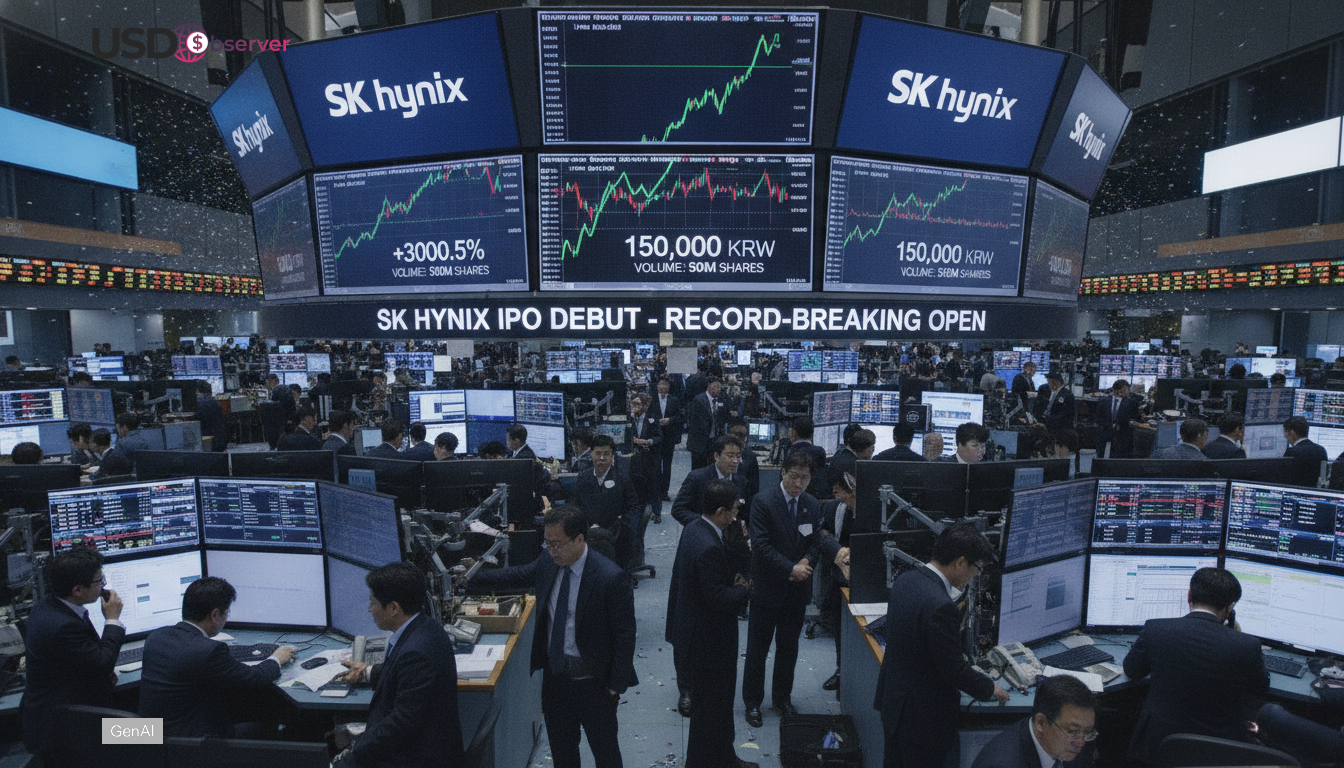
SK Hynix US Listing: $26.5bn Debut and Share Pop
The company raised $26.5bn and shares surged after the start of trading, according to available reports, putting the debut among the year’s biggest equity launches. The sk hynix us listing marked a major test of investor demand for large-scale semiconductor equity in US markets. Investors treated the deal as a read through on appetite for AI linked memory capacity, especially high bandwidth memory used in data center servers, as indicated by these reports. Bankers also framed the outcome as a gauge for how quickly new chip supply can be financed as capex cycles accelerate. The opening session reaction set a benchmark for peers and for how global funds price growth against higher rates.
Offering Structure, Allocation, and Access for Global Funds
Deal documents described a large US float designed to broaden ownership beyond regional buyers and to deepen dollar liquidity. The structure drew comparisons to an ADR style route used by other Asian issuers, while still aiming for straightforward US trading access. In parallel, tokenized equity venues have highlighted how trading access is evolving, as described in Backpack Joins 24/7 trading With Tokenized Equities. The reports indicated the company raised $26.5bn and that shares surged in the debut session, strengthening the perception of resilient demand for scale. The transaction also redirected attention to venue choice, liquidity depth, and valuation anchoring for semiconductor leaders.
Semiconductor Rally Context: AI Memory Demand and Valuation
The rally in major chip names has been supported by expectations that AI server buildouts will keep premium memory tight, lifting pricing and earnings assumptions across the sector, as suggested by available reports. The move played out against a macro backdrop where rate expectations remain sensitive, with yield shifts affecting long-duration tech valuations, as tracked in Bank of England Signals Possible Rate Rises in 2026. These reports linked the strength in the group to conviction that high bandwidth memory capacity will remain scarce relative to near-term demand, supporting higher forward estimates. Traders also watched how the stock’s first days on a major US exchange could influence comparative multiples for listed peers and how quickly passive and active flows might follow. The surge is being priced mainly as an earnings story.
Investor Reaction in Early Trading and Hedging Considerations
Early trading showed a willingness to pay for scale and for exposure to the most constrained parts of the AI supply chain, with investors treating the stock as a liquid proxy for memory intensity, according to available reports. These reports suggested shares surged after the debut, reinforcing a pattern where widely marketed mega deals can still clear at a premium when the growth narrative holds. Some desks highlighted how the US market debut mechanics, including allocation to long-only funds, reportedly helped limit first-day flip risk and reduced immediate volatility. At the same time, investors parsed the timing of the new US shares against upcoming earnings and customer procurement cycles, looking for confirmation that demand is converting into contracted volumes. More broadly, FX hedging matters because USD exposure can materially shift reported returns for non-US buyers.
What the Listing Signals for Tech Issuers and US Equity Flows
The size and reception of the transaction may encourage other large tech manufacturers to consider US market floats to broaden ownership and access deeper dollar liquidity pools, as noted by these reports. Related risk appetite signals have also shown up in other equity stories such as EasyJet Takeover Bid: Apollo Interest Lifts Shares and asset reallocation themes tied to San Francisco housing market: AI pay boosts home bids. Strategists have indicated that a successful mega deal can reset expectations for what the market will finance, but it also raises the bar on guidance discipline, disclosure cadence, and execution. For broader tech, the key signal is whether incremental equity supply is met with persistent demand rather than dilution concerns, especially as AI capex cycles evolve. The deal also matters for cross-border portfolio flows, because US benchmarks can pull in passive allocations once index eligibility is met, according to available reports.