Why Ford is reassessing automated inspection on the line
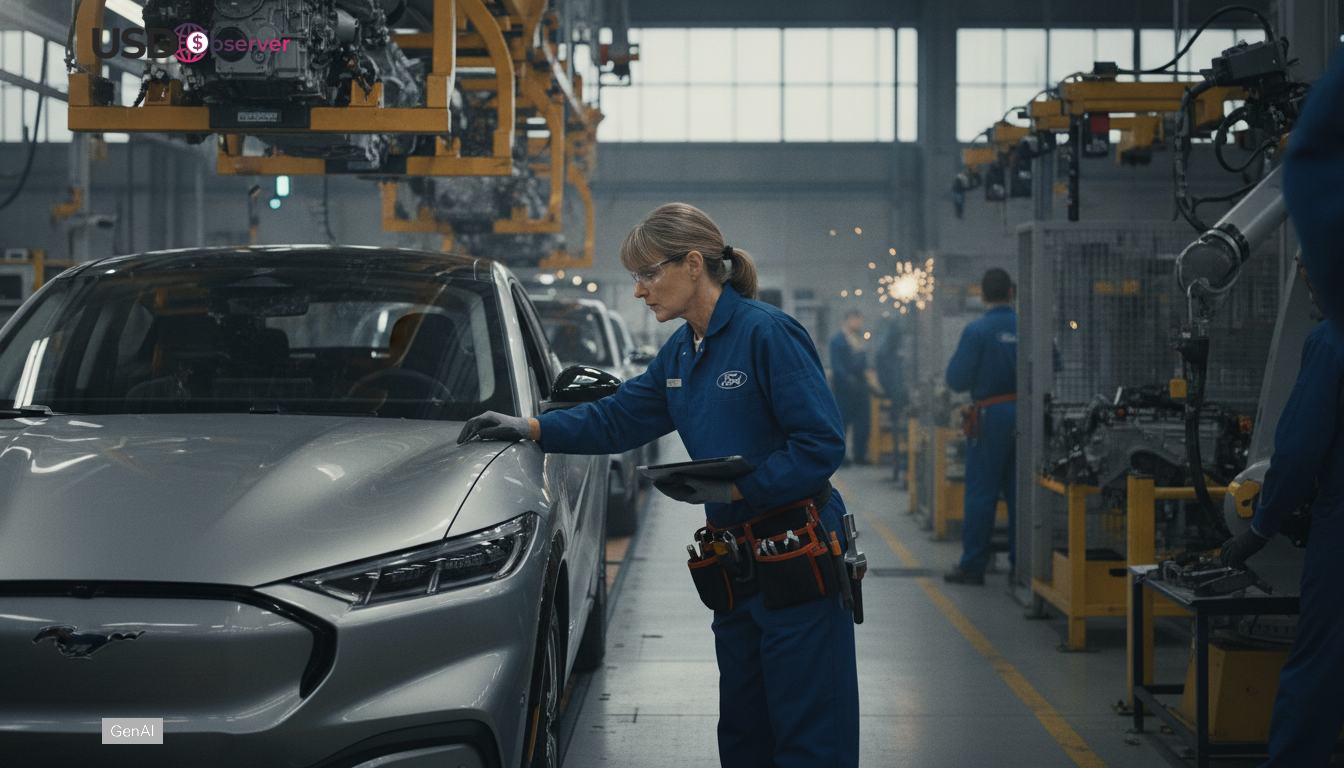
According to available reports, Ford is reassessing automated inspection after certain defects were not flagged during production checks. The company has leaned on cameras, sensors, and software to speed up screening for fit, finish, and assembly consistency, but some plant feedback suggests edge cases can still slip through. Shifts in lighting, material variation, and borderline tolerances can contribute to inconsistent pass/fail outcomes, raising questions about whether automation alone should approve final builds. The shift does not remove automation from factories, but it narrows where it can make binding calls. The goal appears to be more reliable sign-off, clearer accountability, and fewer downstream warranty issues tied to inspection misses.
How machine-vision inspection can miss defects in auto manufacturing
Automotive inspection is costly when it is wrong, because a rare defect that escapes detection can become a warranty claim, a safety complaint, or a recall-level event. Engineers often note that paint texture, trim alignment, and panel gaps can look acceptable from one angle and unacceptable from another, especially when tolerances stack across parts. As a result, AI quality control may be treated more like decision support than a final gatekeeper when conditions are dynamic. Those risks mirror broader governance concerns raised in BIS warning on AI investment risks, where weak oversight can amplify operational failures. In a factory setting, that means disputed decisions should have documentation and review paths.
Ford adds human oversight to end-of-line decisions
Ford appears to be placing more human reviewers into end-of-line roles where ambiguous defects require judgment rather than simple classification; details can vary by plant and program. Plant leaders generally want a named, accountable sign-off when production data conflicts with what teams see on the floor, particularly on high-volume lines where small error rates can still translate into many vehicles. The change reflects a governance reset similar to themes discussed in Tokenization in AI: Framework’s $400M Fund Push, which emphasizes traceability and reviewability. Automated vision checks can remain in the workflow, but as a second set of eyes that flags issues for humans to confirm, document, and route for corrective action.
What Ford may change next in AI quality control systems
The immediate lesson for development teams is that model accuracy metrics may not capture operational risk on a moving line with changing environments. To make AI quality control more dependable, Ford and suppliers may prioritize tighter sensor calibration routines, more controlled lighting, and clearer thresholds that map to manufacturing tolerances. Researchers and practitioners often expect more investment in audit trails so that each automated call can be reviewed after the fact, especially when defects appear downstream. Policy pressure is also building toward stricter accountability, echoing national programs such as South Korea’s Comprehensive AI and Semiconductor Investment Plan. The direction is systems designed for contested judgments, not only high-confidence classifications in lab-like conditions.
Balancing automated checks with human expertise at Ford
Ford’s adjustment points to a durable factory model: automation handles routine screening at scale, while people handle exceptions, root cause analysis, and final accountability. Human engineers can add context that computer vision struggles to infer, such as whether a visual anomaly is cosmetic, structural, or a symptom of process drift that will worsen by the next shift. In parallel, market and policy risks can tighten operating margins, as seen in wider trade discussions like US trade tariffs: Trump warns of 100% EU duties. The strongest setups can combine continuous feedback from inspectors with targeted retraining, plus guardrails that prevent silent performance degradation when conditions change. In that environment, AI quality control has to reduce risk, not introduce it, and human oversight becomes a practical control layer.