Understanding Tariff Policies and Their Immediate Effects
Policy desks are interpreting the recent push for tariffs as a significant factor influencing FX pricing rather than just another political headline. Traders are particularly focused on how quickly changes in tariff language can impact corporate hedging demands and the USD price for imports settled in US dollars. Mid-session, the naira appreciation against the dollar has emerged as a point of reference in emerging market assessments, with liquidity shifting towards safer assets. IG’s outlook on the US Dollar highlights that tariff risks can redirect flows into the dollar, especially when growth forecasts falter. Current live pricing demonstrates increased spreads around tariff-related news, with traders monitoring the speed at which USD strength influences short-term rate expectations.
Examining the Historical Context of Tariffs and Currency Value
Historical tariff cycles show currencies often react first to expectations, followed by adjustments to growth and inflation forecasts. Presently, macro traders are juxtaposing this scenario with previous instances when US policy shocks heightened uncertainty and bolstered demand for dollar liquidity. Analysts frequently refer to the Canadian dollar to US dollar pair for insights, as it is particularly sensitive to North American trade dynamics and commodity prices. The BBC has documented how conflicts and supply disruptions can alter price pressures in real time, as seen in Shell profits surge amid Iran war impact. This historical lens is crucial in assessing tariff-induced inflation. Generally, live markets favor clarity while punishing surprises, particularly when tariff timelines are altered.
Forecasting Analysts’ Projections on the Dollar’s Trajectory
Strategists forecast a scenario where tariffs create short-term demand for the dollar, while the long-term consequences hinge on partner responses and US demand for higher-priced goods. A recent market update from rates desks connects the trajectory of USD strength to the Federal Reserve’s stance on policy rigidity. In this context, naira appreciation against the dollar serves as a stress gauge, reflecting how frontier markets respond when dollar liquidity tightens. The pass-through effects of tariffs are anticipated to elevate measured inflation as tracked by the Consumer Price Index released by the Bureau of Labor Statistics. For those tracking innovative financial rails, there’s also a cross-border dimension highlighted in Stablecoins and Tokenization Move Crypto Into Finance. Current market sentiment remains highly responsive to evolving tariff language.
Observing Global Reactions to US Tariff Strategies
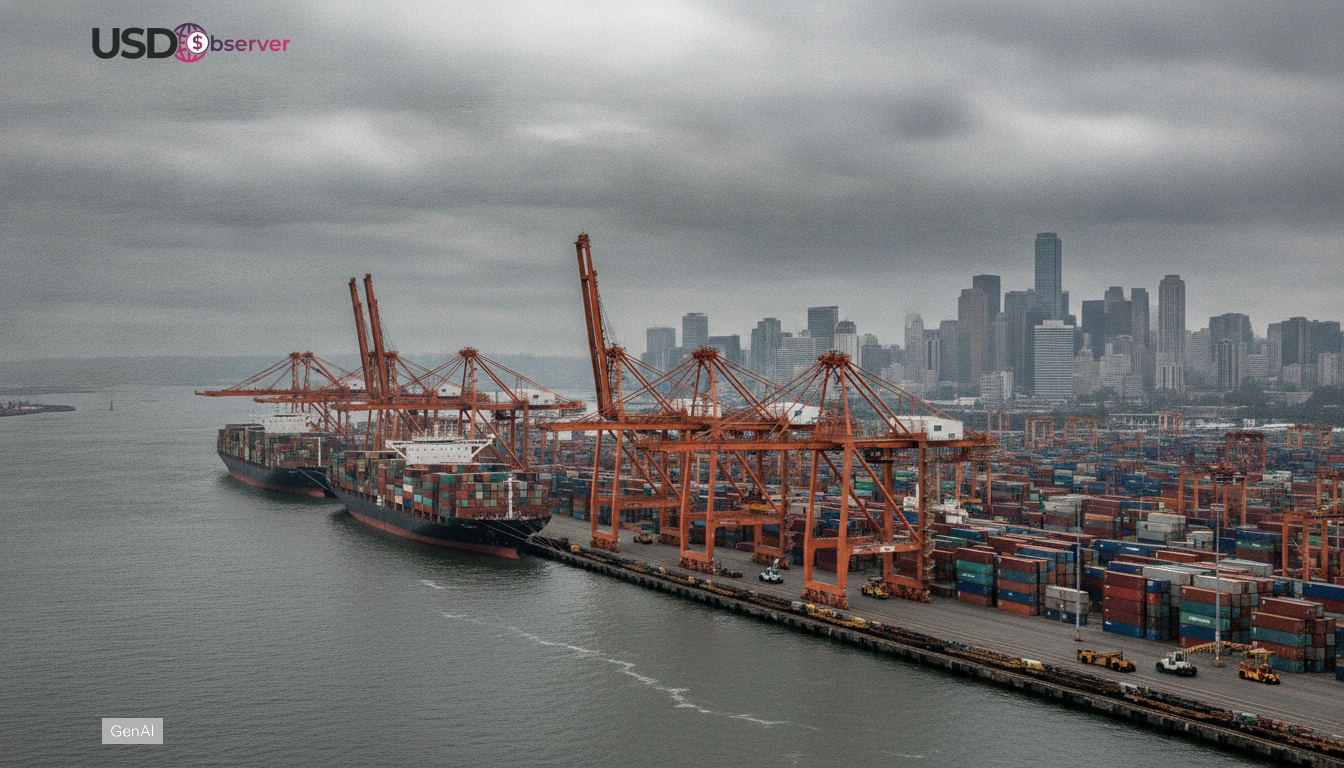
Trading desks across Asia and Europe are observing how their counterparts modify export pricing and reserve strategies in the face of escalating tariff risks. Recently, some banks have pointed out secondary effects, including supply chain adjustments and inventory preloading, which may temporarily boost dollar invoicing and expand the disparity between spot and forward markets. For Nigeria and other import-reliant economies, the effects on local prices can manifest swiftly; sustaining the naira appreciation against the dollar becomes increasingly challenging if demand for US dollars rises for energy and machinery transactions, a situation intricately linked to fuel costs as noted in Airlines Squeezed as Jet Fuel Prices Surge Worldwide. Notably, demand for hedging has been particularly evident around shipping and industrial sectors.
Exploring Long-term Implications for International Trade
Investors looking further ahead are considering that tariffs could expedite bloc-based trade and increase the share of nearshoring, potentially altering the landscape of FX transactions. In this live trading environment, while the dollar often retains its preeminence in settlements, volatility may spike as companies reconfigure supplier networks and renegotiate contracts. The IMF’s research on trade fragmentation, highlighted in its 2023 briefings, warns of efficiency losses that could undermine global growth—this scenario typically supports the US dollar when risk appetites contract. Another focal point is whether successive rounds of tariffs will create enduring inflation risks, which may keep real yield differentials favoring the dollar. Ultimately, markets are not solely fixated on the headline rate but also on the integrity of the policy trajectory and its sustainability over time.