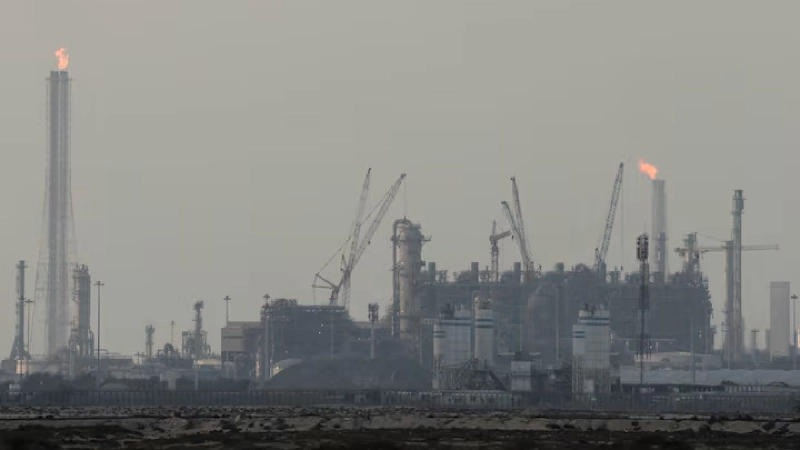
Global energy companies are rethinking long term investment strategies as rising geopolitical risks in the Middle East reshape the outlook for oil and gas exploration. The ongoing conflict in the region has disrupted infrastructure, increased operational risks and raised concerns over supply stability, prompting major producers to consider alternative regions for future growth. While the Middle East remains a key source of global energy, companies are increasingly evaluating opportunities beyond the region as uncertainty drives up costs and complicates long term planning for energy investments.
Major oil firms including Exxon Mobil, Chevron, BP and Shell have historically relied on the Middle East for its vast reserves and relatively favorable production conditions. However, recent disruptions have exposed vulnerabilities, including damage to key facilities and the closure of critical transit routes such as the Strait of Hormuz. These developments have significantly impacted production and export capacity, with the region losing substantial daily revenues as operations are curtailed and infrastructure repairs begin.
The shift in strategy is also being driven by a rising risk premium associated with operating in the region. Increased costs related to security, insurance and logistics are making investments less attractive compared to other parts of the world. Analysts note that even if infrastructure is repaired, the reputational impact of instability could have long lasting effects on investor confidence. This has led to a reassessment of where capital should be allocated, with companies seeking to balance resource availability against geopolitical risk and operational certainty.
Higher oil prices are reinforcing this transition by making previously marginal or high cost projects more economically viable. Regions such as West Africa, Brazil, Southeast Asia and parts of the Mediterranean are gaining renewed attention as companies expand exploration efforts. The possibility of sustained higher prices is encouraging firms to invest in new reserves that were once considered too expensive or risky. This broader geographic diversification reflects a strategic response to both market conditions and shifting global energy dynamics.
The evolving landscape also highlights how global energy supply chains are adapting to geopolitical pressures. While the Middle East will continue to play a central role due to its significant share of global reserves, companies are unlikely to concentrate investments in a single region as heavily as before. Instead, a more diversified approach is emerging, aimed at reducing exposure to localized disruptions while maintaining production capacity to meet global demand.
As energy companies adjust to these changes, the long term outlook for oil markets may also shift. Increased investment in diverse regions could help stabilize supply over time, but it may also lead to higher baseline costs for production. With geopolitical uncertainty continuing to influence decision making, the industry is entering a period of transformation that could redefine how and where energy resources are developed in the coming years.