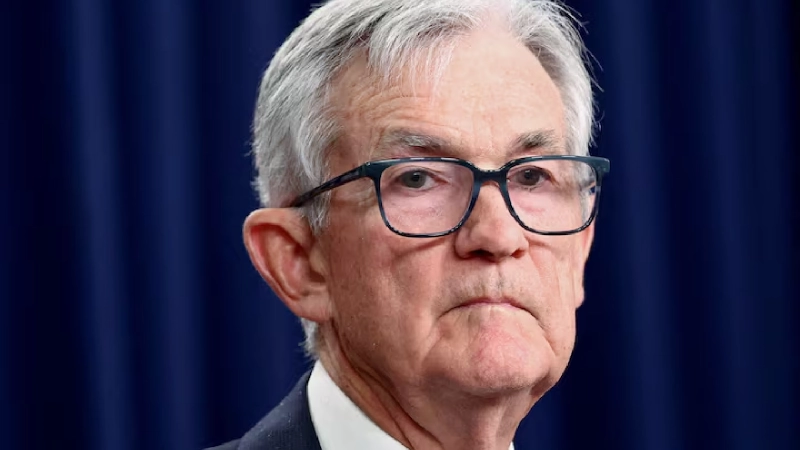
The Federal Reserve is adopting a cautious stance as geopolitical tensions reshape the economic outlook, with Chair Jerome Powell indicating that policymakers are prepared to wait and evaluate the full impact of the Iran conflict before adjusting monetary policy. Speaking in a public discussion, Powell emphasized that current policy settings are appropriate for monitoring how rising energy prices and global uncertainty affect inflation and growth. The approach reflects a measured strategy as the central bank navigates a complex environment shaped by external shocks and shifting market expectations.
The ongoing conflict has pushed oil and gasoline prices higher, creating potential challenges for the Fed’s dual mandate of maintaining price stability while supporting employment. Powell noted that while inflation expectations remain relatively stable over the longer term, recent developments warrant close attention. The central bank is particularly focused on whether energy driven price increases will spill over into broader inflation trends or remain temporary. This distinction is critical in determining whether policy intervention will be required or whether the Fed can continue to hold rates steady.
Market signals have already begun to reflect rising uncertainty, with Treasury yields climbing and some surveys indicating an increase in short term inflation expectations among households. Investors are reassessing the outlook for interest rates, with earlier expectations of policy easing giving way to a more cautious or even tightening bias. Powell acknowledged that while these developments are important, the Fed does not yet have enough information to make definitive policy changes, reinforcing the decision to remain patient as data evolves.
The central bank’s current benchmark interest rate remains within the 3.50 percent to 3.75 percent range, following its most recent policy meeting. Powell reiterated that officials would need to see sustained changes in inflation dynamics before considering any adjustments. He also highlighted the importance of distinguishing between temporary price shocks and more persistent inflation pressures, noting that central banks often look through short term volatility unless it threatens to become entrenched in the economy.
The broader economic backdrop adds further complexity to the Fed’s decision making process. Rising fuel costs are placing pressure on consumers and businesses, while uncertainty surrounding global supply chains and trade flows continues to weigh on growth prospects. At the same time, policymakers are monitoring potential downside risks in the labor market, which could emerge if economic conditions deteriorate. Balancing these competing factors remains a key challenge as the Fed seeks to maintain stability in an increasingly uncertain environment.
As the situation develops, the Fed’s wait and see approach underscores its commitment to data driven policymaking. Officials are expected to closely analyze upcoming economic indicators, including inflation readings and employment data, to assess the trajectory of the economy. With geopolitical tensions and market volatility influencing the outlook, the central bank is positioning itself to respond if necessary, while avoiding premature action that could disrupt economic momentum.