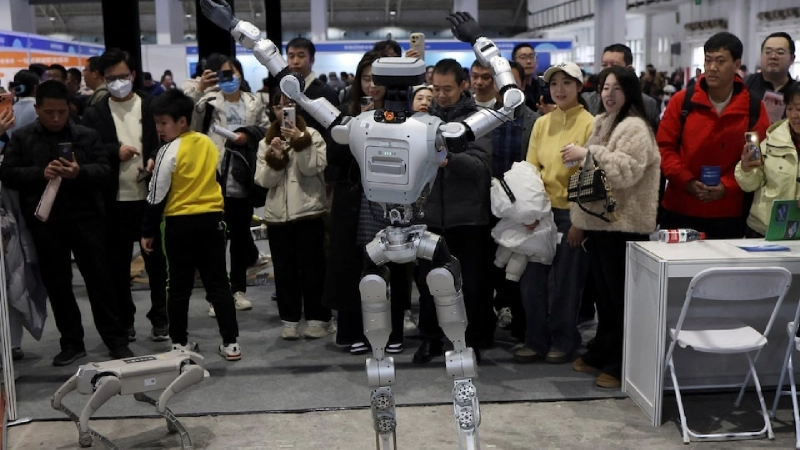
U.S. lawmakers are preparing new legislation that would prohibit federal agencies from purchasing or operating humanoid robots developed by Chinese companies, citing national security and data privacy risks. The proposed bill reflects growing concern in Washington over the rapid advancement of robotics technology and its potential implications for sensitive government operations. As global competition in artificial intelligence and automation intensifies, policymakers are increasingly focused on limiting reliance on foreign technologies that could pose strategic vulnerabilities.
The legislation, known as the American Security Robotics Act, aims to block the use of federal funds for acquiring or deploying unmanned ground systems produced by companies based in countries considered strategic adversaries. The proposal is being introduced with bipartisan support, underscoring a shared concern across political lines about the risks associated with foreign made robotics systems. Lawmakers argue that such technologies could be used to collect sensitive data or be remotely controlled, raising fears about surveillance and potential cyber threats within government infrastructure.
The move comes as Chinese robotics firms accelerate development of humanoid machines capable of performing a wide range of tasks, from industrial labor to domestic services. These companies are increasingly competing with U.S. technology leaders in the race to commercialize advanced robotics solutions. Several Chinese firms are also preparing public listings, highlighting growing investor interest in the sector. This rapid expansion has heightened concerns among U.S. officials about maintaining technological leadership while protecting national security interests.
Supporters of the bill emphasize that the risks extend beyond immediate security threats, pointing to broader implications for economic competitiveness and technological independence. Lawmakers have warned that allowing foreign developed robotics systems into government use could expose critical infrastructure to vulnerabilities. The proposed restrictions are part of a wider effort to safeguard domestic innovation and reduce reliance on external suppliers in key technology sectors, particularly those linked to artificial intelligence and automation.
At the same time, the bill includes provisions that would allow limited research use of such robots by military and law enforcement agencies under strict conditions. These exemptions are designed to ensure that U.S. institutions can study foreign technologies without exposing sensitive systems to potential risks. The approach reflects a balance between maintaining security and enabling continued technological development through controlled access to emerging innovations in robotics.
The introduction of the legislation signals a broader shift in U.S. policy toward tighter controls on advanced technologies originating from geopolitical rivals. As robotics becomes increasingly integrated into critical industries and public sector operations, governments are likely to impose stricter regulations to manage associated risks. The proposal also highlights the growing intersection of national security, technology policy and global competition, with robotics emerging as a key battleground in the next phase of technological advancement.