Investor demand for safety has pushed US money market fund assets to record highs, as geopolitical tensions linked to the Iran conflict continue to reshape global financial flows. Total assets have climbed close to 8 trillion dollars, reflecting a rapid move toward cash and short term Treasury backed instruments. The surge highlights growing uncertainty across equities and traditional safe havens, with investors increasingly prioritizing liquidity and capital preservation. As oil prices rise and inflation risks intensify, money market funds are emerging as a preferred destination for capital seeking stability within the US dollar system.
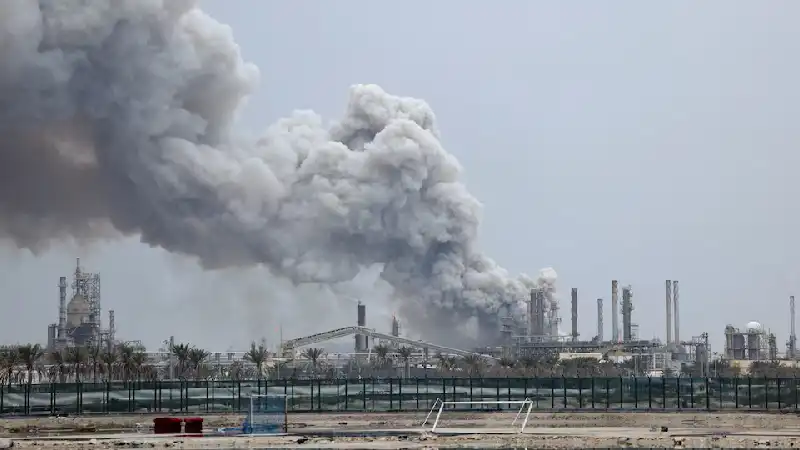
The shift comes as energy markets react sharply to supply risks, with crude prices climbing above 100 dollars per barrel and adding pressure across global economies. Higher oil costs are feeding into inflation expectations, creating a more complex environment for investors already dealing with elevated interest rates and uneven growth. Market participants are reducing exposure to equities and reassessing allocations across commodities and bonds. In this environment, short term cash instruments are offering yields above 3 percent in many cases, making them more attractive compared to volatile assets.
Analysts say the movement into money market funds reflects a broader wait and see approach, where investors prefer to hold liquid positions until there is greater clarity on geopolitical developments. Some wealth managers describe the trend as driven by fear rather than fundamentals, noting that cash is often perceived as the safest option during periods of disruption. However, others caution that the current environment presents challenges even for traditional defensive assets, as government bonds and precious metals are not providing the stability typically expected during market stress.
The relationship between oil prices and financial markets has become increasingly important, with energy acting as a key driver of asset performance. Rising crude prices are influencing currencies, commodities and equities simultaneously, creating a highly interconnected risk environment. Strategists warn that prolonged elevated oil prices could reduce consumer spending, compress corporate earnings and increase the likelihood of stagflation. This combination of slow growth and rising inflation is viewed as one of the most difficult scenarios for investors to navigate, reinforcing the appeal of cash based strategies.
Despite the strong inflows, financial advisors are urging caution against excessive concentration in money market funds. While cash offers stability in the short term, it requires careful timing to reenter higher yielding or growth oriented assets. Missing market recoveries can significantly impact long term returns, particularly if conditions stabilize faster than expected. Experts emphasize that while current risks justify defensive positioning, investors should remain aware of the potential costs of staying on the sidelines for too long.
The broader macro landscape continues to evolve as the conflict influences energy supply chains, inflation trends and central bank policy expectations. The US dollar remains central to global liquidity, and the growth of money market funds underscores its role as a primary store of value during periods of uncertainty. As markets adjust to shifting conditions, capital flows into cash are likely to remain elevated, especially if volatility persists across risk assets and geopolitical tensions remain unresolved.
In the near term, the trajectory of money market fund assets will depend on developments in both the energy market and broader economic indicators. Investors are closely monitoring inflation data, central bank signals and geopolitical updates to assess when it may be appropriate to shift allocations. Until clearer direction emerges, the preference for liquidity is expected to remain a defining feature of the current financial environment.