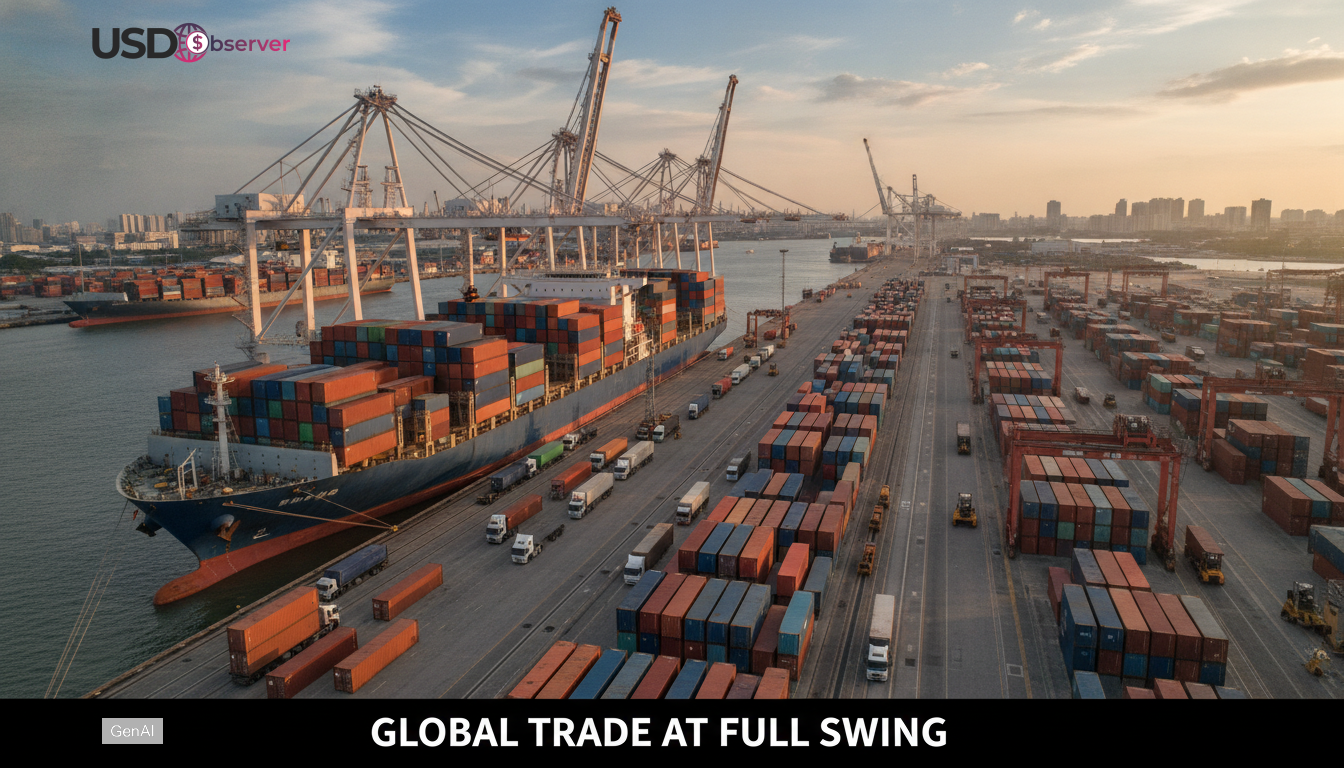
Global capital flows are shifting in 2026 as economic growth patterns diverge across major regions. Investors are increasingly reallocating funds toward economies that offer stronger growth visibility and stable returns. This trend is influencing currency markets, bond yields, and equity valuations as global portfolios adjust to new macroeconomic conditions. The uneven pace of economic expansion across regions has become a defining feature of the current cycle, shaping how capital is deployed and how financial markets respond to evolving risks and opportunities.
Economic Divergence Is Driving Capital Allocation
The global economy is not expanding at a uniform pace, and this divergence is playing a central role in investment decisions. Some economies continue to show resilience supported by consumer demand and services activity, while others face slower growth due to industrial weakness or structural challenges. These differences influence where investors allocate capital.
When growth prospects are stronger in one region, investors often increase exposure to that market. This process can lead to significant shifts in capital flows as funds move across borders in search of better returns. The result is a dynamic financial environment where capital allocation is closely tied to economic performance.
Stronger Economies Attract Investment Flows
Countries with stable growth and predictable policy environments tend to attract more investment. Investors prioritize markets that offer both return potential and financial stability. This preference is particularly evident in periods of global uncertainty when risk management becomes a primary concern.
The United States continues to attract capital due to its deep financial markets and relatively consistent economic performance. High liquidity and transparency make it easier for investors to allocate funds efficiently. As a result, dollar denominated assets often benefit from increased demand during periods of growth divergence.
Weaker Growth Regions Face Capital Outflows
Regions experiencing slower economic expansion may see reduced investment inflows. Lower growth prospects can limit returns and increase perceived risk, leading investors to shift capital elsewhere. This movement can affect currency values and financial market conditions in those regions.
Emerging markets are particularly sensitive to these dynamics. When global investors redirect capital toward developed economies, emerging markets can experience currency pressure and higher borrowing costs. The extent of these effects depends on each country’s economic fundamentals and policy framework.
Currency Markets Reflect Capital Movement
Foreign exchange markets respond quickly to changes in capital flows. When funds move into a country, demand for its currency increases, often leading to appreciation. Conversely, capital outflows can weaken a currency as demand declines.
This relationship makes currency markets a key indicator of global capital trends. Traders monitor economic data and policy developments to anticipate shifts in capital allocation. Exchange rate movements often reflect broader changes in investor sentiment and macroeconomic conditions.
Policy and Data Influence Market Direction
Economic data releases play a crucial role in shaping expectations about growth and investment trends. Indicators such as GDP growth, employment data, and industrial production provide insights into the strength of an economy. These data points influence how investors assess opportunities across different regions.
Policymakers also play an important role in guiding capital flows. Clear and consistent policy frameworks can enhance investor confidence, while uncertainty may lead to cautious positioning. As global conditions evolve, both data and policy signals will continue to shape the direction of capital flows.
Conclusion
Global capital flows are shifting as economic growth divergence influences investment decisions, currency movements, and financial market dynamics across regions.