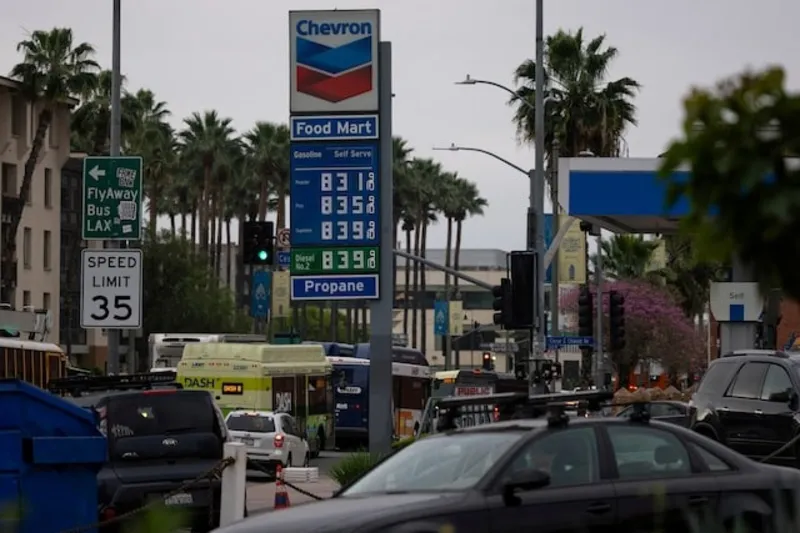
Global financial markets are facing renewed turbulence as crude oil prices approach the $100 per barrel level, triggering concerns about inflation, interest rates and economic growth. A sharp rise in energy prices following escalating conflict in the Middle East has unsettled investors and pushed global stocks lower while the U.S. dollar strengthened against major currencies. The surge in oil has raised alarms among economists who warn that sustained energy costs at these levels could weaken consumer spending and slow economic activity. Markets across equities, bonds and currencies reacted quickly as traders reassessed the economic outlook in an environment shaped by geopolitical tension and tightening financial conditions.
The immediate impact of the oil spike has been visible across several asset classes. Major global stock indexes posted significant declines while government bond yields climbed sharply as investors demanded higher returns to compensate for rising inflation risks. At the same time, the U.S. dollar strengthened as global capital moved toward perceived safety in dollar denominated assets. Emerging market currencies and commodity linked currencies experienced notable pressure during the trading session as investors pulled back from riskier assets. Energy companies were among the few beneficiaries of the turmoil as rising crude prices improved profit expectations for oil producers and related sectors.
Economists say the return of oil prices to levels near $100 per barrel carries significant economic implications. Higher energy costs tend to spread through the entire economy, increasing transportation expenses, raising manufacturing costs and pushing consumer prices higher. This dynamic can erode household purchasing power and reduce business investment, particularly in sectors sensitive to fuel costs such as airlines, transportation and logistics. Market participants also worry that elevated energy prices could revive the inflation dynamics that dominated global markets during 2021 and 2022, forcing central banks to maintain restrictive monetary policies for longer than previously expected.
Financial markets have already begun adjusting their expectations for interest rate policy in response to the energy driven inflation risk. Only weeks ago many analysts anticipated several interest rate cuts from the Federal Reserve during 2026 as inflation appeared to be moderating. However the sudden rise in oil prices has changed that outlook significantly. Traders in interest rate futures markets are now scaling back expectations for monetary easing, reflecting concerns that the central bank may have limited room to lower borrowing costs if inflation pressures return. The shift highlights how quickly geopolitical developments can reshape monetary policy expectations.
Bond markets around the world have also reacted strongly to the changing outlook. Government bond yields in the United States and Europe moved higher as investors sold fixed income assets, anticipating that inflation could remain elevated for longer. Short term Treasury yields climbed to their highest levels in months while European government bond yields also surged as traders reassessed the global interest rate environment. Rising yields typically signal expectations of tighter financial conditions, which can weigh on corporate borrowing and investment across the global economy.
Central banks now face a particularly difficult policy environment as they prepare for a series of upcoming monetary meetings across major economies. Policymakers must balance the risk of persistent inflation against the potential for slower economic growth triggered by higher energy prices and geopolitical uncertainty. Institutions including the Federal Reserve, the European Central Bank and several other major central banks are expected to hold policy discussions in the coming days. Investors will closely watch these meetings for signals about how policymakers plan to respond if energy prices remain elevated or climb even further in the months ahead.