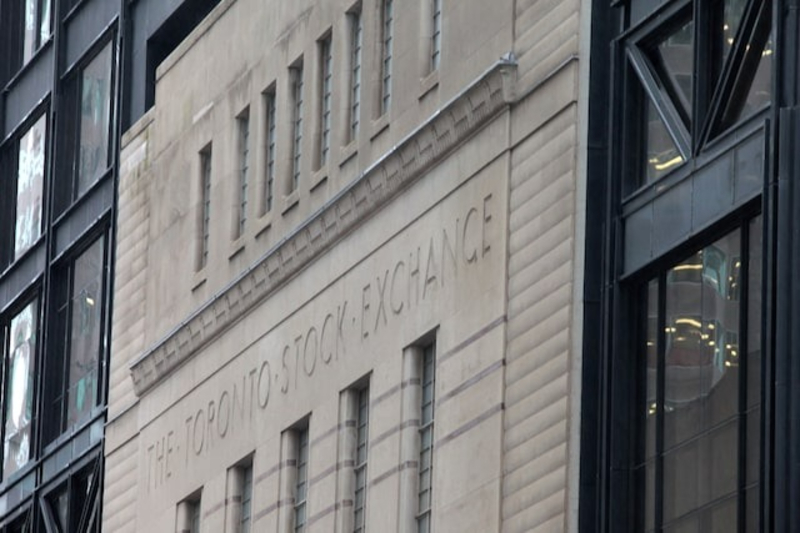
Canada’s main stock market index ended higher for a second consecutive day as gains in financial and mining companies helped offset declines in energy shares following a sharp drop in global oil prices. The S and P TSX Composite Index closed up about 0.3 percent at 33,270.65, continuing its recovery after briefly touching its lowest intraday level in more than a month earlier this week. Investor sentiment improved slightly as markets reacted to signals that tensions in the Middle East could eventually ease, reducing fears of prolonged disruption to global energy supplies.
Financial stocks played a key role in supporting the Canadian market despite mixed performance across the broader economy. The financial sector, which represents one of the largest weightings in the TSX index, recorded gains during the session as investors continued to favor established lenders and financial institutions amid global market uncertainty. However the sector was also marked by significant volatility after shares of goeasy Ltd plunged sharply following the company’s announcement of a large expected credit loss and the suspension of its dividend and share buyback program. Despite the steep decline in that single stock, broader financial shares helped lift the overall index.
Mining and materials companies also contributed to the market’s upward momentum as the price of gold strengthened during the trading session. Precious metals often benefit when investors seek assets that can hold value during periods of geopolitical tension and financial volatility. Gold prices rose as the U.S. dollar pulled back from recent highs, supporting shares of Canadian mining companies that dominate the country’s materials sector. The materials index recorded one of the strongest performances among the TSX sectors, highlighting the continued importance of commodity producers within Canada’s equity market.
Energy companies, however, weighed on the broader index after oil prices recorded one of their largest daily declines in recent years. Crude oil prices fell sharply as markets reacted to expectations that geopolitical tensions in the Middle East might ease and that shipping through key energy routes could stabilize. The decline in oil prices reduced the value of energy stocks listed on the Canadian exchange, which has historically been sensitive to movements in global crude markets. As a result the energy sector was among the weaker performers during the session despite the broader market moving higher.
Technology stocks also faced pressure as investors rotated toward sectors viewed as more resilient during periods of geopolitical uncertainty. Shares of major Canadian technology companies declined during the session, contributing to losses in the technology sector of the TSX index. In particular, several high profile technology firms experienced moderate declines as investors reassessed growth expectations and risk exposure amid volatile global conditions. Industrial shares were also weaker after declines in several large companies dragged the sector lower by the end of the trading day.
Market strategists say investors are likely to continue facing elevated volatility in the near term as geopolitical developments remain a dominant driver of global financial markets. The ongoing conflict in the Middle East continues to influence commodity prices, currency markets and equity valuations across multiple regions. Analysts note that sudden changes in energy prices can have ripple effects across sectors such as transportation, manufacturing and financial services. As a result investors are closely monitoring developments in both global energy markets and international diplomacy to assess how these factors may shape market performance in the weeks ahead.