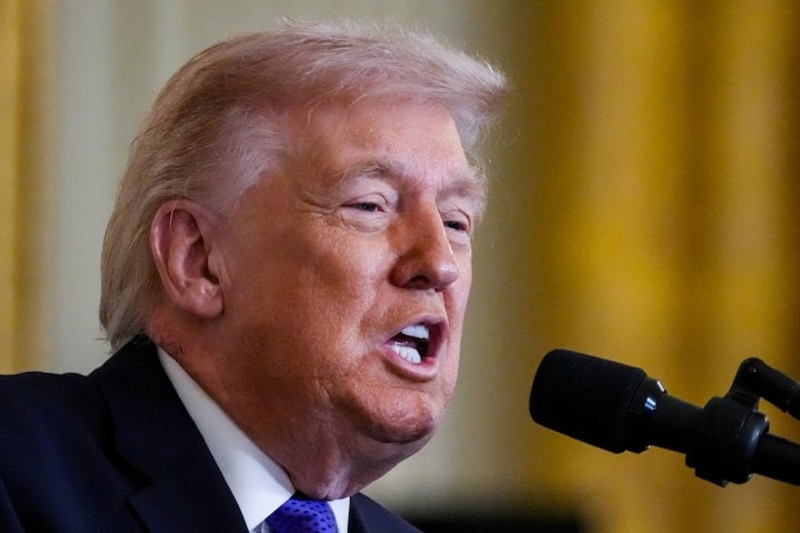
U.S. President Donald Trump has indicated that the United States should play a role in determining Iran’s future leadership as the conflict in the Middle East continues to escalate. His remarks come amid a rapidly evolving geopolitical crisis that has already reshaped security dynamics across the region. The ongoing war has led to significant casualties and widespread infrastructure damage while intensifying global concerns about stability in a region that remains critical to global energy markets and international trade routes.
Speaking during a recent interview, Trump suggested that the leadership transition in Iran should not occur without American involvement. He emphasized that Washington must have influence in determining who ultimately leads the country following the death of Iran’s supreme leader in a military strike earlier in the conflict. According to Trump, a leadership change in Tehran presents an opportunity to reshape the country’s political trajectory and potentially stabilize long standing tensions between Iran and the West.
Trump also indicated skepticism that the next Iranian leader would emerge directly from the family of the previous supreme leader. Political analysts have widely speculated about possible successors, including members of the former leader’s family who have been prominent figures within Iran’s political and religious establishment. However the U.S. president suggested that the final outcome remains uncertain, noting that a wide range of individuals could ultimately emerge as potential candidates for the country’s future leadership.
The comments come as the conflict between Iran, the United States and regional allies continues to intensify. Military strikes and retaliatory attacks have expanded across multiple parts of the region, creating concerns that the war could draw in additional countries. The hostilities have already disrupted transportation routes, energy shipments and diplomatic relations, prompting governments and international organizations to closely monitor developments as the crisis unfolds.
Trump also expressed support for the possibility of Kurdish groups launching operations against Iranian security forces. Kurdish forces based in neighboring regions have historically played a significant role in regional security dynamics, and their potential involvement could introduce additional complexity to the conflict. Analysts note that any expansion of military activity involving Kurdish forces could widen the geographical scope of the conflict and potentially reshape alliances across the region.
The evolving situation has also placed increased attention on the strategic importance of the Strait of Hormuz, one of the most vital maritime corridors for global energy trade. A large share of the world’s crude oil and liquefied natural gas shipments pass through the narrow waterway each day. With tensions rising and several attacks reported on vessels operating in nearby waters, global markets have been closely watching developments around the shipping route and its potential impact on energy supply.
Rising oil prices have already become one of the most immediate economic consequences of the conflict. Energy markets reacted quickly as traders assessed the possibility of supply disruptions across the Gulf region. Higher crude prices have raised concerns among economists about renewed inflation pressures and the potential impact on global economic growth. Energy costs play a significant role in transportation, manufacturing and consumer prices, making the stability of oil markets a critical factor for the broader global economy.
Despite these concerns, Trump suggested that rising gasoline prices should not overshadow the broader geopolitical objectives of the conflict. He expressed confidence that energy prices would eventually stabilize once hostilities subside. However market analysts caution that prolonged instability in the region could continue to influence energy markets, shipping routes and investor sentiment as governments and financial institutions attempt to navigate the uncertain geopolitical landscape.
As the conflict continues to evolve, global leaders, financial markets and international organizations remain focused on the political and economic consequences that may emerge from the crisis. The potential reshaping of leadership in Iran, combined with the broader strategic implications of the conflict, is likely to remain a central issue shaping geopolitical developments and market conditions in the coming months.