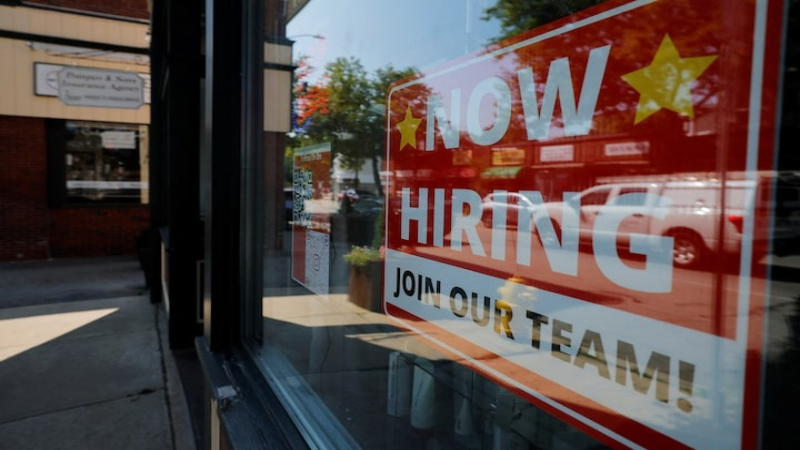
New filings for unemployment benefits in the United States rose modestly last week, reinforcing the view that the labor market remains stable even as hiring momentum stays subdued. Fresh data showed initial jobless claims increased by 4,000 to 212,000 for the week ending February 21, slightly below market expectations and still historically low by long term standards.
The latest figures suggest that layoffs remain contained despite broader economic uncertainty linked to trade policy shifts and elevated borrowing costs. Economists continue to describe the current environment as a low hire, low fire labor market, where employers are cautious about expanding payrolls but are not aggressively cutting staff.
Continuing claims, which measure the number of people receiving unemployment benefits after their first week of aid, fell by 31,000 to 1.833 million. This decline indicates that while hiring remains restrained, businesses are not significantly increasing layoffs. The continuing claims data also aligns with projections that the unemployment rate for February will likely remain near 4.3 percent.
The Chicago Federal Reserve’s model forecasts the jobless rate at approximately 4.28 percent for February, effectively unchanged from January when unemployment eased slightly from 4.4 percent in December. Stability in the unemployment rate supports expectations that the Federal Reserve will maintain its cautious stance on interest rates, particularly as inflation remains above target.
Financial markets reacted with measured moves. The US dollar strengthened against a basket of major currencies, reflecting confidence in the resilience of the labor market and the likelihood of higher rates for longer. Treasury yields declined modestly, while equities showed mixed performance as investors balanced labor stability against concerns about corporate earnings and technology sector restructuring.
Despite the steady headline numbers, underlying labor market dynamics reveal areas of stress. Surveys indicate that consumer perceptions of job availability have deteriorated. A growing share of households report that jobs are hard to get, reaching levels not seen in five years. At the same time, the median duration of unemployment remains near multi year highs, signaling that individuals who lose jobs are taking longer to secure new positions.
Structural factors are also shaping employment trends. Businesses remain hesitant to expand hiring amid lingering uncertainty around trade tariffs and global demand. Rapid advances in artificial intelligence are adding another layer of caution, particularly in technology and professional services sectors where automation is accelerating workflow changes.
Recent college graduates face particular challenges. Many are ineligible for unemployment benefits due to limited work history, meaning their struggles are not fully reflected in claims data. Analysts caution that the relationship between continuing claims and the overall unemployment rate is imperfect, especially when long term unemployed workers and new labor market entrants are considered.
For now, the broader picture remains one of labor market resilience rather than deterioration, reinforcing expectations that monetary policy adjustments will depend more heavily on inflation data than on employment weakness.