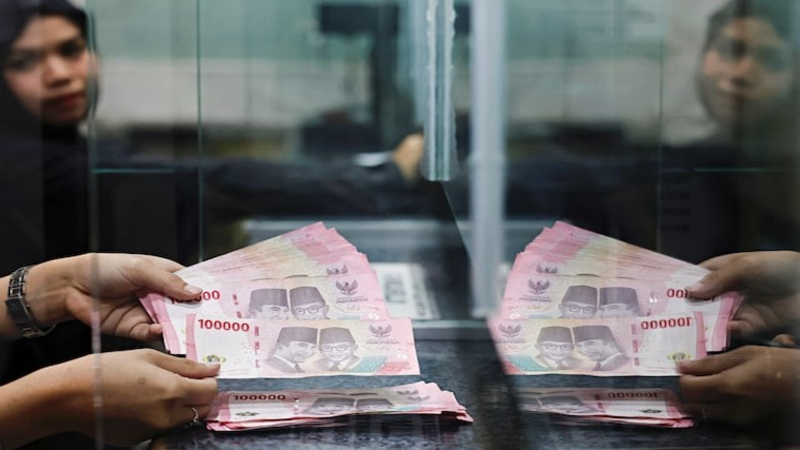
Asian currencies edged lower in subdued holiday trading conditions, with Indonesia’s rupiah leading losses ahead of a closely watched central bank interest rate decision. Thin liquidity across regional markets amplified moves, as investors balanced domestic policy expectations against broader US dollar strength.
The Indonesian rupiah slipped in early trading as markets positioned for Bank Indonesia’s policy announcement. Investors are assessing whether policymakers will maintain current rates or signal a shift in response to inflation trends and currency pressures. The rupiah has remained sensitive to global yield movements and capital flows, particularly as US Treasury yields stay elevated.
Across the region, several markets operated with reduced participation due to local holidays, limiting trading volumes and widening bid ask spreads. In such conditions, even modest shifts in positioning can generate outsized currency moves. Traders noted that the softer tone in Asian foreign exchange reflected a cautious stance rather than aggressive risk reduction.
The US dollar index remained supported by resilient US economic data and expectations that the Federal Reserve will keep rates steady for longer. Higher US yields tend to weigh on emerging market currencies by encouraging capital to flow toward dollar denominated assets. The yield differential remains a key driver of foreign exchange performance across Southeast Asia.
For Indonesia, maintaining currency stability is central to monetary policy. A weaker rupiah can increase imported inflation, particularly for energy and food, while also affecting corporate balance sheets with dollar denominated liabilities. At the same time, aggressive rate hikes could slow domestic growth momentum. This balancing act makes each policy meeting closely scrutinized by global investors.
Elsewhere in Asia, currencies such as the Malaysian ringgit and Thai baht also traded modestly lower. Market participants said that without strong directional cues from China, where trading activity was limited due to holiday closures, regional currencies lacked a clear catalyst.
The broader macro backdrop continues to shape Asian FX trends. Strong US labor and manufacturing data have reinforced expectations that the Federal Reserve will remain cautious about easing policy. Meanwhile, commodity price volatility, particularly in oil, adds another layer of uncertainty for net energy importing economies in the region.
In periods of thin liquidity, short term positioning can exaggerate underlying trends. Investors are likely to return focus to fundamentals once full market participation resumes. For now, the combination of dollar resilience and local policy uncertainty has kept Asian currencies on the defensive, with the rupiah at the center of attention ahead of the interest rate call.