Introduction
The U.S. dollar (USD) has long been considered the cornerstone of the global financial system. Traditionally, it has played the role of a safe-haven currency—a reliable store of value in times of crisis. Yet in today’s rapidly evolving financial landscape, the dollar is increasingly being viewed not only as a defensive asset but also as a risk-sensitive instrument, reacting to shifts in global liquidity, Federal Reserve policy, and investor sentiment.
This dual identity raises a crucial question: Is the USD still a safe haven, or is it becoming more of a risk asset?
The USD as the World’s Reserve Currency
- Roughly 60% of global forex reserves are held in USD.
- Over 40% of global trade invoicing is conducted in dollars.
- U.S. Treasury securities remain the deepest and most liquid asset market worldwide.
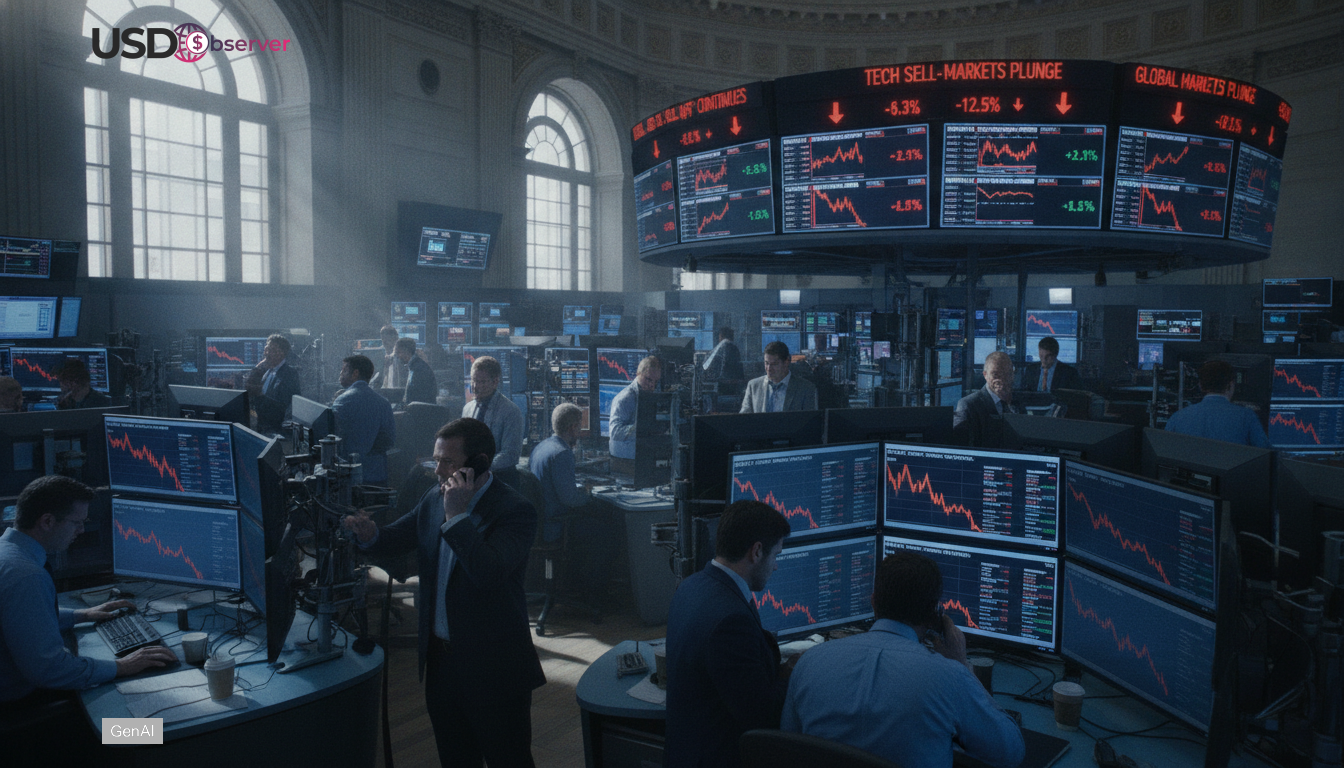
This dominance cements the dollar’s safe-haven role. During global shocks—wars, pandemics, or financial crises—investors rush to USD, driving its value higher.
Why the USD is a Safe Haven
- Liquidity and Accessibility
The USD is universally accepted, and U.S. Treasuries provide unmatched depth for investors seeking safety. - Trust in U.S. Institutions
Despite political divides, U.S. institutions remain more stable and transparent than many alternatives. - Crisis Behavior
- 2008 Global Financial Crisis → DXY surged as investors demanded dollars.
- 2020 COVID-19 shock → USD shortage sent the dollar sharply higher until Fed swap lines eased tensions.
- Geopolitical crises (Russia-Ukraine war, Middle East tensions) → USD strengthens as capital seeks refuge.
These episodes reaffirm the dollar’s status as the ultimate safe haven.
The USD as a Risk Asset
Over the last decade, however, the dollar’s behavior has also aligned with risk-driven cycles, especially linked to Federal Reserve monetary policy.
- Fed Policy Sensitivity
- Hawkish Fed → higher U.S. yields attract capital → USD strengthens.
- Dovish Fed → liquidity flows abroad → USD weakens as risk assets rally.
- Correlation with Risk Sentiment
- At times, the USD weakens when global equities and commodities surge, suggesting a “risk-off = strong dollar, risk-on = weak dollar” dynamic.
- But in other phases, high U.S. yields make the USD trade like a risk asset, benefiting from global carry trades.
- Example: 2022–2023 Tightening Cycle
- Aggressive Fed hikes strengthened the USD to multi-decade highs.
- Yet, this USD rally coincided with equity volatility and capital flight from emerging markets, showing its dual role.
Safe Haven vs. Risk Asset: A Framework
To navigate this duality, traders analyze when the USD acts more like a haven and when it behaves like a risk asset:
| Condition | USD Role | Typical Market Behavior |
|---|---|---|
| Global Crisis / Uncertainty | Safe Haven | USD strengthens across pairs; EM FX, commodities weaken |
| Fed Tightening / Yield Spike | Risk Asset | USD strengthens with rising yields, sometimes alongside equities |
| Fed Easing / Global Risk-On | Weak USD | Capital flows into EM, commodities; USD weakens |
| Geopolitical Tensions | Safe Haven | USD demand rises despite Fed stance |
Impact on Major Currency Pairs
EUR/USD
- In crises, USD demand overwhelms euro support → EUR/USD falls.
- In risk-on phases with Fed easing, EUR/USD rallies.
USD/JPY
- Safe-haven dynamics clash: yen vs. dollar.
- Rising U.S. yields (risk-asset behavior) often push USD/JPY higher.
- Crisis-driven fear may support yen more than USD, depending on severity.
GBP/USD
- USD safe-haven rallies typically weaken GBP.
- In risk-on phases, pound gains if BOE maintains relatively tighter stance.
Emerging Market Currencies (EM FX)
- Safe-haven USD demand triggers EM sell-offs (TRY, BRL, PKR).
- Risk-on cycles with weaker USD fuel EM rallies.
USD vs. Other Safe Havens
- Gold: Competes with USD as a crisis hedge; usually inversely correlated.
- Swiss Franc (CHF): Another traditional safe haven, but less liquid than USD.
- Japanese Yen (JPY): Safe haven in Asia, but vulnerable when Fed-BOJ divergence widens.
The USD’s liquidity advantage ensures it remains the first choice in global crises, even if gold or CHF provide alternative hedges.
The Future: An Evolving Dual Identity
The dollar’s role is shifting as global financial markets evolve:
- De-dollarization Efforts: Countries like China and Russia push for alternatives, but no currency matches the USD’s liquidity yet.
- Digital Assets: Stablecoins and CBDCs may reduce reliance on USD in specific areas, but they still largely reference the dollar.
- Fed Policy Cycles: With inflationary pressures in 2025, the Fed’s stance will continue to dictate whether the USD trades as a haven or a risk-sensitive asset.
What Traders Should Watch
- Crisis Indicators: Geopolitical headlines, volatility indices (VIX), and global credit stress.
- Fed Policy Guidance: Dot plots, FOMC minutes, and Treasury yields.
- Cross-Market Signals: Gold prices, EM bond spreads, and equity performance.
By aligning USD trades with these drivers, traders can anticipate whether the dollar will act more like a shield or a sword.
Conclusion
The U.S. dollar is no longer a one-dimensional safe-haven currency. It has evolved into a dual-role asset, switching between defensive and risk-sensitive behavior depending on the global environment.
- In times of fear, the USD remains the ultimate safe haven.
- In times of tightening U.S. monetary policy, the USD acts like a risk asset, benefiting from yield-driven capital flows.
For forex traders and analysts, the challenge is not asking “Is the USD a safe haven or a risk asset?” but rather recognizing when it is playing which role.
In today’s volatile financial landscape, mastering this distinction is the edge that separates sharp strategies from costly mistakes.