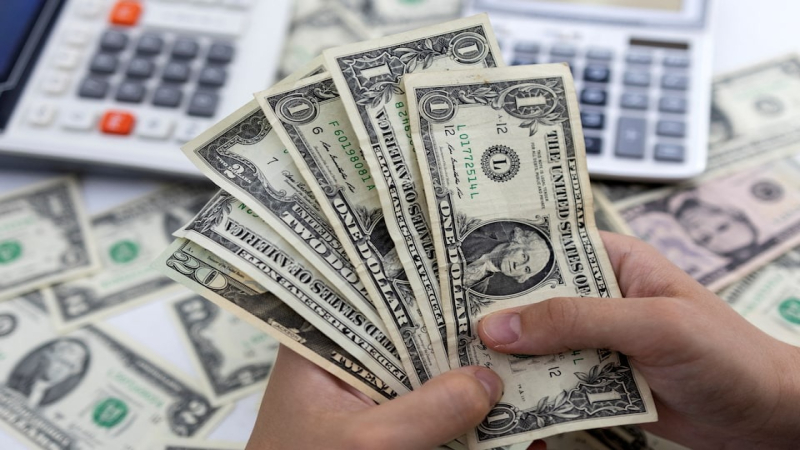
U.S. Commerce Secretary Howard Lutnick has described the recent decline in the value of the dollar as a “more natural” level that benefits American exports and economic expansion. Speaking at a Senate Appropriations subcommittee hearing, Lutnick highlighted that for many years, the dollar was artificially high due to other countries manipulating their currencies to boost exports to the U.S. He said current levels are helping balance trade and stimulate domestic growth.
Lutnick linked the dollar’s current position to stronger exports, noting that U.S. gross domestic product growth has been robust as a result. He projected that fourth quarter 2025 GDP would exceed five percent, with the first quarter 2026 potentially topping six percent. The Commerce Secretary emphasized that a competitive exchange rate supports U.S. businesses in global markets, making American goods more attractive abroad.
While Lutnick’s remarks focus on trade benefits, the U.S. Treasury has consistently maintained a “strong dollar policy,” with Treasury Secretary Scott Bessent highlighting that a strong greenback helps attract foreign investment and maintains overall economic stability. The apparent divergence in messaging reflects differing perspectives within the administration on how currency movements affect trade, investment, and growth.
The dollar has recently weakened to its lowest level in four years, influenced by a combination of factors. Expectations of potential Federal Reserve interest rate cuts, uncertainty surrounding tariffs, policy volatility, and rising fiscal deficits have contributed to eroding investor confidence. President Trump has publicly characterized the weaker dollar as “great,” suggesting that it enhances the competitiveness of U.S. exports.
Market activity on Tuesday reflected these dynamics, with the dollar trading mostly lower against major global currencies. The Japanese yen strengthened following Prime Minister Sanae Takaichi’s election victory, while data showing unexpectedly flat retail sales in December added pressure on the currency. Consumer spending, which accounts for approximately two-thirds of the U.S. economy, is a key driver of growth, and slower than expected results have influenced short-term currency trends.
The Commerce Secretary’s comments suggest that the administration views the current level of the dollar as favorable for supporting trade balances, promoting U.S. manufacturing, and encouraging broader economic growth. While challenges such as fiscal deficits and policy uncertainty remain, the weaker greenback is seen as a tool for boosting exports and sustaining momentum in the domestic economy.
Investors and businesses continue to monitor the dollar’s trajectory closely, as exchange rate fluctuations have significant implications for trade competitiveness, corporate profits, and the broader economy. Policy decisions and market expectations will likely continue to shape the greenback’s path in the coming months.