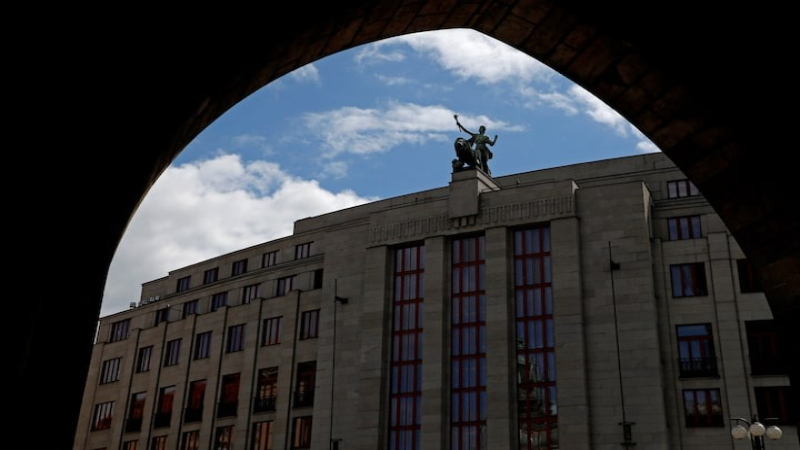
The Czech National Bank is widely expected to keep interest rates unchanged at its upcoming policy meeting, according to a recent survey of economists, as officials weigh growing arguments for renewed monetary easing. All analysts polled anticipate the benchmark rate will remain at 3.50%, where it has stood since the central bank last reduced borrowing costs in mid-2025. The pause reflects policymakers’ cautious approach despite inflation hovering close to the official target. While headline price growth has moderated, concerns persist around elevated services inflation and wage pressures, which could complicate the inflation outlook. At the same time, economic activity has remained stronger than previously expected, reducing the urgency for immediate easing. This combination of stable inflation and resilient growth has supported the case for holding rates steady in the near term, even as market expectations begin to shift.
Recent policy signals suggest the internal debate is becoming more balanced, with central bankers acknowledging that risks to inflation are no longer skewed to the upside. Inflation ended last year below earlier forecasts and is expected to dip further after government measures to lower household energy costs. These developments have eased some pressure on policymakers, who previously emphasized caution. Officials have also pointed to external influences, including the prospect of rate cuts by major global central banks, as a factor that could affect future decisions. While the base case remains stability, several analysts now see room for modest easing later this year if disinflation continues. The shift in tone marks a departure from earlier messaging that focused almost exclusively on inflation risks, signaling greater flexibility in the policy outlook.
Market expectations have begun to reflect this evolving narrative, with investors increasingly pricing in the possibility of a rate cut in the second half of the year. Although the median forecast still sees rates unchanged through the end of 2026, a growing minority of economists now anticipate at least one reduction. Lower-than-expected inflation readings have reinforced the argument that current policy settings may become overly restrictive in real terms. Services prices remain a key focus, particularly at the start of the year when firms typically adjust pricing. Policymakers are expected to scrutinize these trends closely before making any move. The upcoming inflation data, scheduled for release on the day of the policy meeting, could play a decisive role in shaping near-term expectations.
Despite the emerging case for easing, many analysts caution that any rate cut would likely be gradual and data-dependent. Strong domestic demand and anticipated fiscal expansion could offset disinflationary forces, complicating the policy calculus. Central bank officials have emphasized the need for additional confirmation that price pressures are easing sustainably before adjusting rates. While lower utility costs may feed through to broader prices over time, uncertainty remains over how quickly these effects will materialize. For now, the central bank appears inclined to wait for clearer evidence before acting. The growing debate underscores a delicate balancing act as policymakers seek to support price stability without unnecessarily restraining economic growth in a shifting global environment.