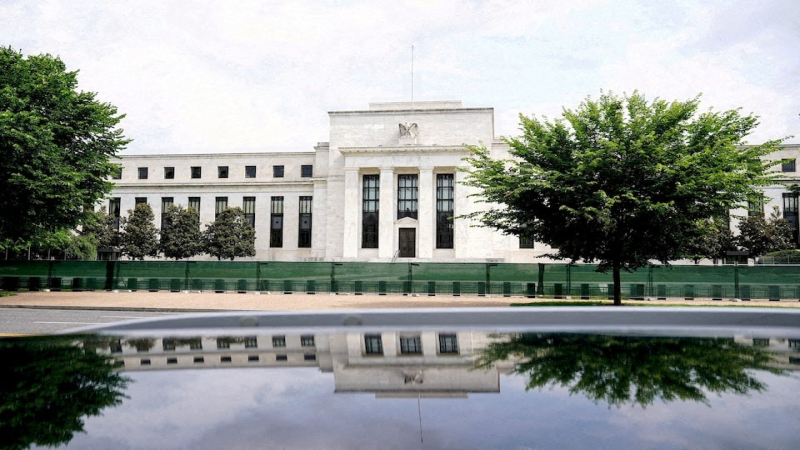
The Federal Reserve left interest rates unchanged at its latest policy meeting, maintaining the benchmark range at 3.50% to 3.75% as officials signaled growing confidence in economic stability while remaining cautious on inflation. Policymakers voted to pause after a series of rate cuts late last year, pointing to steady growth, moderating risks to employment, and inflation that remains above target but no longer accelerating. Federal Reserve Chair Jerome Powell described the economy as resilient, noting that earlier concerns around labor market deterioration and price pressures have eased. While the decision was widely anticipated, the central bank emphasized that future policy adjustments would depend on incoming economic data rather than a preset timeline. Officials reiterated that rates are near neutral, allowing them flexibility to respond should inflation cool further or labor conditions weaken unexpectedly. The stance suggests a potentially extended pause as policymakers assess whether current financial conditions are sufficiently restrictive.
Despite broad agreement among policymakers, two members dissented in favor of cutting rates, underscoring ongoing debate within the committee over the appropriate path forward. Powell stressed that the Fed remains well positioned to act if economic conditions shift, citing multiple scenarios that could justify renewed easing, including softer labor demand or clearer progress toward the inflation target. Inflation remains roughly one percentage point above the Fed’s goal, a factor officials continue to monitor closely. Policymakers acknowledged that recent price pressures have been persistent, though expectations remain anchored, reducing concerns about a renewed inflation surge. Labor market indicators suggest stabilization, with modest job gains aligning more closely with slower workforce growth. This balance has reduced fears of an abrupt slowdown, allowing the Fed to prioritize longer-term price stability while avoiding unnecessary tightening.
Political pressure has continued to hover over monetary policy discussions, with renewed calls from the White House for deeper rate cuts to stimulate growth. Powell avoided direct commentary on political developments, instead reiterating the importance of central bank independence and accountability to Congress. He cautioned future leadership against allowing political considerations to influence policy decisions, emphasizing credibility as essential to maintaining stable financial conditions. The policy statement offered no guidance on the timing of potential rate cuts, reinforcing the Fed’s data-dependent approach. Officials acknowledged that inflation has made limited progress over the past year, with some attributing lingering pressures to trade-related costs. While Powell expects those effects to fade later this year, he noted that delayed relief could complicate policy decisions for future leadership navigating a still-sensitive inflation environment.
Market reaction to the decision was muted, reflecting investor expectations of a prolonged holding pattern. Treasury yields moved modestly, while equity markets finished largely unchanged as traders adjusted expectations for the timing of future rate cuts. Interest rate futures shifted toward pricing the next potential move later in the year, aligning with the Fed’s cautious messaging. Policymakers removed prior language highlighting rising employment risks, signaling increased confidence that the labor market is not deteriorating rapidly. Unemployment remains low by historical standards, reinforcing the view that economic conditions are balanced rather than overheating. For now, the Fed appears content to wait, signaling patience as it evaluates whether inflation resumes a clearer downward trajectory before making any further adjustments to borrowing costs.