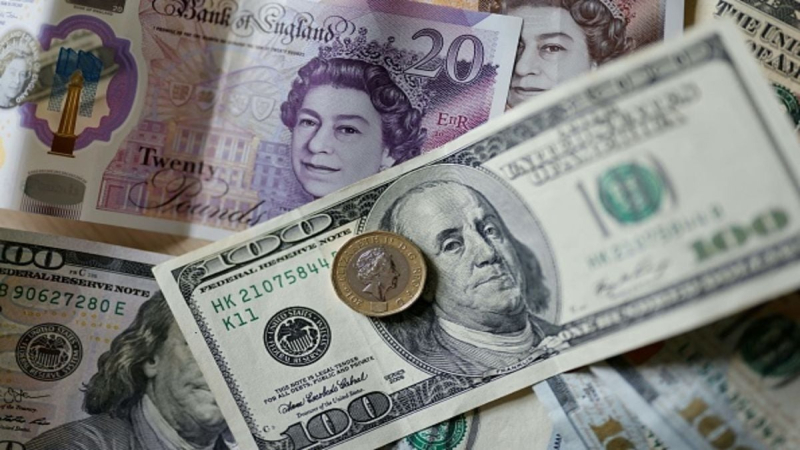
The British pound eased on Wednesday after climbing to its strongest level in four years, as currency markets reassessed the pace of the recent dollar selloff triggered by political commentary from the United States. Sterling pulled back modestly after a sharp rally that lifted it to levels last seen in 2021, reflecting a period of consolidation rather than a reversal in trend. The earlier surge had been driven largely by renewed weakness in the U.S. dollar, after remarks from Donald Trump reinforced investor perceptions that the administration is comfortable with a softer currency. That interpretation prompted aggressive dollar selling across major pairs, pushing sterling sharply higher before profit-taking set in.
The dollar’s decline has been a central force shaping currency markets in recent sessions, with the dollar index falling to its lowest level in nearly four years earlier in the week. While the greenback stabilized somewhat on Wednesday, it remains under pressure after posting steep losses last year and extending those declines into early 2026. Market participants have increasingly focused on U.S. policy uncertainty, including shifting trade signals and public pressure on the Federal Reserve, as factors undermining confidence in the currency. Against that backdrop, sterling’s advance has been amplified by relatively resilient UK economic data, which has supported expectations that the British economy may avoid sharper slowdown risks.
Analysts described the pound’s pullback as a natural adjustment following a rapid and outsized move higher. Sterling has already gained strongly since the start of the year, leaving it vulnerable to short-term corrections as traders reassess positioning. Market commentary suggests that modest declines are unlikely to alter the broader outlook as long as the dollar remains the dominant driver of foreign exchange flows. Movements in the pound against the euro were limited, underscoring that the latest volatility is primarily a dollar story rather than a shift in UK-specific fundamentals.
Currency markets remain highly sensitive to signals from Washington, particularly as investors weigh the likelihood of coordinated action to influence exchange rates and the broader implications of U.S. economic policy direction. Speculation around potential coordination with Japan to support the yen has further fueled uncertainty around the dollar’s near-term trajectory. Until clearer guidance emerges from U.S. policymakers and central bankers, traders expect elevated volatility to persist, with sterling’s performance continuing to be shaped more by dollar sentiment than domestic UK developments.