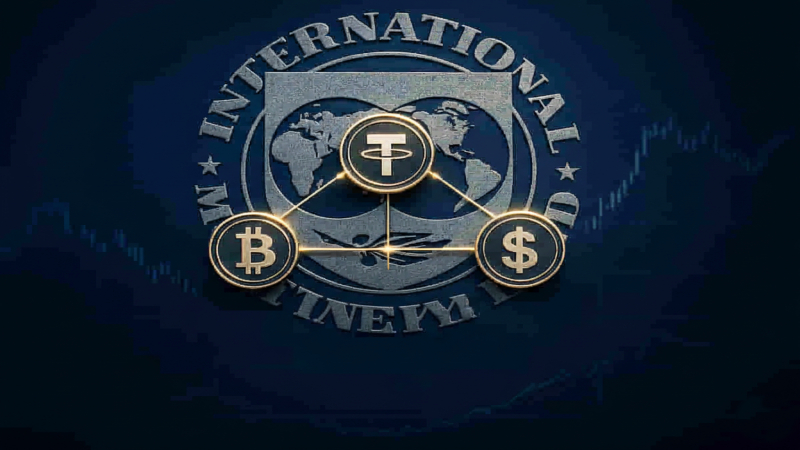
The rapid adoption of stablecoins in certain countries could place new competitive pressure on national monetary and fiscal frameworks, according to senior officials at the International Monetary Fund. Speaking at the annual meeting in Davos, the IMF’s first deputy managing director said digital tokens pegged to major currencies are increasingly being used in jurisdictions where confidence in domestic policy is limited. As a result, stablecoins may function as an alternative store of value and medium of exchange, particularly in economies with fragile institutions or high inflation histories. This dynamic, IMF officials argue, could expose weaknesses in local policy frameworks and force governments to respond. Rather than viewing stablecoins solely as a financial stability risk, the IMF framed their growth as a signal that underlying economic governance issues remain unresolved in parts of the global system.
The comments were delivered during a panel discussion at the World Economic Forum, where policymakers and financial leaders are debating the future of money, payments, and global financial stability. According to Dan Katz, stablecoins linked to the U.S. dollar or other major currencies can gain traction quickly when domestic alternatives lack credibility. That uptake, he said, introduces market discipline by offering users a choice beyond local currencies. In turn, governments may face pressure to strengthen fiscal management, improve central bank independence, and restore confidence in monetary policy. The IMF’s position reflects a broader shift toward recognizing how private digital instruments can influence sovereign policy outcomes, especially in emerging and frontier economies.
At the same time, the rise of stablecoins has raised concerns about financial disintermediation, particularly in banking systems that rely heavily on deposits for funding. Analysts have warned that widespread use of dollar-backed stablecoins could draw savings away from domestic banks, weakening credit creation and reducing the effectiveness of monetary transmission. These risks are viewed as most acute in emerging markets, where regulatory capacity is often limited and capital controls are more common. The IMF has previously cautioned that unmanaged stablecoin adoption could amplify capital flight during periods of stress. However, officials increasingly emphasize that the underlying driver of adoption is not technology alone, but persistent gaps in trust, inflation control, and policy credibility.
The discussion highlights how stablecoins are becoming more than a niche crypto instrument, evolving instead into a structural challenge for traditional monetary systems. For policymakers, the issue is no longer whether stablecoins should exist, but how their growth interacts with national economic frameworks. The IMF’s message suggests that improving domestic policy credibility may be as important as regulation in addressing stablecoin risks. As digital dollars circulate more freely across borders, countries with weaker institutions may find themselves under growing pressure to reform. In that sense, stablecoins are emerging as both a symptom and a catalyst of change in the global monetary landscape.