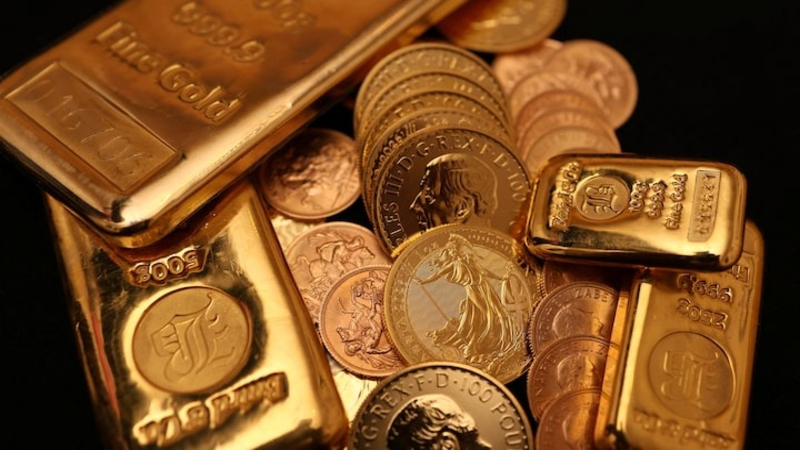
Gold surged to fresh record levels as global risk sentiment deteriorated, driven by renewed trade tensions and growing unease around geopolitical stability. Prices moved decisively above the $4,700 per ounce threshold as investors increased allocations to defensive assets amid uncertainty surrounding tariff policy and international relations. The rally reflects a broader shift in portfolio positioning as confidence in risk assets weakened, with equities retreating and volatility rising across markets. A softer U.S. dollar amplified the move, making dollar priced bullion more attractive to overseas buyers at a time when currency markets are reacting to shifting policy expectations. Gold’s rapid ascent underscores its role as a store of value during periods of political friction, particularly when fiscal and trade risks threaten cross border capital flows and investor confidence in major economies.
Silver also reached historic highs, reinforcing the strength of the broader precious metals complex. Strong momentum in silver has been fueled by a combination of haven demand and structural supply constraints, while its dual role as both a monetary and industrial metal has attracted additional interest during periods of economic uncertainty. The sharp gains seen since last year highlight how investors are increasingly turning to tangible assets as protection against macro instability. Beyond gold and silver, gains in platinum and palladium signaled wider demand for hard assets as markets reassessed growth prospects and policy direction. The move into metals coincided with declining equity markets, reinforcing the view that capital is rotating away from risk sensitive assets toward instruments perceived as resilient during policy driven shocks.
Expectations around U.S. monetary policy have further supported the rally in precious metals. Markets are increasingly pricing in interest rate cuts later in the cycle, reducing the opportunity cost of holding non yielding assets such as gold. At the same time, uncertainty around future leadership and policy direction at key financial institutions has added another layer of caution to investor behavior. Combined with ongoing trade tensions and geopolitical friction, these dynamics have created a backdrop where demand for monetary hedges remains strong. The sustained rise in precious metals prices reflects not just short term risk aversion, but deeper concerns about the durability of global growth, currency stability, and the long term outlook for real returns in traditional financial assets.