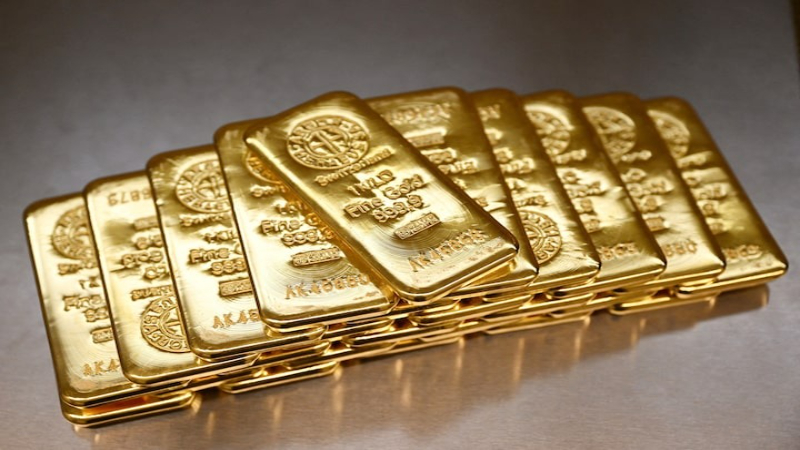
Gold prices retreated sharply at the end of the week as investors moved to lock in profits following a strong rally that pushed the metal to fresh record highs earlier in the week. The pullback reflected a broader cooling across commodity markets after weeks of aggressive gains, with gold losing momentum as immediate haven demand eased. A shift in global risk sentiment reduced the urgency to hold defensive assets, while market participants reassessed positioning after prices climbed rapidly in a short period. Despite the decline, gold remains on track for a second consecutive weekly gain, highlighting that the broader bullish trend has not fully broken, even as near term corrections emerge.
The decline in gold coincided with signs of easing geopolitical tensions, which reduced the premium investors had priced into the metal. Developments in the Middle East suggested a de-escalation in recent unrest, diminishing demand for traditional hedges against geopolitical shock. At the same time, progress on trade discussions between the United States and Taiwan contributed to a more constructive global outlook, reinforcing a shift toward risk assets. As geopolitical uncertainty receded, capital rotated away from precious metals and into areas perceived as offering higher short-term returns, amplifying selling pressure across gold and other related metals.
Currency dynamics also played a role in pressuring gold prices, as upbeat US economic data supported the dollar and reduced expectations for near term monetary easing. A firmer dollar tends to make gold more expensive for holders of other currencies, dampening global demand. Market pricing currently suggests the Federal Reserve is likely to hold interest rates steady through much of the first half of the year, with expectations for the first rate cut pushed further out. This environment limits one of gold’s traditional tailwinds, as lower rates typically enhance the appeal of non-yielding assets. Still, investors remain attentive to labor market and inflation data that could shift policy expectations later in the year.
Other precious metals mirrored gold’s retreat, underscoring the broad nature of the move. Silver experienced a deeper pullback after hitting record levels, as concerns emerged around softer industrial demand and potential outflows from exchange-traded products. Platinum and palladium also declined, though they remain positioned for weekly gains, reflecting lingering supply constraints and longer-term structural factors. For gold, the recent correction appears more consistent with consolidation than a reversal, as long-term support continues to come from central bank demand, diversification flows, and ongoing uncertainty around global growth and fiscal sustainability. These factors suggest volatility may persist, even as the longer-term outlook remains constructive.