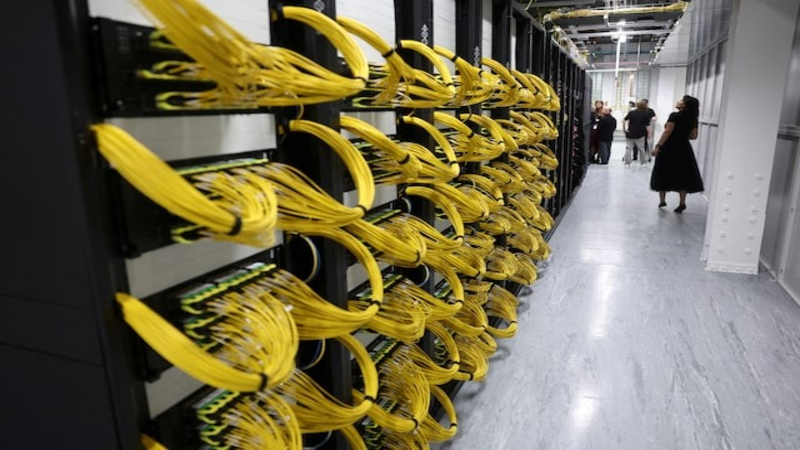
Investor interest in artificial intelligence remains strong heading into 2026, but capital is increasingly flowing toward energy and infrastructure providers rather than large technology firms. Asset managers note that while AI drove market performance last year, the next phase of investment is expected to focus on the physical backbone supporting rapid digital expansion. Power generation, grid upgrades, and data center infrastructure have moved to the forefront as investors reassess where sustainable returns are most likely to emerge. Rising borrowing costs and concerns about capital intensity have led some to question whether the largest technology companies can continue delivering outsized gains at the same pace. As a result, portfolios are being adjusted to capture AI related growth while managing exposure to crowded megacap trades.
Survey data highlights a notable shift in sentiment away from pure technology plays. A minority of investors now view the biggest US technology firms as the most attractive way to access AI growth, while a majority favor companies supplying electricity and related infrastructure to data centers. The expansion of AI workloads has sharply increased demand for reliable power, cooling systems, and transmission capacity, placing energy providers at the center of the investment theme. Infrastructure assets tied to data storage and processing are also attracting increased interest as long term beneficiaries of AI adoption. This broader approach reflects a growing view that the AI opportunity extends well beyond software and chips into real economy assets that enable scale.
Market participants emphasize that diversification has become more important as valuations in parts of the technology sector remain elevated. Rather than exiting AI exposure, investors are seeking differentiated opportunities that may offer more predictable cash flows and lower sensitivity to shifts in sentiment. Energy producers and utilities supporting data center growth are increasingly seen as strategic beneficiaries of the AI boom, particularly as governments and companies prioritize energy security and resilience. Infrastructure spending linked to digital expansion also aligns with longer investment horizons favored by institutional capital. These dynamics suggest that AI related investment is entering a more mature phase, where supporting industries play a larger role alongside headline technology names.
Despite the rotation in preferences, confidence in the long term AI theme remains intact. Only a small portion of investors view the sector as overheated, indicating broad belief that AI will continue reshaping productivity and economic activity. The shift toward energy and infrastructure reflects pragmatism rather than skepticism, as investors focus on managing risk while maintaining exposure to structural growth. As data centers multiply and computing demands rise, the need for power and physical capacity is expected to grow in parallel. This evolution points to a wider investment landscape for AI in 2026, where returns may be driven as much by energy and infrastructure as by innovation at major technology firms.